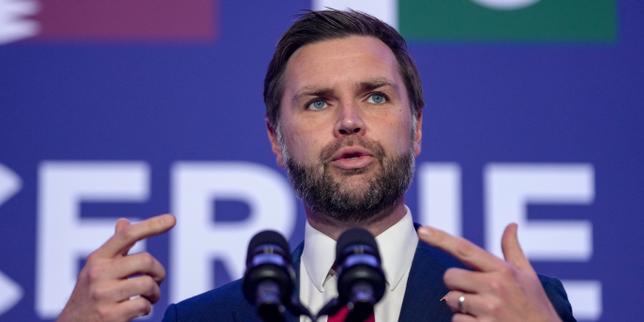
Don't buy the hype coming out of Switzerland just yet. When US Vice President JD Vance stood before reporters at the Bürgenstock Resort overlooking Lake Lucerne, he sounded like a man who had just single-handedly dismantled a decades-old geopolitical nightmare. He announced that Iran had agreed to invite International Atomic Energy Agency (IAEA) inspectors back onto its soil. He called it a major milestone. He even hinted it was the first step toward permanently ending Iran's nuclear weapons program.
It sounds great on paper. A breakthrough after weeks of terrifying escalations in the Middle East. But if you look past the standard political theater, the reality is far messier, far more fragile, and significantly less certain than the White House wants you to believe.
We've been down this road before with Tehran. Decades of broken promises, hidden facilities, and eleventh-hour stall tactics suggest that a celebratory press conference in Switzerland is rarely the end of the story. It's usually just the beginning of a much more frustrating game.
The Core of the Vance Announcement
Let's look at what actually happened on the ground in Switzerland. The US and Iranian delegations spent two days in intense, eighteen-hour negotiation sessions. According to Vance, the meetings were highly productive. The headline victory that the American team is parading around is the reinstatement of those IAEA nuclear inspectors.
Iran kicked many of these inspectors out during previous rounds of diplomatic breakdowns and escalating tensions. Getting them back in is the bare minimum required for any kind of oversight. Vance told NBC News that one of the core elements of this new understanding is that the IAEA and the United States will actually help Iran destroy its highly enriched uranium stockpile.
Think about that for a second. The US is proposing to actively assist Iran in dismantling the very material that could give them a nuclear breakout capacity. It sounds like an incredible diplomatic coup. Vance even claimed that all four major negotiation goals had been achieved during this summit. These goals included opening up the Strait of Hormuz, securing a ceasefire in Lebanon, and establishing a framework for regional peace.
But here is the catch. The entire agreement is contained within a document that is roughly a page and a half long.
A Page and a Half of Pure Vagueness
You can't solve a multi-generational nuclear crisis in one and a half pages. It's mathematically and politically impossible. A document that brief isn't a comprehensive treaty. It's a glorified memo.
Vance himself admitted to reporters that this Memorandum of Understanding is an incredibly general document. It kicks the thorniest, most complicated technical details down the road. It doesn't specify exactly when the inspectors get total access. It doesn't outline what happens if Iran denies entry to specific military sites. It completely glosses over the verification mechanisms that have plagued every single past agreement with the Islamic Republic.
Iran knows exactly how to exploit this kind of vagueness. While Vance was taking a victory lap in front of Western media, the Iranian Foreign Ministry was already singing a very different tune. Iranian officials quickly put out statements asserting that real negotiations on the core nuclear issue haven't even started yet. They view this memo as a framework to talk about talking, not a binding commitment to surrender their atomic ambitions.
This immediate clash of narratives is a massive red flag. When two opposing sides walk away from the exact same table with completely different interpretations of what they just signed, you don't have a deal. You have a temporary pause in hostilities.
The Strait of Hormuz and the Threat of War
To understand why the US rushed into this page-and-a-half agreement, you have to look at the immediate economic and military pressures surrounding the talks. This wasn't just a theoretical debate about nuclear centrifuges. There was an active threat of economic strangulation hanging over the global market.
Right before these negotiations kicked off, Iran declared that the vital Strait of Hormuz was re-blockaded. That single move sent shockwaves through global energy markets. A massive percentage of the world's petroleum passes through that narrow choke point daily. Leaving it blocked meant skyrocketing fuel prices and immediate economic chaos for the West.
The immediate win for the US wasn't actually the nuclear inspectors. It was the establishment of a direct communication line to avoid maritime incidents in the strait. The two sides agreed to a mechanism to coordinate transit and ensure that commercial vessels can pass without getting fired upon or seized by the Islamic Revolutionary Guard Corps.
Vance claimed that the strait is currently open and that the immediate crisis has been averted. This looks like a classic Iranian strategy. Create an acute, terrifying crisis by threatening global oil supplies, then offer to fix the crisis you created in exchange for diplomatic concessions and economic breathing room. Washington bit the bait because the alternative was a shooting war in the Persian Gulf.
The Secret Diplomats in the Room
One of the most fascinating aspects of these Swiss negotiations is who was actually sitting at the table. This wasn't just a standard State Department operation.
Photographs and reports from the Bürgenstock Resort revealed a surprising lineup. On one side, you had Iranian Foreign Minister Abbas Araghchi shaking hands with regional leaders. On the American side, standing right alongside Vice President Vance, was Jared Kushner. Kushner, acting as a special envoy, brings a very specific type of transactional diplomacy back into the mix.
Kushner’s involvement tells us that this administration is treating the Middle East crisis less like a traditional diplomatic puzzle and more like a corporate restructuring project. They want fast, headline-grabbing deals that stabilize markets and protect corporate interests. European leaders, particularly French President Emmanuel Macron, have also been working furiously behind the scenes to keep channels open and prevent the US from sliding into a total regional war.
This combination of transactional American deal-making and desperate European mediation produced the quick fix we see today. But transactional deals usually fall apart the moment one party finds a better deal somewhere else.
Why the Uranium Stockpile Plan is Highly Unlikely
We need to talk about the plan to destroy Iran's highly enriched uranium. Vance stated that the US and the IAEA would assist in this process. It sounds straightforward. It isn't.
Destroying or down-blending highly enriched uranium requires immense technical precision, absolute transparency, and years of constant monitoring. Iran has spent billions of dollars, endured crushing economic sanctions, and risked military strikes to accumulate that stockpile. The idea that they will simply hand it over or let American-backed technicians destroy it based on a page-and-a-half memo is incredibly naive.
Furthermore, Iran has mastered the art of the hidden nuclear facility. For every site that the IAEA knows about, intelligence agencies historically worry about the ones hidden deep inside mountains that haven't been declared. Even if inspectors return to the known sites in Natanz or Fordow, they are only seeing what Tehran allows them to see.
Without unconditional, anytime, anywhere access to any facility in the country, inspections are merely an illusion of security. The current agreement does not grant that level of invasive access. It simply reinstates the previous status quo, which Iran already proved it could dismantle whenever it felt cornered.
How to Track if This Deal is Actually Working
Forget the political speeches. If you want to know whether this agreement is a genuine step toward peace or just a temporary stalling tactic, you need to watch specific, unglamorous indicators over the coming weeks.
First, watch the IAEA flight schedules and visa approvals. Vance claimed inspectors would resume work within days. If we see bureaucratic delays, denied visas for specific American or European inspectors, or sudden disagreements over equipment tracking, the deal is already dead.
Second, monitor the actual shipping data in the Strait of Hormuz. A communication line between navies is nice, but physical security is what matters. If insurance rates for commercial oil tankers don't drop significantly, it means the maritime industry doesn't trust the stability of this deal.
Third, look for the text of the actual annexes. Vance mentioned that the text might be released soon. The real meat of any deal is always in the technical annexes. If those documents never materialize, or if they remain permanently classified, it means the two sides couldn't agree on the actual execution of the plan.
Don't let the headlines fool you. Re-inviting inspectors is a positive step, but it is a microscopic one. Until the vague language of this memo turns into verifiable actions on the ground, treat this breakthrough with a heavy dose of skepticism. Stay skeptical, watch the shipping lanes, and watch the inspectors. Countering political spin requires looking directly at the actions, not the press conferences.