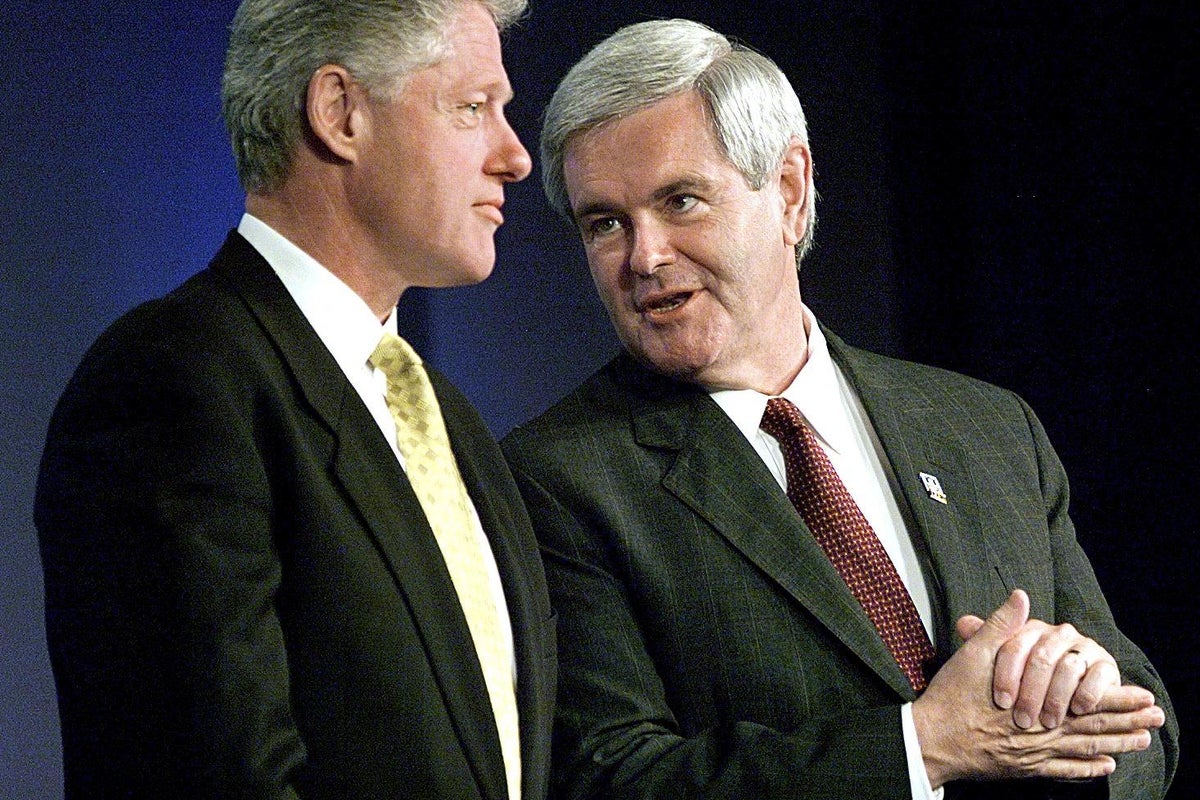
Political regret usually takes decades to surface, if it ever shows up at all. Washington insiders like to double down on their old fights. Yet, former House Speaker Newt Gingrich broke the mold by shifting his stance on one of the most explosive political dramas of the 1990s. Newt Gingrich admits that it was a mistake to impeach Bill Clinton over the Monica Lewinsky sex scandal, a confession that reframes modern American political history.
It changed everything. The 1998 impeachment of Bill Clinton set off a partisan arms race that still defines Washington today. Looking back, the architect of that conservative revolution now sees the strategy as a miscalculation. This admission isn't just about rewriting the past. It offers a brutal lesson in how short-term political theater can destroy long-term governance.
People often forget how intense the late nineties truly were. The country was prosperous, the Cold War was over, and the federal budget was actually balanced. Then came the bombshell revelations about an affair between a sitting president and a 22-year-old White House intern. What followed was a scorched-earth campaign led by Gingrich and independent counsel Kenneth Starr. They wanted Clinton out. They failed, and the blowback changed the trajectory of the Republican Party.
The Strategy Behind the Impeachment Hustle
To understand why Gingrich calls it a mistake now, you have to understand what he was trying to achieve back then. Gingrich wasn't just fighting Clinton; he was trying to solidify a permanent Republican majority. He believed the American public would be so repulsed by Clinton’s behavior and subsequent lies under oath that they would sweep Democrats out of power.
He misread the room completely.
The American public looked at the situation and saw a private moral failure, not a high crime or misdemeanor worthy of overturning a national election. Voters separated Clinton's job performance from his personal conduct. The economy was booming. Unemployment was historically low. People were happy with the direction of the country, and they resented the Republican focus on a sex scandal.
Gingrich now acknowledges that the GOP got blinded by the legal technicalities of perjury. They forgot about public sentiment. By focusing entirely on Clinton's deposition lies in the Paula Jones lawsuit, the Republican leadership alienated moderate voters who just wanted the government to function.
The Midterm Backfire That Broke the GOP
The true turning point happened in November 1998. Historically, the party out of the White House gains congressional seats during a president's second-term midterm election. Gingrich and his team expected a red wave. They thought the Lewinsky scandal would be their ticket to a supermajority.
Instead, they hit a wall.
Democrats actually gained five seats in the House of Representatives. Republicans maintained a slim control, but the moral victory belonged entirely to Clinton. It was a disaster for the GOP establishment. The voters sent a clear message: stop the obsession with the president's private life.
The fallout was immediate and brutal. Within days of the election disaster, Gingrich faced a revolt from his own ranks. Recognizing he had lost his mandate, he announced his resignation as Speaker of the House and stepped down from Congress altogether. He became a casualty of the very weapon he tried to use against Clinton. The irony was thick, and it clearly left a lasting impression on the veteran politician.
Why Gingrich Reevaluated the Clinton Sex Scandal
Decades of reflection change a politician's perspective. In his modern commentary, Gingrich points out that the obsession with Clinton's personal conduct derailed actual policy achievements. Before the scandal broke, the Republican-led Congress and the Clinton White House were actually getting things done. They reformed welfare in 1996. They passed balanced budgets.
The impeachment circus killed that cooperation.
Gingrich’s admission stems from a realization that the impeachment didn't hurt Clinton's legacy as much as it damaged the legislative process. Clinton’s approval ratings actually spiked during the trial, reaching an astonishing 73 percent. The public rallied around the president because they felt the prosecution was a partisan witch hunt.
By pushing for impeachment, Gingrich inadvertently shielded Clinton from deeper policy criticisms. The debate stopped being about taxes, foreign policy, or government spending. It became a tribal war over morality and legal semantics. Republicans lost that debate in the court of public opinion.
The Legacy of Partisan Warfare
The damage didn't stop in 1999 when the Senate acquitted Clinton. The tactics used by Gingrich and his allies created the template for modern congressional investigations. Before the late nineties, impeachment was a rare, extreme tool reserved for constitutional crises like Watergate. After 1998, it became just another weapon in the partisan toolbox.
Every subsequent president has faced threats of impeachment from the opposing party. The bar was lowered significantly. Gingrich's current regret highlights the danger of weaponizing oversight for short-term political points. When you use the ultimate constitutional option for a political stunt, you normalize it.
This shift created the deep polarization we see today. It started when the House decided that a president's lies about an extramarital affair justified a trial in the Senate. The political culture never truly recovered from that hyper-partisan environment.
Lessons for Modern Political Leaders
Current lawmakers should study Gingrich's admission closely. The most important takeaway is that public fatigue is real. Voters have a limited appetite for purely negative, scandal-driven politics. If a political party centers its entire strategy on tearing down an opponent rather than offering a constructive vision, voters eventually revolt.
Focus on the issues that affect daily lives. People care about inflation, job security, healthcare, and infrastructure. They don't want a multi-million dollar investigation into personal misconduct unless it directly compromises national security or involves systemic corruption.
Evaluate the long-term cost of a political victory. Even if the House successfully impeached Clinton, the Senate was never going to convict him. The entire exercise was an expensive piece of political theater that cost Republicans their leader and their momentum.
When planning a political strategy, look beyond the next news cycle. Ask yourself if the path you are choosing builds trust with voters or simply feeds the core base while alienating the middle. Gingrich learned the hard way that feeding the base at the expense of the center leads to political exile. Avoid the temptation of short-term outrage and prioritize sustainable, policy-driven opposition. That is how you build a lasting majority that survives the fickle nature of public opinion.