The grass under the stadium floodlights did not look like a pitch. It looked like an anvil.
For ninety minutes, and then thirty more, the air inside the arena tasted of stale sweat, spilled beer, and the collective, suffocating anxiety of eighty thousand people who forgot how to breathe. On one side stood the titans of a passing era. They were men with heavy eyelids and heavily tattooed arms, men who carried the weight of a nation’s eternal expectations and the literal scars of a decade spent winning everything that mattered. On the other side stood children. They had braces on their teeth and haircuts they probably copied from TikTok thirty minutes before boarding the team bus.
Everyone knew how this script was supposed to go. The old gods of Argentina, stubborn and cynical, were meant to choke the life out of the match, find one moment of pure, celestial malice, and lift the trophy into the desert sky.
Instead, they were hunted.
To understand what happened in the closing moments of the World Cup final, you have to understand the specific cruelty of athletic aging. It does not happen all at once. It happens in millimeters. It happens when a brain that has calculated ten thousand successful passes commands a leg to move, and the leg responds a fraction of a heartbeat too late.
The Weight of Gold
Consider the Argentine captain. Let us call him the Old Man, though his actual name is etched into the bedrock of footballing history. He spent the better part of the evening operating in a radius no larger than a backyard garden. He did this not out of laziness, but out of necessity. Every burst of acceleration was a withdrawal from a bank account that was dangerously close to overdraft.
For the first hour, his economy of movement was a masterclass. He used his eyes to move defenders. He used his hips to deceive boys who were still in elementary school when he won his first Ballon d'Or. When Argentina scored their second goal—a brutal, counter-attacking sequence that felt less like sport and more like a heist—it seemed the old order would hold.
The Argentine fans in the north stands were already crying. They were singing that song, the one about the homeland and the boys who died in the islands, their voices bouncing off the fiberglass roof like thunder. They believed the myth. They believed that desire, when polished by enough suffering, becomes invincible.
But football is ultimately a game played by lungs and hamstrings, not ghosts.
Across from them, the Spanish bench did not look like a war council. It looked like a high school cafeteria. The Spanish manager, a man whose gray hair seemed entirely at odds with the team he had assembled, looked at his substitutes and did not offer a grand tactical lecture. He simply pointed at the pitch and told them to run.
Spain had spent the last four weeks being patronized by the footballing establishment. Pundits called them naive. They called their possession style neat but toothless. They warned that against the dark arts of South American defending—the tactical fouls, the shirt-tugging, the whispering of poison into an opponent's ear before a corner kick—the boys from Madrid and Barcelona would crumble.
What the experts missed was the terrifying fearlessness of someone who has nothing to lose because they haven't lived long enough to understand what losing feels like.
The Shift in the Wind
The turn came in the seventy-third minute.
It began with a sound. Not a cheer, but a collective gasp from the Argentine contingent as their central midfielder, a warrior of three previous tournaments, collapsed to the turf clutching his calf. It wasn't a contact injury. His body had simply resigned.
As he was helped off, Spain’s seventeen-year-old winger picked up the ball.
Imagine a hypothetical viewer watching football for the very first time. They wouldn't notice the tactics or the formations. They would only notice the speed. The boy didn't run with the labored, mechanical stride of a professional athlete; he glided like a kid chasing a dog down a suburban street. He faced up against an Argentine left-back who had spent the last ten years terrorizing the best attackers in Europe.
The defender stood his ground. He showed the boy the outside, offering him the touchline, the classic veteran trap designed to force a cross into a crowded box.
The boy did not take the bait. He didn't even look at the ball. He looked at the defender’s knees.
One step. A stutter. A shift of weight so violent it looked like a glitch in the broadcast.
The stadium fell silent. In that single second, the physical disparity between the two generations became absolute. The defender’s mind knew exactly what to do, but his joints refused the order. He slipped. It was a tiny, undignified stumble, the kind that happens on an icy sidewalk. By the time his hand hit the grass to steady himself, the boy was gone.
The cross was low, hard, and entirely indifferent to the reputation of the goalkeeper waiting for it. When it hit the back of the net, the Spanish players didn't celebrate with the rehearsed, brand-managed dances of modern superstars. They just fell on top of each other in a chaotic pile of limbs, screaming into the turf.
Twenty minutes later, the scoreboard read 2-2. Extra time.
The Cruelest Thirty Minutes
Extra time in a World Cup final is a psychological experiment masquerading as a sport. Tactics are abandoned. Formations dissolve into a desperate game of survival.
The Argentine players spent the brief intermission sitting on ice chests, their legs wrapped in heavy towels, while physiotherapists worked on their muscles with the frantic energy of mechanics fixing a burning car during a pit stop. They looked ancient. The greasepaint of sweat and dirt on their faces made them look like soldiers from a forgotten war.
Spain’s players remained standing. They drank water, they laughed, and they bounced on the balls of their feet. They were eager to get back out there. That was the most frightening thing about them. They weren't tired.
When the whistle blew for the restart, the match became an execution.
Spain did not pass the ball to score; they passed it to humiliate. They kept the ball in triangles, moving it with a crisp, rhythmic ping-ping-ping that echoed through the microphone arrays around the pitch. Every pass was a question asked of Argentina’s aging legs. Can you reach this? How about this one? What about now?
Argentina tried to fight back with the only weapons they had left: cynicism and pride. They threw elbows. They left their boots in late during tackles. They tried to provoke the Spanish teenagers, looking for a red card that might level the playing field through chaos.
But the boys refused to get angry. They just smiled.
With five minutes remaining before the horror of a penalty shootout, the breakthrough arrived. It didn't come from a tactical masterstroke. It came from a mistake born of pure, unadulterated exhaustion. An Argentine defender, trying to clear a routine ball, swung his leg and missed it entirely.
The Spanish midfielder, a nineteen-year-old who looks like he still belongs in a university lecture hall, collected the loose ball twenty yards out.
Time stopped.
He didn't blast it. He didn't try to break the net. He used the inside of his foot to curl the ball into the far corner, well beyond the reach of the diving keeper. It was a shot of terrifying maturity, executed with the casual indifference of a teenager throwing a crumpled piece of paper into a wastebasket.
The Changing of the Guard
The final whistle did not bring a roar. It brought a strange, reverent hush over the stadium, followed by the high-pitched screaming of the Spanish section.
The Argentine players collapsed instantly. Some lay flat on their backs, staring into the bright stadium lights, their chests heaving, their eyes vacant. They looked less like defeated athletes and more like men who had survived a shipwreck only to realize they were on an uninhabited island. The Old Man stood in the center circle, his hands on his hips, his head bowed. He did not cry. He had passed beyond the point of tears into a state of quiet, dignified acceptance. He knew.
He knew that history had moved on without him.
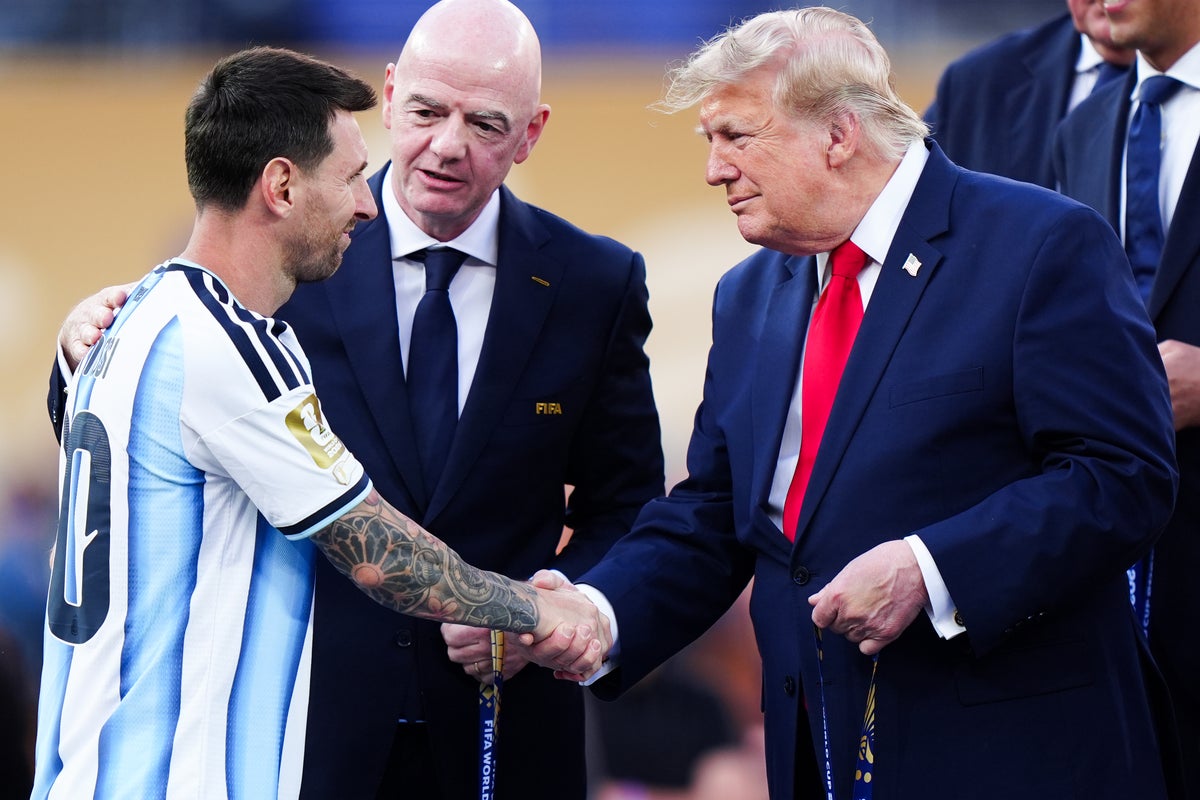
The trophy presentation was supposed to be a coronation for the old regime, a final validation of a legendary generation. Instead, it felt like a christening. When the Spanish captain lifted the gold trophy, his teammates didn't just cheer; they bounced around him with an energy that felt entirely disconnected from the grueling two hours of football they had just endured.
We often talk about the beauty of experience in sports. We romanticize the veteran who knows how to suffer, who understands the nuances of the game, who can win through sheer force of will. But tonight proved that there is something more powerful than experience.
Innocence.
The boys from Spain didn't win because they were smarter than Argentina. They didn't win because they wanted it more. They won because they didn't know they were supposed to be afraid of them. They looked at the legends of the game and saw only old men who were a step too slow.
As the stadium lights finally began to dim, long after the confetti had been swept into small, colorful piles on the sidelines, a single image remained. The young Spanish winger was sitting on the pitch, his medal dangling loosely from his neck, eating a slice of pizza from a cardboard box. He looked entirely ordinary. He looked like a kid after a weekend game in a park.
Behind him, the empty stadium loomed, silent and dark, waiting for the next generation to arrive.