The headlights don’t blink. When you stare into the high beams of a vehicle idling outside your bedroom window at three o’clock in the morning, you expect to see the silhouette of a driver. A neighbor coming home late. A delivery worker checking a map. A teenager sneaking out. You look for the tilt of a head, the glow of a smartphone screen, or the impatient drum of fingers on a steering wheel.
Instead, there is only the sterile, spinning hum of a lidar sensor on the roof. Expanding on this idea, you can also read: The Capitalist Madness Behind Hugo Gernsbacks Suffocation Helmet.
For the residents of Oak Creek Way, a quiet, horseshoe-shaped suburban street that usually hears nothing louder than a morning lawnmower, the future didn’t arrive with a grand announcement. It arrived with a click. Then a pause. Then a slow, mathematical reverse turn that has been repeated hundreds of times a week.
Autonomous vehicles have found the neighborhood. And they won't leave. Analysts at Ars Technica have also weighed in on this situation.
What happens when corporate algorithms decide your peaceful slice of the world is the perfect sandbox for stress-testing artificial intelligence? The resulting friction isn't just about traffic laws or municipal codes. It is a deeply unsettling clash between human sanctuary and machine learning.
The Ghost Fleet of Oak Creek
Consider Elena. She has lived at the bend of the cul-de-sac for twelve years. Her two children learned to ride their bicycles on this asphalt because it was safe, predictable, and entirely insulated from the chaotic arteries of the nearby metro area.
Six months ago, that predictability vanished.
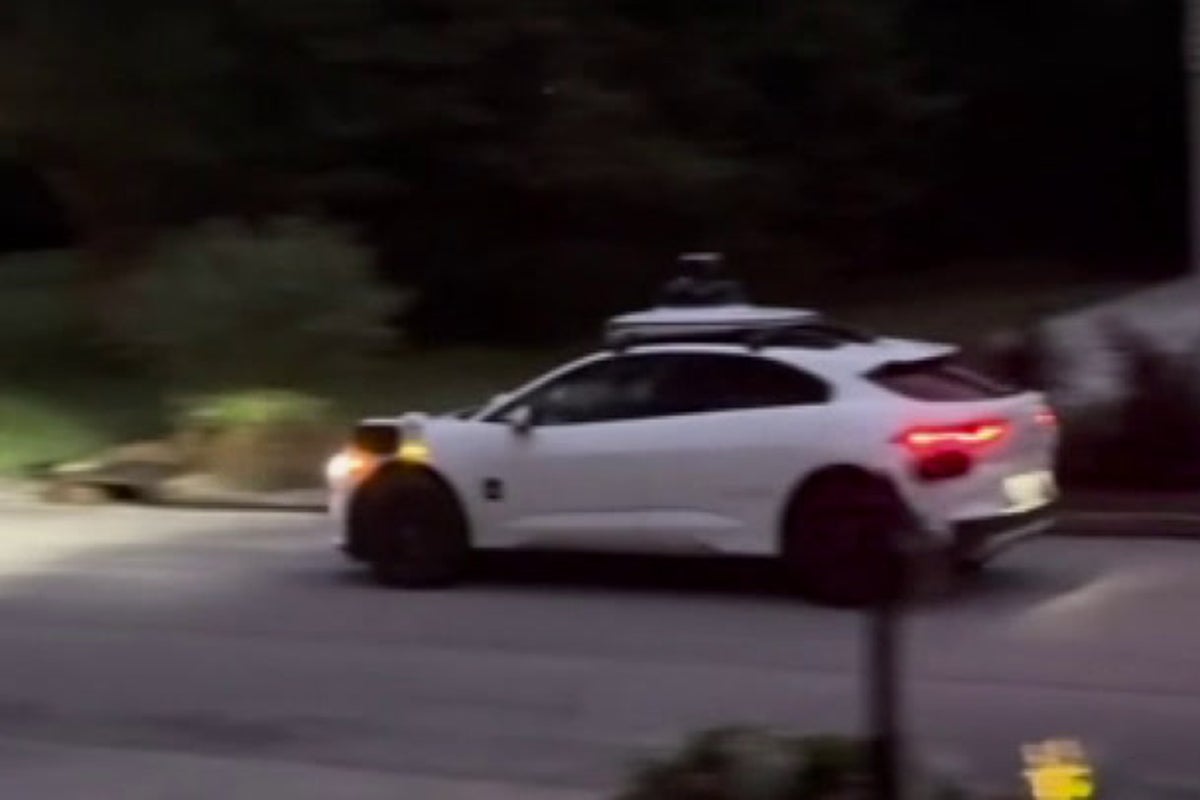
It started with a single white sedan, bristling with cameras and sensors, pulling into the dead-end street. It drove to the very edge of the pavement, stopped for exactly forty-five seconds, executed a flawless multi-point turn, and drifted back out toward the main road. Elena watched from her kitchen window, thinking it was a fluke.
By Tuesday, there were five of them. By the weekend, they were arriving in caravans.
The vehicles are part of a commercial pilot program mapping the trickiest suburban layouts in the county. Dead ends, sharp turns, and narrow streets with parked cars are notoriously difficult for autonomous navigation systems to process. To a machine learning model, Elena’s quiet street isn't a neighborhood. It is a high-level obstacle course. A puzzle to be solved over and over again through sheer iteration.
Data shows that these autonomous fleets rely on massive reinforcement loops. To perfect a left turn or a U-turn in tight quarters, an AI needs to execute the maneuver thousands of times under varying light conditions, weather patterns, and angles. When a specific geographic coordinate satisfies the algorithm's need for complex training data, the fleet is routed there automatically.
The software doesn't know about the families sleeping inside the homes. It only knows that the geometry of the cul-de-sac provides excellent training feedback.
The Psychological Weight of the Unblinking Eye
The physical danger of a low-speed autonomous vehicle is statistically minimal. According to safety reports filed with transportation regulators, these cars are programmed to err on the side of extreme caution. They stop for squirrels. They freeze when a plastic bag drifts across the windshield. They obey the 25-mile-per-hour speed limit with religious devotion.
But logic fails to comfort you when you are walking your dog at dusk and a two-ton machine creeps up behind you in complete silence, its roof sensors spinning like a mechanical top.
There is a distinct psychological toll that comes with living inside a live tech experiment. Neighbors describe a persistent feeling of being watched, not by a malicious voyeur, but by something far more indifferent: an optimization engine. Every time a resident steps out to grab the morning paper in their bathrobe, or lets their dog touch the front lawn, they are captured in high-definition 3D mapping data, feeding a corporate server farm miles away.
The community has tried to adapt. Some residents have taken to parking their own traditional cars in patterns designed to block the turning radius of the autonomous fleet, hoping to make the cul-de-sac "too difficult" for the algorithm to bother with.
It didn't work. The machines simply adjusted their routes, pausing longer, calculating harder, and filling the street with the soft, high-pitched whine of electric drivetrains trying to solve the new human-made maze.
The Regulatory Void
When a delivery truck blocks a driveway or speeds through a neighborhood, there is a clear chain of accountability. You call the company. You report the license plate. You speak to a manager.
With the driverless fleet, the chain of command dissolves into a cloud of customer service automation and corporate public relations statements.
Local police departments are often utterly unequipped to handle the nuance of algorithmic trespassing. If a vehicle isn't breaking the speed limit, and it isn't parked illegally, what crime is it committing? Public roads are public roads, whether the entity operating the steering wheel is made of carbon or silicon. Municipalities find themselves caught in a legal gray area, waiting for state and federal lawmakers to catch up to a reality that is already idling outside their citizens' front doors.
This isn't an isolated tech glitch. It is a glimpse into a broader shift in how public space is utilized. We are accustomed to thinking of corporate infrastructure as something contained within brick walls, corporate campuses, or digital screens. We forget that the physical world—our streets, our air, our neighborhoods—is the ultimate infrastructure required for autonomous technology to scale.
The companies behind the fleets point to the grand promise of the technology: a future with zero traffic fatalities, reduced emissions, and unparalleled mobility for those who cannot drive. These are noble, necessary goals. The math makes sense on a spreadsheet.
But spreadsheets don't account for the loss of a child’s safe space to play, or the creeping anxiety of an elderly resident who feels trapped in their own home by a rotating cast of robotic monitors.
The Price of Optimization
The sun begins to set over Oak Creek Way, casting long shadows across the neat lawns and concrete driveways. For a brief moment, the street looks exactly as it did a decade ago. Peaceful. Human.
Then, a soft chime echoes from the corner of the avenue.
Another white sedan appears, its roof array gleaming in the fading orange light. It slows down as it enters the cul-de-sac, its sensors scanning the mailboxes, the trash cans, the tricycle left on the grass. It calculates the distance to the curb with millimeter precision.
It stops. It waits.
Inside the house, a window blind twitches. A resident watches, waiting for the machine to finish its lesson for the day, wondering at what point their home ceased to be a refuge and became nothing more than a data point.