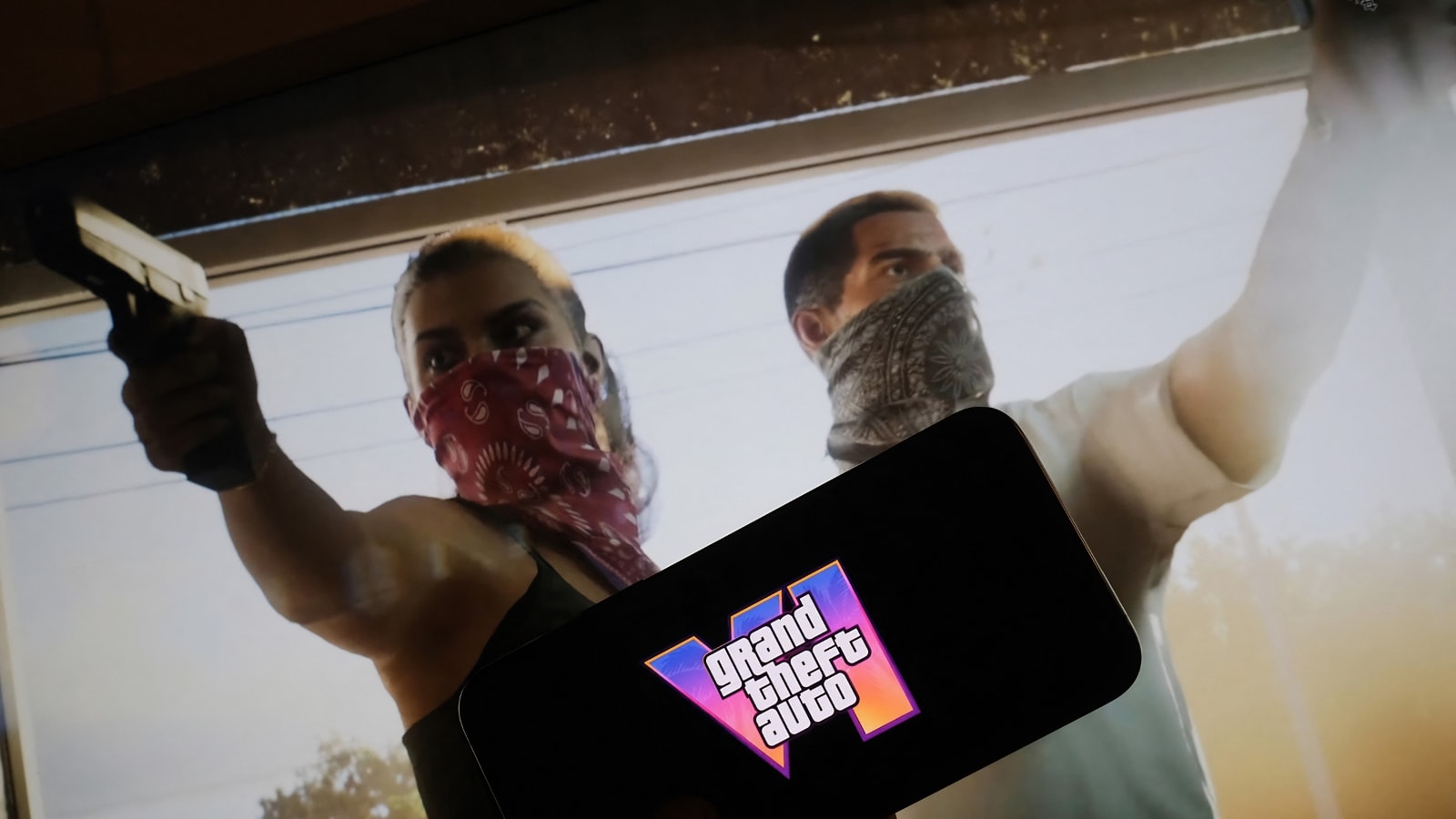
The glow of a television screen illuminates a living room in suburban Ohio at two in the morning. A teenager sits cross-legged on the carpet, their eyes glued to a low-resolution loop of digital asphalt, swaying palm trees, and a physics engine that bends light just a little closer to reality than anything we saw yesterday. This is not a trailer dropping with orchestral pomp at a summer showcase. This is a leak. A fragmented, compressed, unauthorized pixel-bleed of a game that has spent a decade eating away at the collective patience of millions.
Across the ocean, in a modest apartment in Berlin, a thirty-year-old software engineer pauses her scrolling. She watches the same shaky footage, not because she cares about the polygon count of a virtual convertible, but because she wants to understand the gravity well. Meanwhile, you can explore similar developments here: Why Bill Simmons is Right About Artificial Intelligence and His Critics Are Terrified of the Future.
Gravity is the only word for it.
Within days, that stolen, stuttering footage of digital sunshine and fictional misdemeanor broke through the ceiling of global attention. It did not merely trend. It conquered. Statistics quietly filtered out from industry analysts, revealing a staggering reality: Grand Theft Auto VI gameplay footage had topped Netflix charts in eighty-seven countries. More than that, it eclipsed the streaming numbers of a prestige film starring Robert De Niro, an acting titan who has spent fifty years crafting the very grammar of cinematic cool. To explore the complete picture, we recommend the recent article by The Hollywood Reporter.
How did we get here? How does a compilation of unpolished source code from a virtual playground manage to crowd out the highest echelons of professional, emotionally heavy cinema?
To understand this, we have to stop looking at video games as toys and start looking at them as town squares.
Think about the last time you felt truly present in a public space where everyone shared your exact language, your ironic jokes, your generational exhaustion, and your hyper-specific nostalgia. For millions of people under thirty, that space is not a café, a park, or a neighborhood block. It is a digital map rendered in Vice City pink and neon blue. When Rockstar Games builds a world, they do not just build geometry. They build an altar of escapism.
We live in an era characterized by a profound, gnawing lack of agency. Rent goes up. Supply chains stutter. Headlines read like dispatches from a sinking ship. In this climate, the human brain looks for environments where actions have direct, predictable, and immediately satisfying consequences. If you steal a car in a video game, the police arrive with sirens blaring, and you either outdrive them or you face the music. It is high-stakes drama with a reset button.
When the gameplay footage leaked, the reaction was not just curiosity. It was a mass pilgrimage to a digital shrine.
Let us consider a hypothetical composite character to ground this shift: Marcus, a twenty-eight-year-old night-shift warehouse worker in Chicago. Marcus does not go to the cinema anymore. Tickets are thirty dollars, popcorn is twenty, and the parking lot requires a mortgage. But Marcus has a Discord server with four friends spread across three time zones. Every night at eleven, they log into the same digital ecosystem. They do not always play missions. Sometimes they just drive up a virtual mountain in a stolen pickup truck and listen to the fictional radio stations talk about the absurdity of modern life, laughing at the biting satire of a culture that mirrors their own.
When the leaked footage hit the web, Marcus watched it twelve times before his shift ended. He wasn't looking at graphics. He was looking at his future living room. He was looking at the place where he and his distant friends would spend three hundred hours of their lives trying to forget the crushing monotony of inflation and bad news.
This is where the traditional entertainment industry miscalculates. Hollywood still operates on a twentieth-century broadcast model. They make a thing; you sit in the dark and consume the thing; you go home. It is a monologue.
Interactive entertainment is a conversation.
When a Robert De Niro film drops on a streaming service, it is a masterclass in performance. We admire it. We applaud the actor's craft, the subtle twitch of a jawline, the weight of a silence in a mob drama. But we are ghosts at the feast. We cannot touch the table. We cannot steal the car. We cannot jump off the balcony into a swimming pool just to see if the physics engine handles the splash correctly.
The eighty-seven countries where the gaming footage beat the cinematic heavyweight represent a global tectonic shift in how human beings process narrative. We no longer just want to watch heroes save the world. We want to build our own antiheroes, screw up our own missions, and share the bloopers with millions of strangers who treat the shared chaos as a second language.
The scale of this phenomenon defies casual dismissal. We are talking about a cultural product that generates more economic gravity than blockbuster film franchises, yet remains culturally ghettoized by critics who still view controllers through the lens of playground pacifiers. They see pixels. The world sees a mirror.
Consider what happens next when a piece of entertainment stops being a product and becomes a permanent infrastructure. People grow up inside these digital spaces. They fall in love, they build inside jokes, they mourn friends who logged off permanently, they establish entire social strata within lobbies and voice chats. A Robert De Niro movie is an exquisite two-hour painting hung in a gallery. A game like this is a living, breathing city with millions of tenants moving the furniture around every second of the day.
The leak itself was a tragedy of corporate security, a massive breach of trust that cost developers years of guarded anticipation. Yet, the public's feral hunger for those raw, unfinished frames exposed something pure. It proved that the anticipation is not driven by marketing budgets or clever trailer edits. It is driven by a collective, breathless need for a new place to gather.
The screen in the Ohio living room goes dark as the sun starts to crest over the horizon. The teenager finally closes his laptop, rubbing tired eyes, listening to the quiet hum of the real world creeping back in through the window blinds. Downstairs, the coffee maker clicks on. The bills are still on the counter. The news is still grim. But out there, somewhere in the humming servers of the world, a digital horizon is waiting to be built, and millions are standing at the border, ready to cross over the moment the gates open.