The North Sea at 3:00 AM does not care about geopolitics. It cares about gravity, the freezing point of saltwater, and the crushing weight of black iron. On a pitch-black night, the water looks less like liquid and more like moving obsidian, rising and falling in violent, freezing swells that could swallow a man before he has time to scream.
Somewhere in those dark waves, a rusted hull plows through the water. It carries no flag you would recognize. Its transponder—the digital heartbeat that tells the world a ship’s name, speed, and destination—has been dark for days. This is a ghost ship, part of the shadow fleet keeping a sanctioned economy alive.
Then comes the sound. It starts as a low, rhythmic thrumming, vibrating through the soles of your feet before it hits your ears.
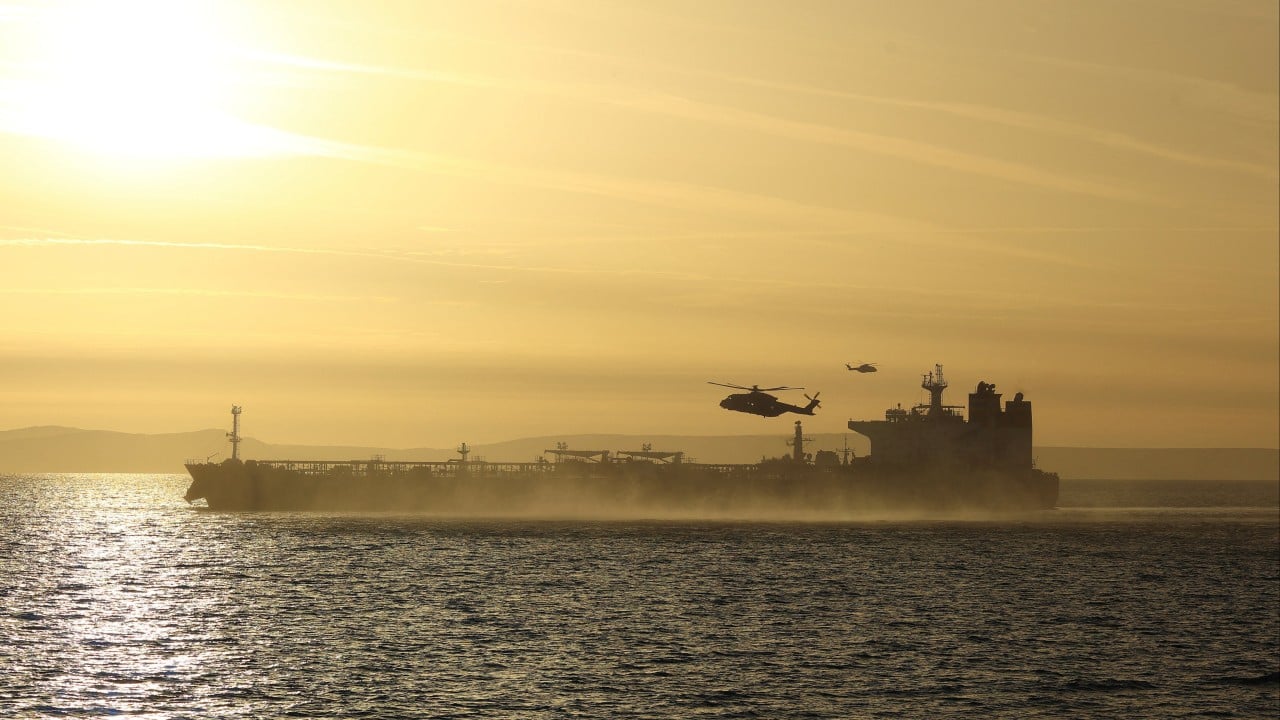
Out of the mist, a Royal Navy helicopter hovers, a roaring insect against the clouds. Below it, fast-attack boats cut through the surf. Figures clad in matte-black gear, weighed down by body armor and night-vision optics, prepare to leap onto a moving, slippery deck. These are British commandos. They are not here for a routine inspection. They are here to seize a floating environmental time bomb and choke off the financial bloodstream of a war.
The world reads about this in brief, sterile headlines. We see phrases like "maritime interdiction" or "sanctions enforcement." But those words freeze the reality. They turn a sweat-slicked, high-stakes gamble into a bureaucratic ledger. To understand why this midnight raid matters, you have to look past the ink and into the cold metal reality of what is actually floating off our coasts.
The Shell Game on the High Seas
To understand the ghost fleet, you have to understand the sheer desperation of a closed economy. Imagine a bank account that has been frozen by every major institution on earth. You have assets, but you cannot sell them through any legitimate storefront.
So, you go to the alleyways.
The shadow fleet is a collection of aging, decrepit tankers bought through shell companies based in jurisdictions that look the other way. These ships are old. In the legitimate shipping world, a tanker is sent to the scrapyard after fifteen or twenty years because the hull grows weak, the systems fail, and the risk of a catastrophic oil spill skyrockets. The ghost fleet runs on vessels that should have been razor blades a decade ago.
They sail without standard international insurance. They falsify their locations using GPS spoofing technology, making a radar screen believe they are safely docked in Dubai when they are actually loading crude oil in the Baltic Sea.
Consider the mechanics of a ship-to-ship transfer. Two massive, unmaintained vessels pull alongside each other in international waters, held together by nothing but heavy ropes and luck. They pump millions of barrels of highly volatile oil from one hold to another in the dead of night, without the safety gear required by international law. One snapped line, one spark from a rusted winch, and the coastline of Scotland or Norway is choked in black sludge for a generation.
This is the invisible stake. The British commandos who slid down fast-ropes onto that rolling deck were not just stopping a shipment; they were defusing a bomb.
Minutes of Absolute Dark
Put yourself on that deck for a second.
You are a commando. The air tastes like salt and diesel fuel. Your boots are trying to find traction on a surface coated in sea spray and grime. You do not know who is behind the steel doors of the bridge. Are they underpaid, terrified merchant sailors who want no part of a war? Or are they armed mercenaries hired to protect a multi-million-dollar cargo?
Every doorway is a fatal funnel. Every corridor is a maze of rusted steel.
The commandos move with a terrifying, synchronized silence. They use hand signals. The flashlights attached to their weapons slice through the gloom, illuminating peeling paint, Cyrillic warning signs, and the smell of neglect.
The real victory in operations like this doesn't involve firing a shot. It happens when the ship’s captain looks out the bridge window, sees the overwhelming force occupying his vessel, and slowly raises his hands. Tension gives way to adrenaline, then to a cold, hard focus. The bridge is secured. The engine room is locked down. The ghost ship is a ghost no longer.
The Digital Echo in Kyiv
Hours later, across the European continent, a phone lights up in a bunker beneath Kyiv.
President Volodymyr Zelensky receives the briefing. For months, his administration has been shouting into the wind about the shadow fleet. They have pointed out that every barrel of oil slipped through the blockade transforms into artillery shells falling on Kharkiv, into drones targeting power grids, into more long months of attrition.
His public statement of gratitude to the UK was polite, diplomatic, and properly framed for the evening news. But behind the official press release lies a profound sense of relief. For Ukraine, this raid is proof that the West is willing to move beyond paperwork.
Sanctions on a computer screen are easily bypassed. A shell company in Cyprus can be replaced by a shell company in Panama by noon. But a British commando standing on the bridge of a seized tanker cannot be deleted with a keystroke. It is a physical manifestation of a red line.
But the real problem lies elsewhere. Securing one ship is a tactical victory; stopping the system is an industrial challenge.
The Logistics of Shadows
How big is this ghost fleet? Estimates suggest it numbers over six hundred vessels. It is an entire parallel maritime economy, running alongside the legal world like a dark reflection.
- The Ships: Aged crude carriers, often lacking double hulls, operating past their safe lifespans.
- The Crews: Mariners often flying under flags of convenience from nations with zero regulatory oversight, sometimes working without valid certifications.
- The Capital: Billions of dollars flowing through untraceable digital networks, opaque banks, and cash transactions.
When the UK military intervenes, they are pulling a single thread from a massive, tangled knot. The economic pressure is immense. If the shadow fleet becomes too dangerous to operate—if insurance premiums for illegal voyages become too high, or if the risk of losing the entire ship to a special forces boarding party becomes real—the math changes.
The shadow economy relies on the assumption that the open ocean is too big to police. It bets on the cowardice of Western nations, hoping they will value quiet waters over uncomfortable confrontations.
That bet failed in the North Sea.
The Wake Left Behind
The captured tanker is steered toward a secure port, its journey interrupted, its payload frozen. The commandos pack their gear, climb back into their helicopters, and fly toward the dawn, leaving the civilian crew to face the legal wreckage of their choices.
The water closes over the spot where the confrontation happened, erasing the wake of the fast-boats within minutes. The North Sea returns to its gray, indifferent rhythm.
But on the charts of global shipping companies, the water is different now. The invisible boundaries have shifted. Every captain steering a rust-bucket full of illicit crude looks out into the mist a little more closely, wondering if the thrumming in the distance is just the wind, or the sound of the law coming down from the sky.