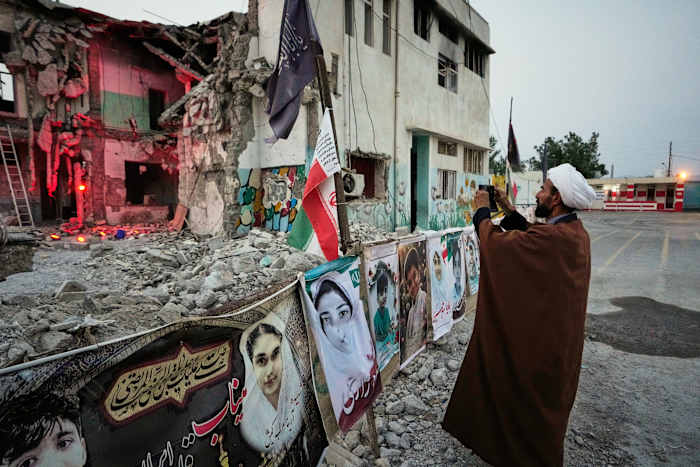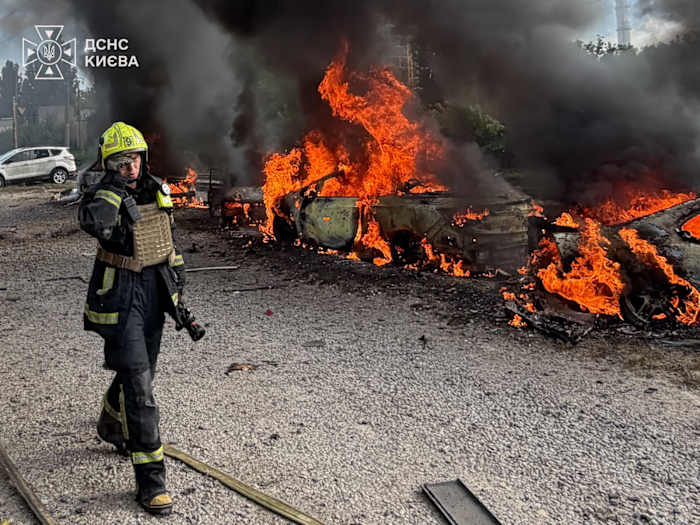
Air raid sirens in Kyiv do not sound like a warning anymore; they sound like background noise to a population that has learned to calibrate its survival by the pitch of an incoming engine. When a coordinated barrage of Russian missiles and explosive drones slams into residential districts, injuring scores including children, the immediate Western headline focuses on the casualty count and the interception rate. Yet counting the wounded misses the machinery of the campaign. This is not merely an escalation of battlefield friction. It is a systematic, winter-focused attrition strategy designed to break urban habitability long before ground positions shift.
Understanding why these strikes persist requires looking past the tactical intercept statistics released by defense ministries. For months, military analysts tracked a deliberate conservation of cruise and ballistic stockpiles. Moscow was not running out; it was waiting. The shift toward densely populated civilian hubs during freezing temperatures targets the physical foundations of municipal life: substations, district heating networks, and water distribution nodes. When a missile strikes an apartment block in a regional center, the kinetic blast is only the primary shock. The secondary shockwaves dismantle the infrastructure that keeps half a million people warm, lighted, and connected.
The mechanics of these mixed-salvo attacks are engineered to overwhelm integrated air defenses. By pairing slow-moving loitering munitions with hypersonic or supersonic ballistic missiles, operators force defenders into an impossible triage. A drone swarm drains interceptor missiles and forces radar operators to reveal tracking frequencies, opening corridors for precision munitions to strike fixed grid assets. It is an expensive calculus, but one calculated to impose maximum psychological and economic drag on a society already strained by years of total mobilization.
Behind the numbers released by emergency services lie thousands of individual fractures in the social fabric. Hospitals operating on backup generators. Schools converted into warming shelters. Families rotating sleep schedules to watch for falling debris while temperatures drop below freezing. International humanitarian law classifies attacks directed explicitly at civilian infrastructure as war crimes, yet accountability mechanisms remain deadlocked in diplomatic chambers where enforcement tools are blunt at best.
The strategic equilibrium has settled into a grim stalemate. Ukraine continues to absorb and adapt, patching transformers within hours of an impact and deploying mobile anti-drone teams equipped with searchlights and heavy machine guns. But adaptation has limits when the adversary retains a substantial domestic industrial base capable of turning out hundreds of long-range systems monthly, bypassing sanctions through grey-market microchip procurement networks.
As the cold deepens, the rhythm of these bombardments will dictate the political pressure points on both sides of the frontline. The civilian population remains the primary target not because they hold rifles, but because they hold the endurance of the state.