The sea at midnight does not look like water. It looks like black glass, heavy and cold, reflecting nothing except the stars and the occasional stubborn spark of a navigation light.
Picture a sailor standing on the steel deck of a United States Navy warship slicing through those dark swells. The wind smells of salt and hot metal. The hum of the turbine is a constant, low vibration in the soles of your boots. For hours, the watch is a meditation in emptiness. You scan the horizon because the manual says you must, half-believing that the vast, indifferent ocean holds nothing more dangerous than a stray shipping container or a pod of dolphins. For an alternative view, consider: this related article.
Then the radar screen stutters.
In modern naval combat, proximity is measured in heartbeats. When CENTCOM later reported that U.S. forces had struck five Iranian tankers following an attempted attack on a Navy warship, the headlines reduced the event to a neat transaction of military might. Strike. Counter-strike. Threat neutralized. Similar coverage on this trend has been shared by Associated Press.
Numbers on a screen.
To understand what actually happened, you have to strip away the sanitized terminology of defense briefings and stand on that pitching deck when the alarm finally tears through the night.
Sirens do not ask for your permission to panic. They demand. Red strobe lights paint the bulkheads in jagged strokes. In an instant, the sleepy routine of the middle watch evaporates. Men and women who moments ago were nursing lukewarm coffee find themselves locked in muscle memory, strapping into gear, checking targeting solutions, and bracing for an impact that might arrive before they can finish their next breath.
The threat, when it materialized, came not from the open ocean, but from the shadows of maritime transit. Iranian vessels, operating with aggressive intent, closed the distance. (Note: This narrative reconstructs the sequence of events based on official U.S. Central Command statements regarding the engagement.) They were sleek hulls moving fast against the current, carrying a payload of hostility masked by the anonymity of commercial design.
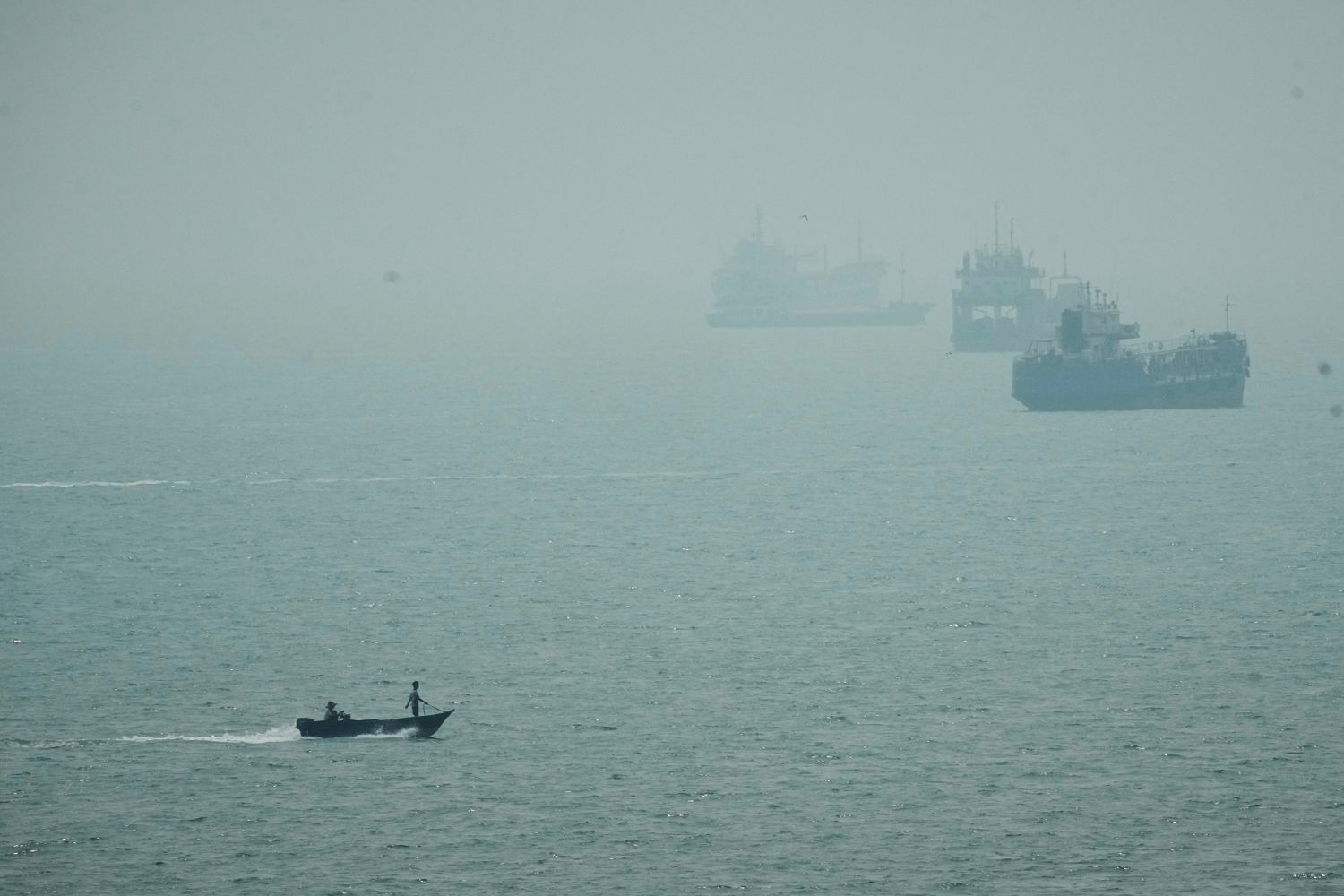
This is the central anxiety of modern maritime security. The ocean is too big to police and too crowded to ignore. Thousands of tankers move through these narrow choke points every single day, carrying the invisible lifeblood of the global economy. When a hostile actor decides to weaponize that environment, the line between a routine commercial voyage and an act of war blurs into a terrifying ambiguity.
Imagine watching a silhouette detach itself from the dark, accelerating toward your hull with lethal purpose. You do not have the luxury of committee meetings. You have seconds.
The engagement itself was brief, violent, and absolute. When the warship's defensive systems and supporting air assets responded, the resulting strikes against the five Iranian tankers were not an escalation born of sudden aggression; they were the final, deafening punctuation mark to a provocation that left no other choice. Fire bloomed across the water, casting a lurid orange glare that chased the shadows from the waves for miles around.
For the crew watching from the rail, there is no sense of triumph in that fire. Only a profound, ringing silence that settles in after the ordnance stops falling. You smell the sulfur drifting on the offshore breeze. You look at the burning hulls and realize how thin the margin is between peace and catastrophe.
The geopolitical fallout of that single night will echo through capitals for months. Analysts on television will parse the rules of engagement, debate the threshold of proportionality, and speculate on the next diplomatic chess move. Markets will twitch. Oil prices will fluctuate by a few dollars a barrel, prompting suburban drivers to wince slightly at the pump.
Yet those abstractions miss the human core of the equation.
Every strategic maneuver, every sanction, every missile fired over a dark sea ultimately traces back to human beings caught in the machinery of history. The sailors who stood their ground in the Persian Gulf did not do so to move a geopolitical needle. They did it because they wanted to see tomorrow's sunrise.
The water eventually calms. The smoke drifts away, absorbed by the vast, uncaring atmosphere. But the horizon changes once you have seen it burn. It stays with you, a quiet reminder that the world we built on the edge of the abyss is held together by very little indeed.