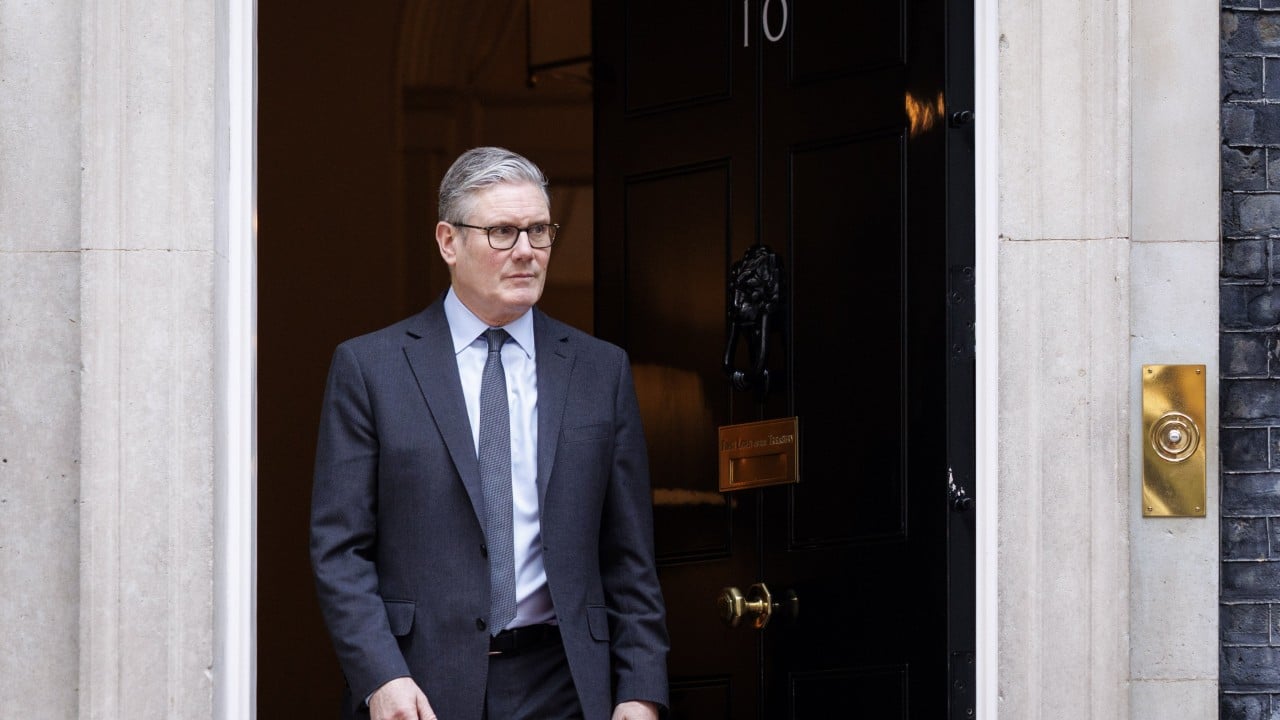
The tea in the Cabinet Room had likely gone cold long before the maps were rolled out. When the Prime Minister calls an emergency meeting as the sun sets over London, it isn’t for the sake of ceremony. It is because the math no longer adds up. While the rest of the country was settling into their evening routines—scrolling through phones, putting children to bed, or worrying about the rising cost of a weekly shop—Keir Starmer was staring at a set of variables that refuse to stay still.
The headlines will tell you this is about "geopolitical tension" and "macroeconomic shifts." Those are sterile words. They are words designed to hide the fact that a missile launch thousands of miles away can directly determine whether a pensioner in Manchester can afford to turn on the heating in October.
We are living through a moment where the distance between a war zone and a grocery aisle has collapsed to zero.
The Ghost in the Supply Chain
In the quiet corridors of Number 10, the conversation wasn't just about military strategy. It was about oil. It was about the Straits of Hormuz. It was about the terrifyingly fragile thread that connects the Middle East’s volatile geography to the British inflation rate.
Consider a hypothetical family in a suburb of Birmingham. Let’s call them the Taylors. They aren't following the intricacies of Iranian drone capabilities or the specific defensive posture of the Israeli Iron Dome. They are, however, looking at their banking app. They see that the "temporary" spike in fuel prices from two years ago never really went back down. They see that the cost of shipping a container from Asia—the container holding their new washing machine or their son’s birthday presents—is climbing again because ships have to take the long way around Africa to avoid a fight.
When Starmer sits down with his economic advisors, the Taylors are the invisible guests at the table. The government knows that the British public’s patience with "global headwinds" has worn paper-thin.
The reality is that the UK economy is currently a convalescent. It is a patient just beginning to walk again after a long, grueling illness. A flare-up in the Middle East isn't just a news story; it’s a potential relapse. If Iran moves from rhetoric to a sustained blockade or a full-scale regional conflict, the global price of Brent Crude doesn't just "nudge" upward. It leaps. And when oil leaps, everything—from the plastic in your toothbrush to the lettuce in your fridge—follows suit.
The Weight of the Red Folder
There is a specific kind of silence that descends on a room when the Briefing Book is opened. It’s a heavy, physical thing. This emergency meeting was triggered by the realization that the UK cannot simply "wait and see" what happens between Tehran and Tel Aviv. The stakes are too high for passivity.
The government is currently trying to balance a very delicate checkbook. They’ve promised growth. They’ve promised stability. But stability is a luxury in a world where a single tactical miscalculation in the Golan Heights can wipe out a year’s worth of Treasury projections.
I remember talking to a former civil servant who worked through the 1970s oil crisis. He described the feeling of watching the dials spin out of control. You can pass all the legislation you want, you can give all the speeches you like, but you cannot legislate away the price of a barrel of oil if the tankers stop moving. That is the nightmare scenario haunting the current administration. They are trying to build a fortress out of sand while the tide is coming in.
Markets Don't Have Hearts, But They Have Nerves
The City of London reacted to the news of the meeting with its characteristic, cold-blooded twitchiness. Traders aren't looking at the morality of war; they are looking at the volatility index.
Gold goes up. The pound gets nervous.
This isn't just numbers on a Bloomberg terminal. This is the collective anxiety of millions of people’s pension funds. When the markets "price in" a war, they are effectively betting on how much poorer you are going to be in six months. Starmer’s task is to convince those markets—and the British public—that there is a hand on the tiller.
But how do you project calm when the variables are controlled by people who don't care about your interest rates?
The meeting was about contingency. It was about asking the hard questions that nobody wants to hear the answers to. Do we have enough gas in storage? How quickly can we pivot our trade routes? If the energy price cap spikes again, what is the "Break Glass in Case of Emergency" plan for the most vulnerable?
The Invisible Stakes
It is easy to get lost in the jargon of "fiscal responsibility" and "diplomatic de-escalation." But if you peel back the layers, this is a story about vulnerability.
We like to think of our modern lives as self-contained. We click a button, and a package arrives. We flip a switch, and the light comes on. We fill the tank, and the car moves. We have spent decades building a world that feels "seamless"—to use a word I’ve grown to loathe because it is a lie. Nothing is seamless. Everything is seamed, stitched, and bolted together by a series of precarious global agreements and aging infrastructure.
The meeting at Downing Street was an admission that the seams are showing.
There is a profound sense of exhaustion in the UK. People are tired of being resilient. They are tired of "once-in-a-generation" crises happening every three years. The Prime Minister knows this. He knows that his political capital is tied directly to the price of a loaf of bread. If he can’t insulate the British economy from the fires in the Middle East, the "change" he promised will feel like a cruel joke to the people standing in the checkout line.
The Long Shadow of the Afternoon
As the meeting broke up and the ministers emerged into the crisp night air, the cameras caught the usual grim expressions. There were no grand pronouncements. There were no "Mission Accomplished" banners. There was only the quiet, grinding work of trying to prepare for the worst while hoping for a miracle.
The sun rose the next morning over a London that looked exactly the same as it did the day before. The buses ran. The coffee shops opened. The commuters shuffled toward the Underground. But underneath the surface, the gears were shifting.
We often think of history as a series of loud bangs—explosions, declarations, revolutions. But most of the time, history is made in quiet rooms by tired people looking at spreadsheets and realizing that the world they knew yesterday is gone.
The emergency meeting wasn't just a response to a threat. It was a recognition of a new reality. We are no longer spectators to global conflict; we are participants in its economic fallout. The distance between the front line and the front door has vanished.
The lights are still on for now. But in the halls of power, they are checking the fuses, watching the horizon, and waiting to see if the sparks in the distance turn into a conflagration that no amount of policy can extinguish.
The shadows on Downing Street have never looked quite this long.


