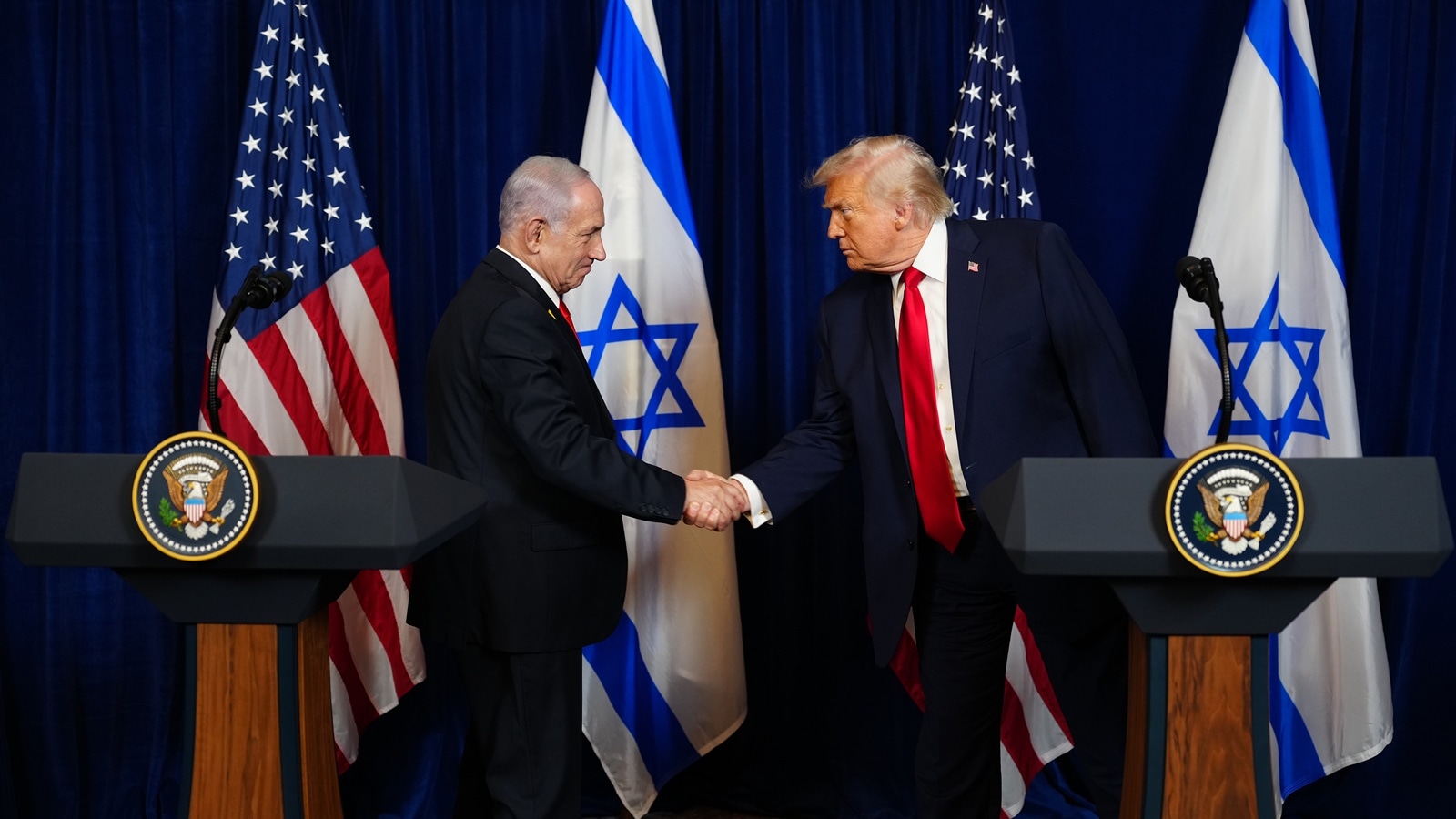
The Situation Room in the basement of the West Wing is soundproof, but it cannot muffle the weight of a decision that could reset the clock on global peace. On that humid evening in June, the air inside felt recycled, heavy with the scent of expensive wool and cold coffee. It was here that a President sat at the head of a mahogany table, looking at a digital map of the Iranian coastline.
One order. That was all it would take.
To understand how the United States arrived at the precipice of a full-scale war with Iran, you have to look past the official press releases and the dry chronologies of troop movements. You have to look at the friction between the men in that room—the intelligence officers who see the world in shades of gray, and a leader who saw it in black and white.
The Paper Fortress
For months, the CIA had been building a case of caution. They aren't in the business of peace, but they are in the business of reality. Their reports were thick, dense with intercepted signals and grainy satellite imagery. They argued that while Tehran was provocative, it was also predictable. They saw a nation reacting to the tightening noose of economic sanctions, lashing out like a cornered animal, but not yet ready to commit suicide by starting a war with a superpower.
But the President wasn't interested in the nuances of Persian psychology. He wanted a win. A big one.
Imagine a chess player who decides to flip the board because he’s tired of the slow grind of the opening gambit. That was the atmosphere in the Oval Office. The advisors who had spent decades studying the Middle East were suddenly treated like interns. Their data was dismissed as "deep state" interference. The intelligence community, led by Gina Haspel, found themselves shouting into a vacuum.
The disconnect was visceral. On one side, you had the analysts who knew that a strike on Iranian soil would ignite a regional firestorm, drawing in Hezbollah, Iraqi militias, and potentially Russian interests. On the other, you had a small circle of hawks who believed that a "short, sharp shock" would make the Ayatollahs fold.
The Vice President’s Shadow
Mike Pence is a man of deliberate silence. Usually, he is the loyalist’s loyalist, the steady hand behind the erratic throne. But even he felt the tectonic plates shifting in a dangerous direction.
Reports from that period suggest a rare, muffled discord. Pence, along with Secretary of State Mike Pompeo, had spent years advocating for "Maximum Pressure." They wanted to starve the Iranian regime of resources. However, the Vice President knew the difference between a stranglehold and a gunshot. As the planning for the strike progressed, even the most ardent hawks began to look at the exit signs. They realized that once the missiles left the tubes, there was no "undo" button.
The plan was specific: hit three sites. Radar stations. Missile batteries. It was retaliation for the downing of a high-altitude Global Hawk drone—a piece of hardware worth $130 million but carrying no human soul.
The President’s own military leadership, including General Joseph Dunford, then-Chairman of the Joint Chiefs of Staff, raised the alarm. They weren't questioning the legality; they were questioning the math. In the cold calculus of war, you have to account for the "proportionality."
Ten Minutes to Impact
The ships were in position. The pilots were in their cockpits, the hum of the engines a steady vibration through their flight suits. The targets were locked.
Inside the White House, the tension had reached a screaming point. This wasn't a policy debate anymore; it was a countdown. The President asked a single question that should have been asked hours, if not weeks, earlier.
"How many will die?"
A general answered. "One hundred and fifty, sir."
Silence.
In the world of geopolitics, 150 lives is a rounding error. It is a tragedy, but in the context of a potential nuclear-aspirant enemy, it is often viewed as a necessary cost. But for a man who views himself as a deal-maker rather than a war-maker, that number hit a nerve.
He called it off.
Ten minutes. That was the margin between a headline about a skirmish and a century defined by a new Middle Eastern quagmire. The planes turned back. The missiles remained in their silos.
The Invisible Stakes
We often talk about foreign policy as if it’s a game of Risk played on a board in a basement. We forget that the "assets" are 19-year-olds from Ohio and 19-year-olds from Isfahan.
The real story of the road to war wasn't the drone that was shot down. It was the complete breakdown of the American advisory system. When a President stops listening to his intelligence agencies—the very people paid to be the eyes and ears of the Republic—the nation begins to walk blind.
The CIA was ignored not because their data was wrong, but because their data was inconvenient. It didn’t fit the narrative of a quick, easy victory. The Vice President’s caution was sidelined because it looked like weakness in a room that only valued strength.
This friction created a vacuum where logic died. It led to a moment where the most powerful military in human history was operating on gut instinct rather than strategic foresight. We saw a commander-in-chief who was willing to bypass every check and balance in the national security apparatus, only to be stopped by his own sudden realization of the human cost.
It was a lucky escape. But luck is a terrible foundation for a global superpower.
The Aftermath of a Non-Event
The day after the strike was cancelled, the world woke up to a strange quiet. To the average person, it was just another Friday. They went to work, bought their coffee, and complained about the weather. They didn't know that the night before, the world had narrowly avoided a pivot point that would have changed the trajectory of their lives.
But the damage was done. The relationship between the White House and the intelligence community was fractured beyond immediate repair. Trust, once broken, doesn't just grow back. The analysts at the CIA learned that their expertise was a secondary concern. The allies of the United States learned that the "red lines" were drawn in sand and erased by the tide of a single man’s mood.
War is often portrayed as a grand, inevitable thing—the result of vast historical forces clashing. But the reality is much smaller. It’s a group of tired people in a basement. It’s a printed report sitting unread on a desk. It’s the ego of a leader clashing with the grim warnings of his subordinates.
We think of peace as the natural state of things, but it is actually a fragile construct held together by the willingness of powerful people to listen to things they don't want to hear. On that night in June, the system failed. The only thing that saved the peace was a last-minute change of heart, a moment of human empathy that cut through the noise of the war room.
The lights stayed on. The missiles stayed down. But the ghost of that decision still haunts the halls of power, a reminder that the road to war is paved with the silence of the experts and the loud, unchecked confidence of the few.
The map on the table is still there. The targets haven't moved. And somewhere in a soundproof room, the coffee is still getting cold.