Backstage at a massive stadium tour, silence usually sounds like anticipation. It smells like hot electronics, stale coffee, and hairspray. It hums with the low-frequency vibration of thirty thousand souls stamping their feet against concrete bleachers outside. But on a Tuesday evening that felt entirely too heavy, the silence in the green room was something else entirely. It was the sound of a contract being folded into a pocket. It was the sound of loyalty outweighing a paycheck.
Four opening acts, walking away into the dark. For another perspective, check out: this related article.
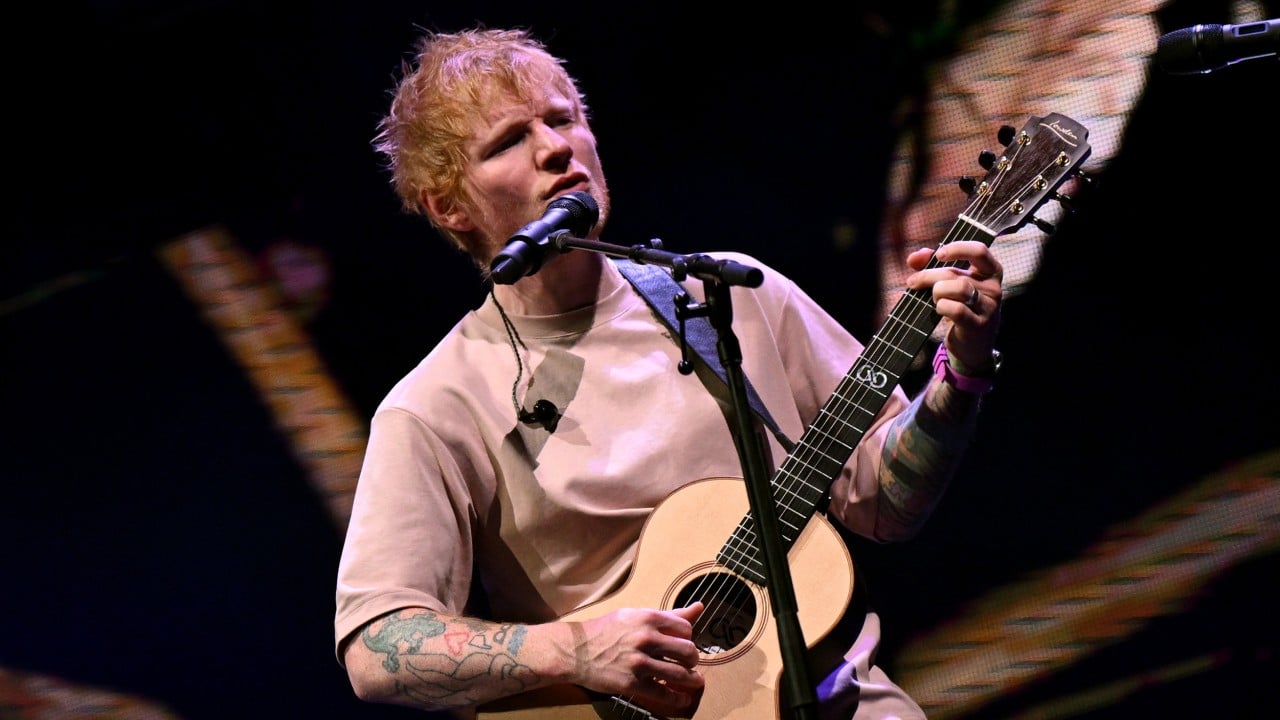
Ed Sheeran is not merely a pop star; he is an institution of arithmetic and acoustic charm, a man who built a global empire out of a loop pedal, a battered guitar, and a disarming everyman smile. Yet, the machinery of modern stadium pop can be a fragile ecosystem. When Macklemore found himself at the center of a sudden industry tempest—sparked by controversies over political stances, public statements, and the rapid-fire cancellation of bookings—the shockwaves did not stop at the edge of the Seattle rapper's own tour dates. They rippled outward, catching fire in the collaborative subcultures of live performance, eventually forcing supporting artists to make a choice that accountants never want musicians to make: stand by a colleague or keep the lights on.
Support acts do not typically walk away from stadium tours. You do not abandon the marquee without a profound, burning reason. To open for Sheeran is to play before oceans of upturned faces in every time zone on Earth. It is exposure that converts into streaming royalties, editorial playlist placement, and career longevity. It is security. Further insight on this matter has been provided by Variety.
And yet, four separate acts made the calculation and found the security wanting.
To understand why, we have to look past the press releases and the frantic PR damage control. We have to look at how modern touring has transformed into an interconnected web of corporate logistics, ideological litmus tests, and raw human friction. A tour is not just a stage and some lights. It is a traveling village where social consensus matters more than setlists. When a headliner's orbit becomes politically radioactive, the fallout reaches every dressing room down the corridor.
Consider the anatomy of a support slot. When an artist agrees to open for a titan like Sheeran, they are entering a silent social contract. They agree to share the audience, to warm up the room, and to exist within the moral framework of the tour's brand. But what happens when that framework cracks? What happens when a separate controversy involving a peer—in this case, Macklemore—forces a wedge through the tight-knit community of touring musicians?
The four acts who pulled their support did not do so in a vacuum. They acted out of a visceral sense of solidarity, a belief that art cannot be cleanly separated from the artist, and that association is a form of endorsement. Whether one agrees with the specific catalysts of the boycott is almost secondary to the reality of the gesture. They looked at the stadium lights, they looked at the contracts, and they chose the exit.
Ed Sheeran’s team moved with the swift, practiced efficiency of a multinational corporation. Replacement acts were scouted, phone lines burned up, and new signatures were secured before the morning coffee had gone cold. In the upper echelons of pop music, the show must go on with terrifying mechanical precision. An empty slot is a liability. A silent stage is a financial hemorrhage.
Yet, the show that goes on is subtly altered.
Fans in the front rows will still scream the lyrics to Shape of You. They will still sway to Thinking Out Loud. The loop pedal will still loop. But the invisible fabric holding the enterprise together has been frayed. The stage is no longer just a platform for music; it is a monument to a fracture.
We live in an era where neutrality has become an endangered posture. Audiences demand purity, sponsors demand safety, and artists are constantly pressed to prove their moral alignment on the fly. The old rock-and-roll ethos of chaos and rebellion has been replaced by an intricate game of risk management, where a single misspoken word or a controversial association can destabilize a hundred-million-dollar operation.
When support acts walk, they are casting a vote in a referendum that happens entirely offstage. They are saying that the money, the exposure, and the stadiums are not worth the erosion of identity. They are reminding us that behind the global branding and the Spotify metrics, musicians are still human beings capable of drawing a line in the dust.
The stadium lights will come up tomorrow night. The roar of the crowd will wash over the barricades like warm surf. But if you listen closely, beneath the bass notes and the applause, there is the lingering echo of doors closing in the dark, and a quiet reminder that even the biggest pop star on the planet cannot outrun the consequences of a divided room.