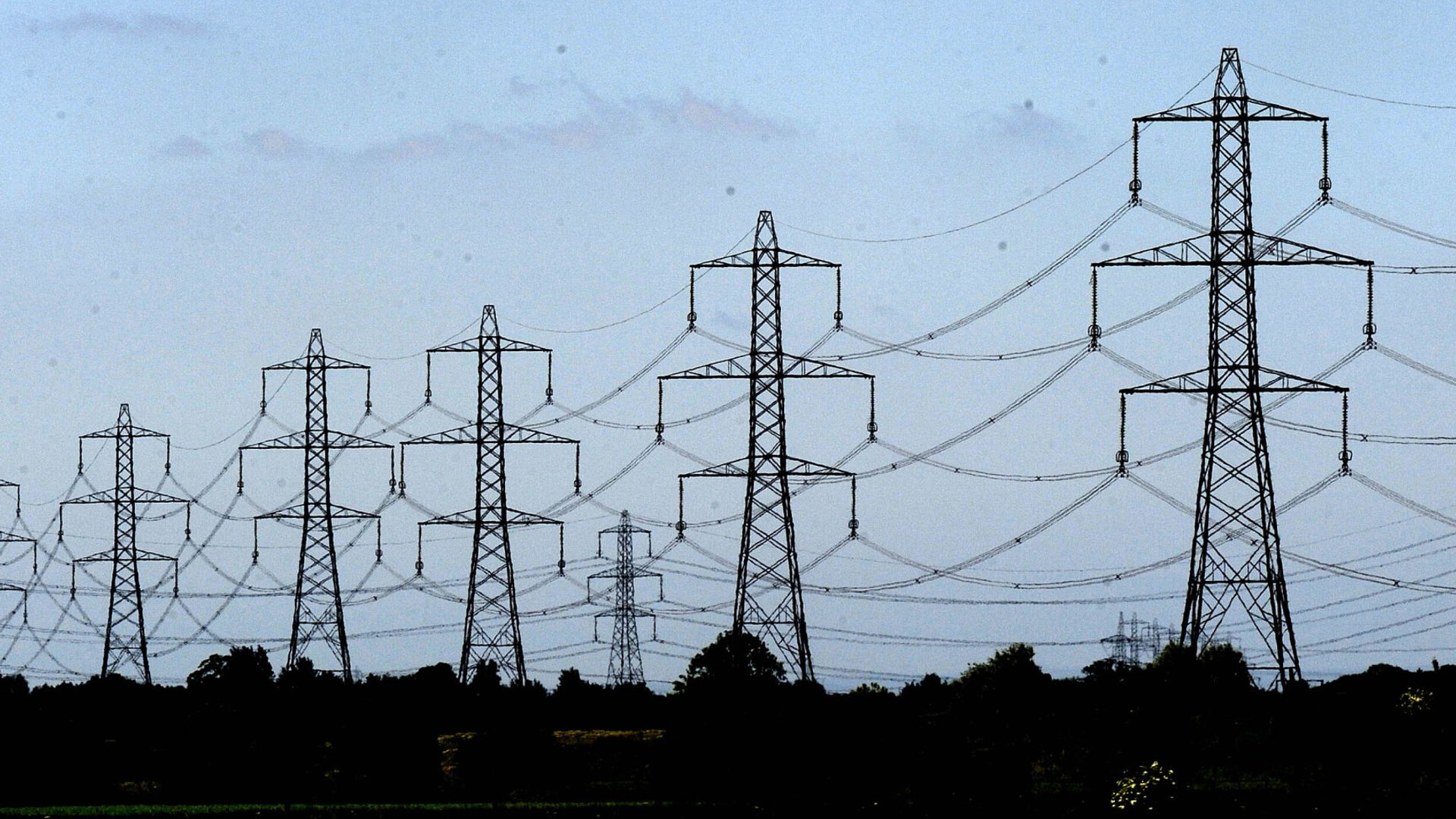
The tea in the mug is lukewarm. It is 3:14 AM. In a concrete facility somewhere in the English midlands, a shift supervisor named David stares at a wall of monitors. The screens display a pulsing, interconnected web of green lines representing the United Kingdom’s high-voltage electricity transmission network. For twenty years, David’s job has been boring. In the energy sector, boring is the gold standard. Boring means the hum of the transformers is steady, the frequency is locked at 50 Hertz, and millions of kettles can click on simultaneously during the commercial break of a football match without anyone experiencing a flicker.
Then, a low-frequency acoustic alarm begins to chime. It is not the screaming siren of a catastrophic system failure. It is a persistent, mechanical chirp.
On a perimeter camera feed, isolated in the top-right corner of his workstation, David sees it. A speck. A tiny, four-bladed silhouette hovering just above the razor wire of a critical substation. It looks like a toy. It looks like the gadget a teenager might receive for Christmas to fly over a local park.
But this drone is not filming a sunset. It carries a small, sophisticated payload designed to disrupt electromagnetic fields, or perhaps a simple spool of carbon-fiber wire meant to be dropped directly onto the exposed busbars below.
Within ninety seconds, three more specks appear on the monitor. They move with an eerie, coordinated autonomy. They do not need a pilot holding a radio controller in a nearby field; they are navigating via pre-programmed GPS coordinates, silent and completely indifferent to the security guards on the ground.
David reaches for the telephone. His hand is sweating. He realizes, with a sudden cold weight in his stomach, that the multi-million-pound physical security barriers, the biometric locks, and the concrete walls around him were built to keep out humans on foot. They are entirely useless against an intrusion from the sky.
The Fragile Illusion of the Switch
We live our lives under the comforting myth of absolute permanence. You flick a plastic switch on a wall, and light floods the room. You plug a rectangular brick into an outlet, and your smartphone drinks up data. We treat electricity like oxygen—invisible, infinite, and guaranteed.
The reality is radically different. The modern energy grid is the largest, most complex machine ever built by human hands, and it exists in a state of perpetual, delicate balance. Power generated at offshore wind farms in the North Sea and nuclear plants on the coast must be consumed the exact millisecond it is produced. There is no massive national warehouse where electricity sits on a shelf waiting for you to need it.
Because the system is so highly tuned, it is shockingly vulnerable to targeted disruptions.
When intelligence agencies and defense analysts warn that hostile actors could use commercial drones to trigger widespread blackouts across the UK, they are not talking about a futuristic, Hollywood-style sci-fi war. They are talking about cheap, off-the-shelf technology being weaponized to exploit a structural vulnerability that has existed for decades.
Consider the mathematics of vulnerability. A modern electrical substation can cost tens of millions of pounds to construct. It houses massive transformers that take months, sometimes years, to manufacture and ship.
A consumer drone capable of carrying a two-kilogram payload can be purchased online for less than the price of a mid-range laptop.
If a hostile state or a sophisticated criminal group launches a swarm of twenty drones toward a cluster of critical distribution nodes, the defensive math falls apart. Even if security teams manage to spot them, how do they stop them? You cannot easily shoot a small, fast-moving object out of the sky with conventional firearms without risking catastrophic ricochets into the high-voltage equipment you are trying to protect.
The threat is not merely theoretical. Security officials have quietly tracked a sharp increase in unexplained drone sightings near sensitive UK infrastructure over the past several years. These are not recreational hobbyists losing control of their devices. These are reconnaissance missions. They are mapping the blind spots in radar coverage, testing response times, and probing the digital perimeter of our physical world.
The Anatomy of Darkness
To understand what a drone-induced blackout actually looks like, we have to look past the immediate inconvenience of unlit rooms. The human mind struggles to comprehend cascading failures. We think of a power cut as a localized pause—a temporary return to candlelight and board games.
The truth is far sharper.
If a coordinated drone strike takes out three key substations simultaneously, the grid experiences what engineers call a voltage collapse. The automated safety systems, designed to protect the rest of the network from frying, will instantly trip. Circuits snap shut.
Within minutes, the darkness expands.
- The First Hour: Mobile phone masts, stripped of their primary power source, switch over to backup batteries. These batteries are designed to last for a few hours at most. As people flood the network to call loved ones, the bandwidth chokes. The bars on your screen vanish. The digital tether connecting you to information is severed.
- The Fourth Hour: Water treatment facilities rely heavily on electric pumps to move clean water through underground networks and clear waste. Without power, water pressure drops. In high-rise apartment buildings, the taps dry up almost immediately. The sewage systems begin to back up.
- The Twelfth Hour: Refrigeration systems at major supermarket distribution centers fail. The cold chain, which keeps millions of pounds worth of food from spoiling, breaks down. Transport links freeze as electric trains sit abandoned on tracks and traffic lights remain dead, turning major intersections into gridlocked mazes of metal.
The modern city is about three days of electricity away from total paralysis. We are entirely dependent on a system that can be compromised by a device that fits inside a backpack.
[Substation Failure] ──> [Grid Instability] ──> [Automated Safety Trips] ──> [Cascading Blackout]
                                                                                   │
    ┌───────────────────────────────┬───────────────────────────────┐              v
    v                               v                               v        [Total System
[Communications Collapse]   [Water Pump Failures]       [Supply Chain Halt]     Paralysis]
This vulnerability is compounded by the shift toward renewable energy. While the transition to wind and solar is vital for the planet, it changes the physics of the grid. Traditional coal and gas plants utilized massive, heavy spinning turbines that possessed natural mechanical inertia. This inertia acted as a giant shock absorber; if something went wrong elsewhere on the network, the heavy spinning metal bought the system precious seconds to recover.
Modern renewable energy systems connect to the grid via digital inverters. They lack that heavy, physical momentum. The digital grid moves faster, but it also falls faster. When it is hit, it reacts with terrifying speed.
The Invisible Battle for the Skies
Why has this happened? How did we build an infrastructure so vital yet so exposed?
The answer lies in a fundamental human blind spot: we build for the threats we can see. For the last half-century, protecting an infrastructure asset meant building a stronger fence, installing thicker glass, and placing a heavier lock on the gate. The sky was assumed to be safe, a neutral zone policed by geography and the sheer difficulty of aviation.
Technology democratized the air before we figured out how to defend it.
The drones being used in modern asymmetric conflicts are not reliant on vulnerable civilian satellite signals. They use optical navigation systems that scan the terrain below them, matching the physical landscape to onboard digital maps. They are immune to traditional electronic jamming. If you cut their connection to the operator, they do not crash; they simply continue their mission autonomously.
Defending against this requires a complete rewiring of how we perceive national security. It means installing automated, short-range radar systems at every critical node in the country. It means deploying directed-energy weapons—lasers and high-powered microwave emitters—that can fry the internal circuitry of an incoming drone in milliseconds without damaging the surrounding transformers.
But installing this level of defense across thousands of miles of pylons and hundreds of substations is a monumental financial and logistical hurdle. It takes years. The technology of offense, meanwhile, evolves every single month.
The Weight of the Unseen
Back in the control room, the mechanical chirping stops. The speck on David’s monitor screen changes direction, turning sharply to the west, away from the substation, disappearing into the pre-dawn mist as quickly as it arrived.
It was another test. A dry run.
David lets out a breath he didn't realize he was holding. He looks at his hands, still resting on the desk, and then looks back at the green lines on the screen. The grid is stable. The frequency is holding at exactly 50 Hertz. Outside, the city is beginning to wake up, millions of people reaching out in the dark to turn on their kettles, entirely unaware of how close the silence came.