The air in Punta Cana usually tastes like salt, roasted coffee, and the sweet, heavy promise of absolute escape. It is a sensory curtain that drops the moment you step off the plane, whispering that nothing bad can happen here. For years, the major resorts of the Dominican Republic have sold this exact illusion. They manufacture a seamless, frictionless reality where the most stressful decision of your day is choosing between the infinity pool and the beach.
Then comes the smell of burning thatch.
It starts small. A faint, acrid prickle at the back of the throat that doesn’t belong in a five-star eco-paradise. You tell yourself it’s just a beachside barbecue or a controlled clearing in the nearby hills. But when the sky turns the color of a bruised plum at three o'clock in the morning, the illusion breaks.
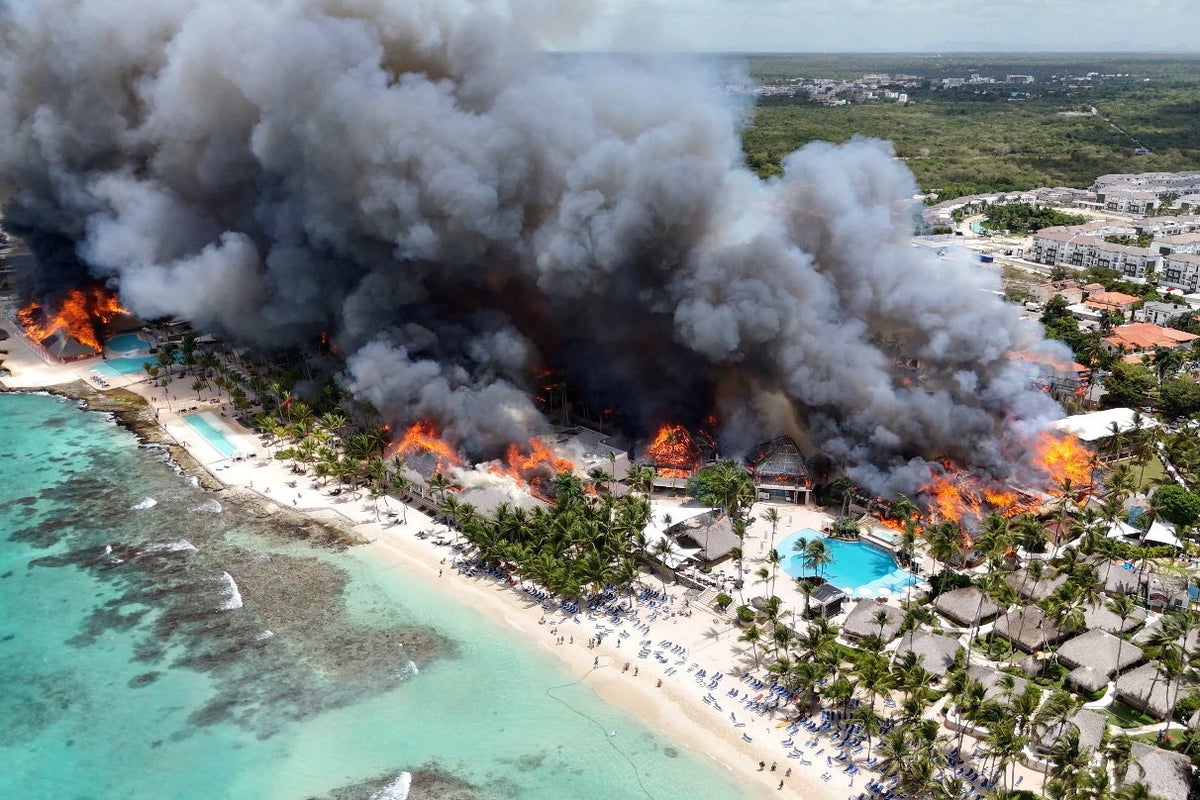
When a massive fire tore through a luxury resort complex in the eastern region of the Dominican Republic, it didn't just destroy millions of dollars of premium real estate. It systematically dismantled the unwritten contract between the modern traveler and the hospitality industry. Nearly 1,700 tourists found themselves abruptly ejected from a highly curated dreamscape into a raw, terrifying lesson in survival.
They were left standing on the sand in their pajamas, watching twenty-foot flames swallow their passports, their flight itineraries, and their peace of mind.
The Anatomy of an Overhead Crisis
To understand how quickly paradise can turn into a trap, you have to look at how these mega-resorts are built. The very aesthetic that draws us to the Caribbean—the gorgeous, sweeping palapa roofs made of dried palm fronds—is an architectural tinderbox.
Imagine a series of massive, open-air structures designed to capture the ocean breeze. They are beautiful. They are traditional. They are also, structurally speaking, a chimney system waiting for a spark.
When the fire ignited in the main pavilion of the resort, it didn't crawl. It sprinted. The ocean wind, normally the resort’s greatest asset, became an accelerant, driving the flames across the interconnected roofs of the lobby, the restaurants, and the guest wings. Within minutes, the central hub of the property was entirely engulfed.
Consider what happens next to the human brain in this scenario.
You are asleep in a room you've only occupied for three days. The layout is unfamiliar. The lighting is low. When the alarms scream, your internal map fails. This is the hidden friction of travel safety. In our own homes, we can navigate to the exit blindfolded. In a foreign resort spanning dozens of acres of manicured gardens, winding paths, and identical-looking villas, evacuation is a complex maze.
Local emergency dispatchers received the first frantic calls as the smoke began to blanket the guest quarters. Dictating chaos over a crackling radio line, the emergency response units from Higüey and Punta Cana mobilized. But a resort built for isolation is, by definition, difficult to access quickly with heavy fire apparatus. The long, winding driveways designed to keep the noise of the highway at bay now acted as bottlenecks for incoming fire trucks.
When the Safety Net Vanishes
There is a specific vulnerability that comes with being an international tourist during a catastrophe. You are entirely dependent on a system you do not understand.
When the power cut out across the complex, the high-tech amenities vanished. The electronic keycards became useless pieces of plastic. The digital safes holding thousands of dollars in emergency cash, credit cards, and legal identification became impenetrable steel boxes locked inside burning rooms.
For the 1,700 guests fleeing toward the ocean, the immediate crisis wasn't just the heat at their backs; it was the sudden erasure of their identities. Without a passport, you are an administrative ghost. You cannot easily board a plane, check into a different hotel, or prove who you are to your embassy.
As the sun began to rise over the Dominican coastline, the scene on the beach looked less like a vacation and more like a displacement camp. Families huddled under beach towels, watching the black smoke obscure the sunrise. Toddlers slept on lounge chairs while parents frantically tried to find a cellular signal to contact anxious relatives back home.
The local civil defense forces and resort staff worked under immense pressure to catalog the survivors. When dealing with a shifting population of international travelers, simply accounting for every individual is an logistical nightmare. Guests speak different languages, some are on excursions, others are sleeping off jet lag. The simple question—is everyone out?—takes hours of agonizing cross-referencing to answer.
Astonishingly, despite the speed and ferocity of the blaze, early reports indicated no fatalities. It was a miracle of timing and rapid, ad-hoc coordination by the ground staff who ran from door to door, banging on wood, shouting instructions in Spanish, English, and French. They became the human barrier between a property disaster and a mass tragedy.
The True Cost of the All-Inclusive Promise
The aftermath of an event like this reveals the massive, invisible machinery of the global travel industry. Long after the embers are extinguished by the local fire brigades, a secondary, bureaucratic battle begins.
A vacation is not just a physical trip; it is a complex financial web of airlines, third-party booking agencies, travel insurance providers, and corporate hospitality conglomerates. When a resort burns to the ground, that web tangles instantly.
Who is responsible for the stranded traveler?
The resort group scrambled to relocate the displaced guests to sister properties along the coast. But the peak travel season means beds are already scarce. Tourism-dependent economies operate on razor-thin margins of vacancy. Absorbing nearly two thousand people simultaneously into neighboring hotels is like trying to pour a gallon of water into a pint glass.
Then there is the psychological fallout.
The travel industry spends billions of dollars ensuring that you never have to think about risk. They sell a profound sense of security. But when that security is broken so visibly, the psychological recovery takes far longer than the physical rebuild of a lobby. The next time those travelers hear a loud noise in the night, or smell a faint hint of smoke from a restaurant kitchen, the phantom panic will return.
The Horizon Beyond the Ash
By midday, the fire was contained, leaving behind a skeletal landscape of charred concrete pillars and blackened metal beams where a tropical sanctuary had stood just twenty-four hours prior. The smoke gradually cleared, revealing the sparkling, indifferent blue of the Caribbean Sea just beyond the wreckage.
The tourists were eventually bused away, transported to temporary lodgings, emergency consulates, and chaotic airport terminals. They left behind their luggage, their clothes, and the curated memories they had paid thousands of dollars to collect.
We travel because we want to believe that elsewhere exists—a place where the rules of ordinary, messy life don't apply. We buy the ticket to buy the peace. But as the fleets of buses rolled away from the ruined resort, the lesson left behind in the ash was unmistakable. Paradise is always a temporary construction, built on land that remembers exactly how to burn.