The ink was already dry on the hall tickets. In thousands of apartments across Dubai, Doha, and Kuwait City, the ritual had reached its fever pitch. Sharp HB pencils lay in neat rows. Clear plastic pouches—the mandatory transparency of the examination hall—held nothing but a ruler, an eraser, and the weight of a decade of expectations.
For a Grade 12 student under the Central Board of Secondary Education (CBSE), the "Boards" aren't just an exam. They are a secular pilgrimage. They represent the narrow gate through which one must pass to reach university, to justify a father’s long hours in a glass tower, or to fulfill a mother’s dreams of a medical degree in Bangalore or London. Recently making news in related news: The Strait of Hormuz Peace Myth Why Global Markets Crave Tension Not Solutions.
Then, the screens flickered.
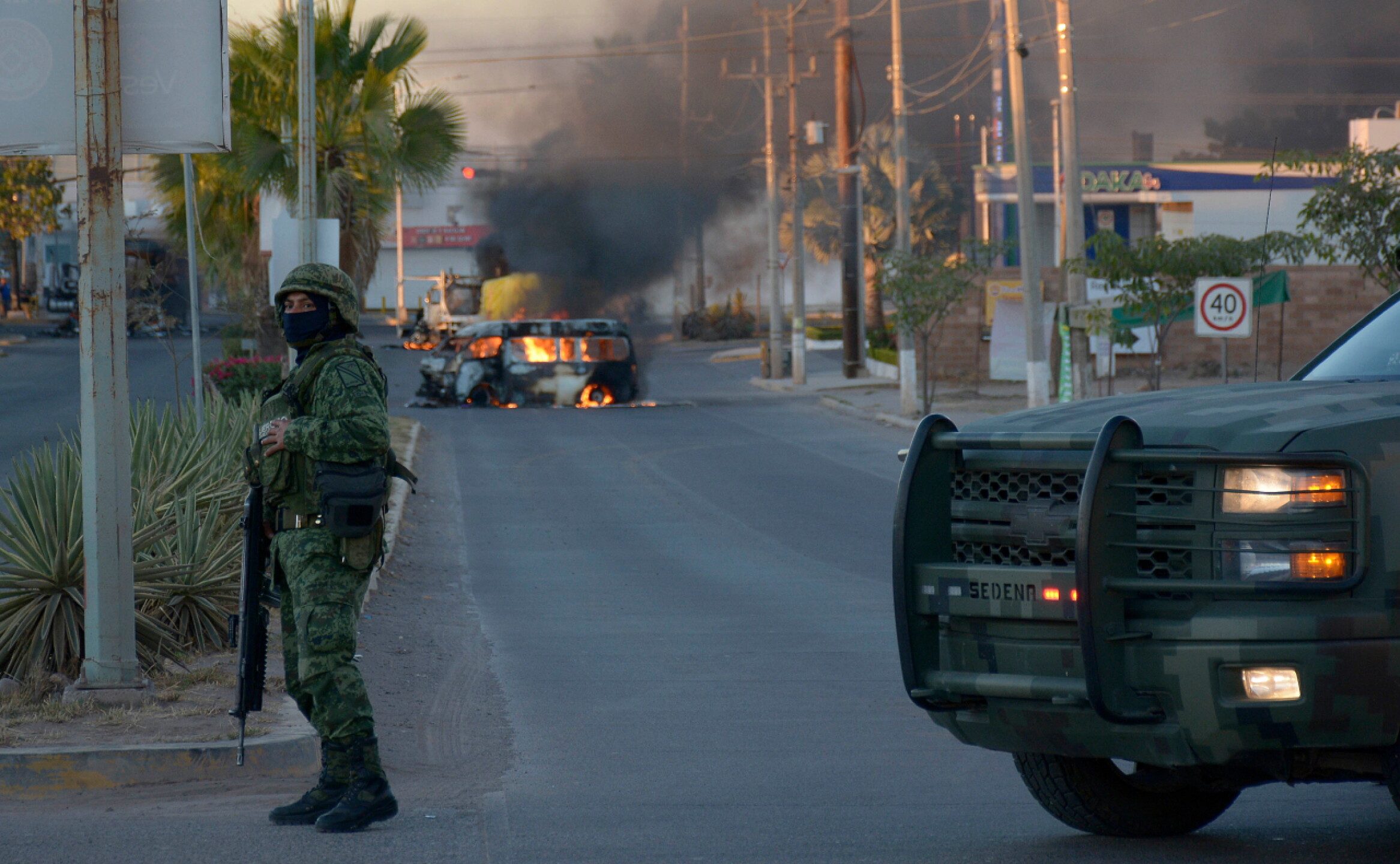
The news didn't come as a formal letter at first. It arrived as a frantic vibration in WhatsApp groups, a headline scrolling across a news feed, and finally, a somber notification from school principals. Due to the escalating regional conflict, the CBSE had made the unprecedented call to postpone the Class XII examinations across the Middle East. More details regarding the matter are explored by Reuters.
Safety, the officials said, was the priority. But for the seventeen-year-old staring at a chemistry textbook, "safety" is a ghost. The reality is the sudden, jarring silence of a momentum interrupted.
The Anatomy of a Stalled Dream
Imagine Sarah. She is a hypothetical composite of the twenty thousand students currently living in this limbo, but her anxiety is entirely real. For two years, Sarah has mapped her life in two-week increments. Her internal clock is tuned to the start time of 10:30 AM. She knows exactly how many minutes it takes to solve a calculus problem and how many sips of water she can afford before losing focus.
When an exam is postponed amid a geopolitical crisis, the logistical fallout is easy to quantify. You can measure the cost of reprinting papers or the difficulty of securing new venues. What you cannot measure is the "adrenal fatigue" of a teenager who was peaked for a performance that is no longer happening.
The biology of stress is unforgiving. When the body prepares for a massive challenge, it floods the system with cortisol and adrenaline. It sharpens the senses. It narrows the world down to the tip of a pen. To have that release valve screwed shut—to be told "not today, and we don't know when"—is a psychic shock.
Sarah’s textbook is still open. But the words on the page have lost their magnetic pull. They are just words again.
The Invisible Stakes of a Postponed Paper
The CBSE board exams are often criticized for their rigid memorization and high-stakes pressure. Yet, for millions of Indian families living in the Middle East, these exams are the great equalizer. They are the objective proof of merit, the ticket to a competitive college back home, or the scholarship to a university abroad.
A postponement is not a holiday.
It is a logistical nightmare for families who had already booked their summer flights home to visit grandparents. It is a terrifying delay for students who have university applications due in April, applications that require final grades to be confirmed. The delay in one corner of the world ripple-effects into an entire ecosystem of academic admissions.
But beyond the bureaucracy, there is a far more delicate human element at play.
The students in the Middle East are not just test-takers; they are observers of history. They see the same headlines their parents see. They hear the sirens and the geopolitical discussions that hum beneath the surface of every dinner table. The conflict isn't just a news cycle to them; it is the reason their room is now silent instead of filled with the scratching of a pen.
The Burden of the Waiting Room
Consider the shift in a household’s gravity when an exam is pushed back. The parents, who have also spent months in a state of hyper-vigilance, suddenly find themselves trying to navigate a vacuum.
A father in Sharjah, perhaps, who has been coming home early to ensure a quiet house for his son’s physics prep. A mother who has been curating a specific diet of brain-boosting almonds and low-sugar breakfasts. They are now the curators of a waiting room.
The tension in these homes is palpable. It is the sound of a clock ticking in a room where nobody is talking.
The board’s decision is fundamentally an act of care. No examination is worth a single life. In the hierarchy of human needs, physical safety will always sit at the very base of the pyramid. But for a student, the "hierarchy of needs" is often inverted. Their self-worth, their immediate future, and their identity are all tied to that 100-mark paper.
The CBSE has promised to announce the revised dates as soon as the situation stabilizes. Until then, the students are in a state of suspended animation.
The Resilience of the Diaspora
There is a specific kind of grit that comes with being an expatriate student. You are raised in one culture while studying a curriculum from another, all while living in a third. You are used to complexity. You are used to the idea that your life is subject to forces far beyond your control—visa regulations, oil prices, and now, the tides of war.
The students who are currently staring at their calendars in Dubai or Muscat or Riyadh are learning a lesson that no textbook can teach. They are learning about the fragility of plans. They are learning that intelligence is nothing without adaptability.
While the world watches the maps and the troop movements, Sarah and her peers are watching the "Latest News" section of a government website. They are rewriting their notes for the third time. They are trying to find the willpower to care about the Krebs cycle when the world feels like it is tilting on its axis.
The real story isn't the postponement itself. It is the resilience of the twenty thousand teenagers who will eventually walk into those halls. Whenever the date is finally set, they will sit down, they will take out their clear plastic pouches, and they will begin to write.
They will write as if their lives depend on it, because in the quiet, desperate logic of a seventeen-year-old in the Middle East, it still does.
The silence of the examination halls today is a heavy one. It is a silence filled with the echoes of a conflict that didn't ask for their permission to intervene. But eventually, the silence will be broken by the rhythmic, collective scratching of thousands of pens. That sound, more than any news headline, will be the true sign that the future has resumed its course.