The coffee shop in Kuwait City’s Sharq district usually hums with a predictable rhythm. Espresso machines hiss, the heavy scent of cardamom lingers in the humid air, and the chatter revolves around real estate or the blistering summer heat. But on a recent Tuesday night, the air felt different. It was heavy. Men and women kept their eyes glued to their phones, their faces illuminated by the cold blue light of breaking news alerts.
Outside, the sky was pitch black. No planes were landing. No planes were taking off.
For the average global citizen, airspace is an invisible concept. We look up, see a white condensation trail slicing through the blue, and think of vacations, business trips, or loved ones returning home. We assume the sky is a permanent highway, free and open to all. It is not. Airspace is a fragile sovereign border, a delicate ceiling made of international law and geometry. And when a region edges toward the brink of total war, that ceiling slams shut like a steel vault.
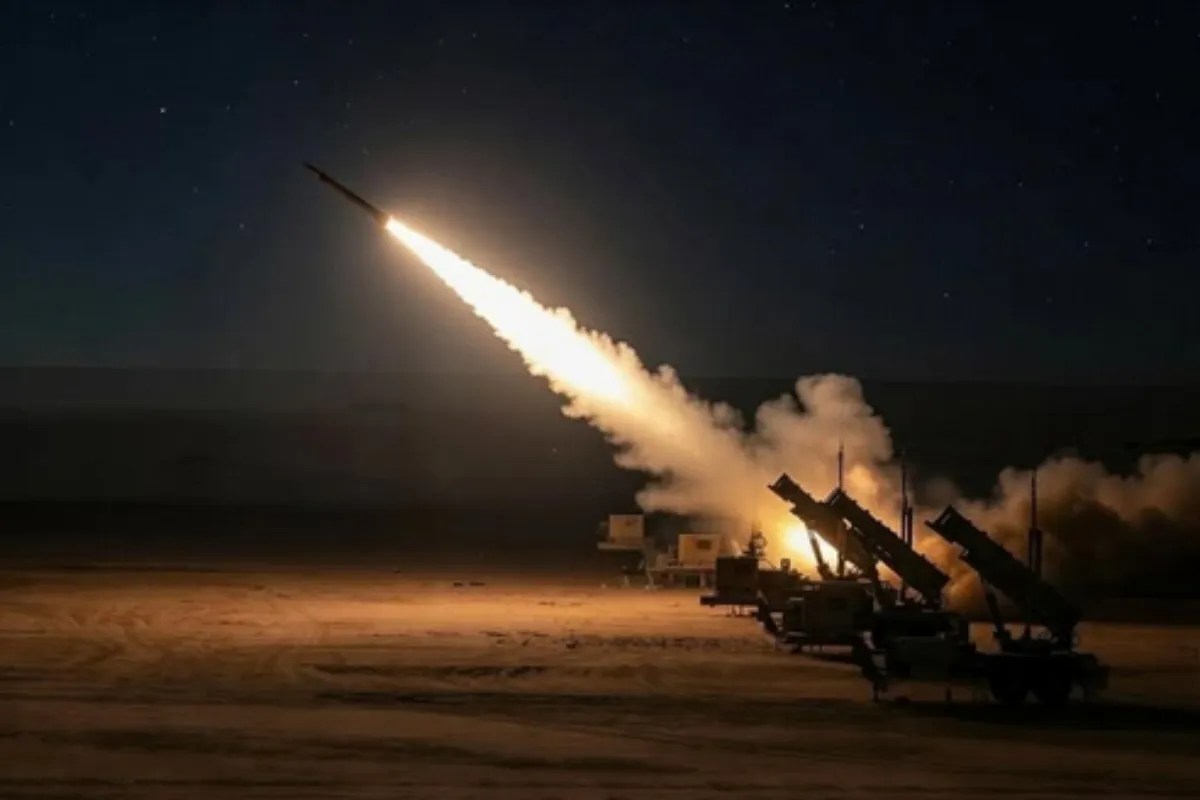
Kuwait made the decision quietly but with absolute urgency. As Iranian missiles and drones sliced through the night sky toward targets across the region, the small, strategically vital Gulf nation closed its airspace to all commercial traffic. Defensive measures were activated. Anti-air batteries spun into place, their radar systems sweeping the darkness, looking for anomalies.
To understand the weight of this moment, you have to look beyond the cold headlines of geopolitical friction. You have to look at the ground.
The Friction of a Sudden Silence
Picture a young family sitting in the departure lounge of Kuwait International Airport. Let us call the father Tariq. He is holding a sleepy four-year-old daughter on his shoulder, his pockets stuffed with boarding passes for a flight to London that will now never leave. He had spent months planning this trip, a brief escape from the grinding routine of daily life. Now, the departure boards flash an aggressive, uniform red. Cancelled. Cancelled. Cancelled.
The frustration in the terminal is palpable, but beneath the annoyance lies a deeper, colder current of fear. Why is the flight cancelled? Because the sky above them has become a potential highway for flying bombs.
When Iran and the United States lock horns, the world trembles. But the small nations nestled between them hold their breath. Kuwait, a country that still carries the generational scars of the 1990 invasion, understands better than most what happens when the machinery of war ignores borders. Closing the airspace is not merely an administrative headache for airlines; it is a profound declaration of vulnerability and self-defense.
The mechanics of a modern drone strike are terrifyingly precise yet inherently chaotic. A one-way attack drone, buzzing with the sound of a lawnmower engine, travels slowly but low to the ground. A ballistic missile tears through the upper atmosphere at hypersonic speeds. When these weapons are launched in salvos, the civilian aviation corridors that crisscross the Middle East become lethal traps. A commercial airliner is a massive, slow-moving radar target. In a sky filled with interceptor missiles and panic, a tragic misidentification is only a split-second mistake away.
Kuwait’s leadership knew this. They chose economic disruption over catastrophe.
The Economic Arteries of the Sky
Consider the sheer complexity of global flight paths. The airspace above the Gulf is one of the busiest crossroads on Earth, connecting Europe to Asia and Africa to the Americas. It is a aerial superhighway.
When a critical node like Kuwait shuts down, the ripple effect is instantaneous and massive. Imagine a stone thrown into a still pond. The ripples don't stop at the bank; they bounce back and distort the entire surface.
A flight from Frankfurt to Mumbai cannot simply take a detour without consequence. A detour means adding hours to the flight time. More hours mean burning tens of thousands of gallons of extra aviation fuel. Extra fuel means heavier planes, which requires offloading cargo or passengers to meet weight restrictions. The financial bleeding starts in the millions of dollars per hour, and it eventually trickles down to the consumer in the form of soaring ticket prices and disrupted supply chains.
But money is a secondary thought when the air defense sirens are primed.
The invisible stakes are psychological. For decades, the Gulf states have built a reputation as oases of stability, luxury, and hyper-modernity amidst a turbulent neighborhood. Skyscrapers touch the clouds, and world-class airlines offer unparalleled luxury. But a closed sky shatters that illusion of immunity. It reminds everyone, from foreign investors to local shopkeepers, that geography is destiny. You cannot relocate your country away from a flashpoint.
The Anatomy of an Alert
What does defensive action actually look like for a nation caught in the crossfire?
It begins in dark rooms filled with glowing green and blue monitors. Military personnel sit with headsets clamped to their ears, watching data points crawl across screens. Every blip is a question mark. Is that a flock of birds? A commercial airliner that ignored the grounding order? Or a low-flying suicide drone carrying dozens of kilograms of high explosives?
The stress in these command centers is suffocating. The operators know that a false positive means firing a multi-million-dollar interceptor missile at nothing, or worse, a civilian target. A false negative means a hostile payload hits a power plant, a water desalination facility, or a residential neighborhood.
Outside the command centers, on the coastal fringes and desert borders of Kuwait, the physical hardware of defense stands ready. Patriot missile batteries point their boxy noses toward the horizon. These systems are marvels of engineering, capable of tracking and destroying incoming targets traveling faster than the speed of sound. But they are a last line of defense. They are the shield you hold up when the sword is already swinging.
The closing of the airspace is the preventative strike against chaos. By clearing the sky of all civilian traffic, the military creates a clean canvas. If it moves, it is hostile. It simplifies the math of survival.
The Human Cost of Geography
The political analysts on international news networks talk about "force projection," "deterrence," and "strategic depth." These are bloodless terms designed to distance us from the reality of the situation.
The reality is an elderly woman in a suburban home outside Kuwait City, checking the seals on her windows because she remembers the smell of burning oil fields from her youth.
The reality is an expat worker from Kerala, sitting in a cramped dormitory, wondering if he should send his savings back home immediately in case the banks freeze, or if he will even have a job next week if the regional economy stalls.
The reality is the profound sense of isolation that comes when the world leaves you behind. When the planes stop flying to your country, you are effectively cut off from the global collective. The sky, which once felt like a bridge to everywhere, suddenly feels like a heavy wool blanket pulled over your head.
This is the true victory of conflict, even before a single shot is fired or a single building is destroyed. It holds entire populations hostage to anxiety. It alters the texture of daily life. It turns a simple trip to the grocery store or an evening walk by the Arabian Gulf into an exercise in hyper-vigilance. You find yourself listening closely to the rumble of distant engines, trying to distinguish between a heavy truck on the highway and the low drone of an incoming unmanned aerial vehicle.
The Mirage of Neutrality
For a long time, the smaller nations of the region believed they could navigate the stormy waters of US-Iran relations by remaining perfectly neutral, acting as mediators, and focusing on commerce. They built glitzy airports to welcome the world. They created logistics hubs to move the world's goods.
But neutrality is a luxury of peacetime.
When missiles fly, they do not recognize diplomatic immunity or geopolitical neutrality. Gravity and mechanics dictate their paths. If a missile suffers a guidance failure mid-flight, it falls wherever the laws of physics dictate. It does not care if the soil below belongs to a combatant or a peaceful bystander.
The action taken by Kuwait is a sobering reminder that in modern warfare, there are no true bystanders. The interconnected nature of our world means that an escalation between Washington and Tehran is felt instantly in the quiet boardrooms and residential quarters of the Gulf. The decision to seal the sky was an act of profound sovereignty, but it was also a confession of vulnerability. It was an admission that the storms of the region cannot be managed with words alone; sometimes, you simply have to close the shutters and pray the roof holds.
Back in the Sharq coffee shop, the espresso machine finally goes quiet as closing time approaches. The patrons step out into the warm night air. They look up, instinctively searching the darkness for a sign, a light, a movement. But there is nothing. The sky remains perfectly, terrifyingly empty, a vast expanse of silence waiting for the world to decide whether it will breathe again or burn.