The sirens start wailing long before the first shockwave hits. If you live in Kyiv, that sound is a grim rhythm of survival, marking another night where sleep becomes an impossible luxury. Recent overnight bombardments across Ukraine's capital once again targeted vital urban zones, leaving residential areas damaged and civilians injured, including young children caught in the crossfire of relentless ballistic strikes.
Air defense systems light up the horizon with tracer fire and bright secondary explosions, but interception debris frequently rains down on apartment blocks. When you track these waves of aerial assaults, a stark reality emerges. The strategy isn't just about military targets; it is a calculated pressure campaign designed to wear down civilian morale, cripple municipal infrastructure, and push the city's power and heating grids to their absolute limits as winter approaches.
What Target Analysis Reveals About Modern Aerial Strikes
Military analysts watching the telemetry out of Ukraine notice a distinct shift in how these campaigns operate. Instead of single, sporadic missile launches, planners in Moscow increasingly rely on complex, multi-wave combinations. Drones sweep in first to map out or exhaust active air defense radar networks, followed closely by supersonic ballistic projectiles that leave mere minutes of warning time for residents to scramble into underground shelters or subway stations.
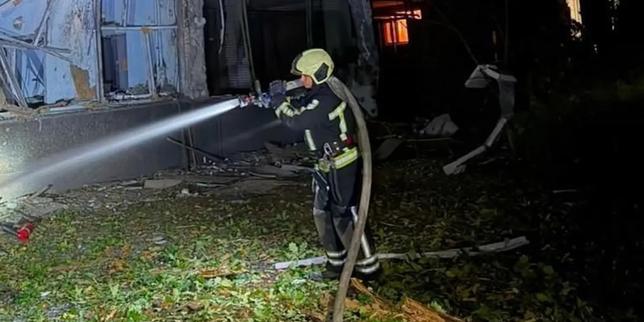
The impact zones tell a brutal story. Windows shatter across multiple residential blocks from the sheer force of blast waves. Local kindergartens, non-residential storage facilities, and transportation corridors bear the brunt of falling debris. Emergency response teams work through blinding smoke and sub-zero temperatures, putting out fires before dawn breaks. You realize quickly that staying safe requires more than luck; it demands split-second decisions and an ironclad mental routine.
Living Under the Drone and Missile Threat
For ordinary families staying in the capital, daily life adapts in grim, surreal ways. People set up makeshift sleeping spaces in hallways, adhering to the "two-wall rule" that shields them from direct window blasts. Schools function mostly online, parks empty out the moment storm warnings flash on government apps, and local businesses invest heavily in backup generators just to keep doors open for a few hours.
The psychological toll outweighs the physical damage. Children grow up recognizing the distinct buzzing sound of Iranian-designed loitering munitions long before they learn about them in textbooks. Municipal workers patch up blown-out roofs and shattered water mains within hours of an attack, showing an astonishing level of resilience that keeps the city functioning despite continuous punishment.
International partners continue debating shipment volumes for advanced air defense batteries like Patriot systems, but the supply chain lag leaves massive gaps in coverage. Every delayed shipment translates directly into unintercepted warheads tearing through civilian districts. Until the umbrella over Ukrainian airspace thickens dramatically, nights in Kyiv will remain a terrifying test of endurance.