The tea was still hot. In the quiet suburbs of Kuwait, Tuesday evening usually follows a predictable, rhythmic lull. Families gather. The television hums with the nightly news or a dubbed soap opera. The scent of oud and charcoal lingers in the air, a sensory blanket that signals safety. But at 8:45 PM, that rhythm didn't just break. It evaporated.
A sound like the earth tearing in half ripped through the residential district of Sabah Al-Salem. It wasn't the distant rumble of a storm or the familiar backfire of a car. It was the sharp, metallic shriek of physics meeting architecture at terminal velocity.
Six people—mothers, fathers, perhaps a child finishing homework—became the human face of a geopolitical chess move they never asked to play. They weren't soldiers on a ridge. They were civilians in their living rooms. When the Iranian-launched projectiles struck, the glass didn't just break; it became a cloud of jagged diamonds, flying through the air with enough force to rewrite the lives of everyone in the room.
The Anatomy of a Sudden Silence
Physical pain has a way of slowing down time. Imagine the moment of impact. One second, you are reaching for a glass of water. The next, the ceiling is on the floor, and the air is thick with the acrid smell of pulverized concrete and burnt wiring.
Kuwait’s Ministry of Interior confirmed the toll: six injured. In the sterile language of a press release, "injured" is a bloodless word. It doesn't capture the stinging heat of a shrapnel wound. It doesn't describe the ringing in the ears that drowns out the screams of neighbors. It certainly doesn't account for the psychological tremor that follows—the realization that the four walls you pay a mortgage on are no longer a fortress.
This wasn't a military installation. There were no tanks parked in the driveways of Sabah Al-Salem. This was a neighborhood. By targeting—or "accidentally" hitting—a residential zone, the attack bypassed the front lines and struck directly at the heart of civic stability. When the home is no longer sacred, the very foundation of a society begins to feel brittle.
A History Written in Ballistics
To understand why this strike feels like a betrayal of the regional soul, we have to look at the fragile geography of the Gulf. Kuwait sits in a delicate position, a nation that has historically prided itself on being a bridge-builder, a mediator, and a point of relative calm in a neighborhood often defined by friction.
But geography is destiny.
When Iranian forces launched this assault, they weren't just aiming at coordinates on a map. They were sending a message wrapped in steel. For decades, the shadow of conflict has loomed over these waters, but the unwritten rule was usually that the civilian heart stayed off-limits. That rule lay buried under the rubble of a Kuwaiti villa on Tuesday night.
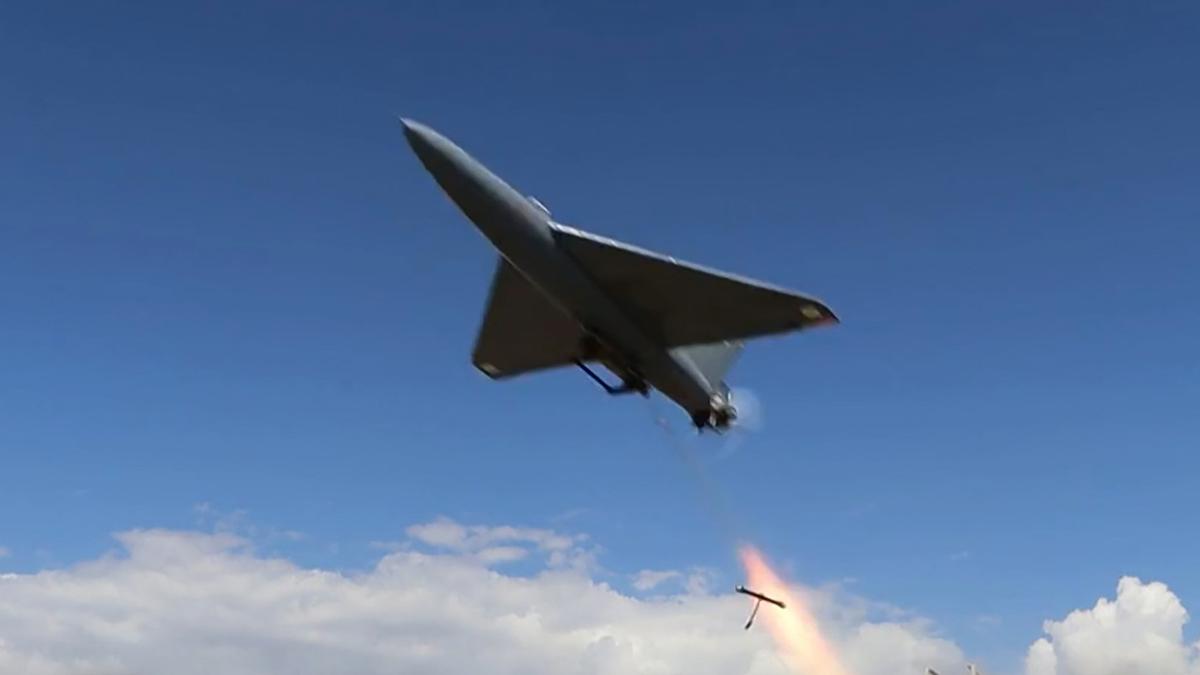
The technical specs of the weaponry matter less than the intent. Whether it was a drone, a cruise missile, or a short-range ballistic projectile, the result remains a calculated violation. Experts suggest that such "accidents" are rarely accidental in the world of high-stakes diplomacy. They are tests. They are probes to see how a nation reacts when its people are bled in their own homes.
The Invisible Stakes of a Broken Window
Consider a hypothetical resident—let’s call him Omar. Omar spent twenty years working in the oil sector to build a house for his three daughters. He picked the tiles. He made sure the garden had enough shade for the summer heat. On Tuesday, a piece of Iranian hardware worth more than Omar’s annual salary tore through his roof.
Omar isn't a politician. He doesn't care about regional hegemony or enrichment levels. He cares about the fact that his youngest daughter now shakes every time a door slams.
This is the hidden cost of the attack. It is the erosion of peace of mind. You can patch a hole in a wall with plaster. You can’t patch the feeling of being hunted in your own bed. The six victims taken to the hospital are the immediate casualties, but the thousands of neighbors who watched the smoke rise are the secondary victims. They are now living in a world where the sky is no longer a canopy, but a threat.
Kuwaiti authorities acted with a grim, practiced efficiency. Fire crews and medics flooded the scene, their flashing lights casting long, rhythmic shadows against the scarred buildings. The official stance was firm: a condemnation of the "cowardly" act. But beneath the diplomatic rhetoric, there is a pulse of genuine anger.
The Geography of Fear
Why Kuwait? Why now?
The region is currently a tinderbox of competing interests. Iran, facing internal pressures and external sanctions, often uses its proxy reach and missile capabilities to remind its neighbors of its proximity. By striking a residential area, the message is clear: No one is out of reach.
But this strategy often backfires. Instead of cowing a population, it tends to crystallize a sense of national identity. In the hours following the attack, the Kuwaiti social media landscape wasn't filled with calls for surrender; it was filled with images of the flag and offers of blood donations. The strike intended to create a fracture, but it may have inadvertently forged a shield.
The logistics of the attack suggest a launch from across the Gulf, a trajectory that crosses international waters and violates every standard of sovereign respect. It is a reminder that in the modern age, distance is an illusion. We are all within a twenty-minute flight of a disaster we didn't start.
The Weight of the Morning After
As the sun rose over Sabah Al-Salem on Wednesday, the dust had settled, but the air felt heavy. Construction crews moved in to board up the gaps. Neighbors stood on sidewalks, speaking in hushed tones, their eyes wandering toward the horizon.
The six who were injured are recovering. Their physical wounds will scar over. But the narrative of Kuwait as a sanctuary has been challenged. The country now faces a choice: how to respond to an unprovoked strike without escalating a situation that could engulf the entire region in flames.
It is a tightrope walk performed over a pit of fire.
The international community watches from a distance, issuing statements of "concern" and "solidarity." But for the people on the ground, those words are as thin as the paper they are printed on. They know that the only thing standing between them and the next strike is a complex web of deterrence, diplomacy, and luck.
The tea in the cup is cold now. The televisions are back on, but the volume is a little lower, as if everyone is listening for that specific, terrifying shriek in the air. We often speak of war in terms of maps and movements, of grand strategies and historical shifts. But on Tuesday night in Kuwait, the reality of the world was found in the shattered glass of a kitchen window and the sudden, terrifying silence of a home that will never feel quite as safe again.
The sirens have stopped, but the quiet that replaced them is loud with a new kind of knowledge. You can fix a roof. You can heal a limb. But you cannot unsee the moment the sky turned into a weapon.
The smoke has cleared, revealing a neighborhood that is exactly the same as it was yesterday, except for the fact that everything has changed.