The sound of a drone is not a roar. It is a whine—a persistent, mechanical mosquito buzz that burrows into the ear canal and stays there long after the physical object has passed. In the residential outskirts of Isfahan, that sound has become the new heartbeat of the night. For a young woman named Sarah—a composite of the millions currently holding their breath across the Middle East—the evening routine no longer involves checking the stove. It involves checking the horizon.
War, in its modern iteration, is rarely a singular explosion. It is a series of escalations that feel like a tightening noose.
The latest updates from the borderless front lines between Israel and Iran suggest a terrifying paradox: as one world leader talks of "winding down," the machines of war are being greased for a heavier strike. While political commentators in Washington discuss the strategic maneuvers of a returning Trump administration, the people on the ground are watching the sky. They know that "winding down" is often a euphemism for a final, violent push to secure a position before the music stops.
The Mathematics of Fear
Military strategists speak in "sorties" and "payloads." They treat the geography of the Levant like a chessboard where pieces are traded for positional advantage. But for those living beneath the flight paths, the math is much simpler. It is the distance between the bedroom and the basement. It is the number of seconds a child has to wake from a deep sleep before the impact tremor hits.
Israel has signaled that its attacks on Iranian interests will not just continue, but intensify. The logic is clinical. If a transition of power is coming in the United States, there is a perceived window of opportunity—a period where the old rules are blurred and the new ones haven't been written yet. In this vacuum, the "ramp up" becomes a race against the clock.
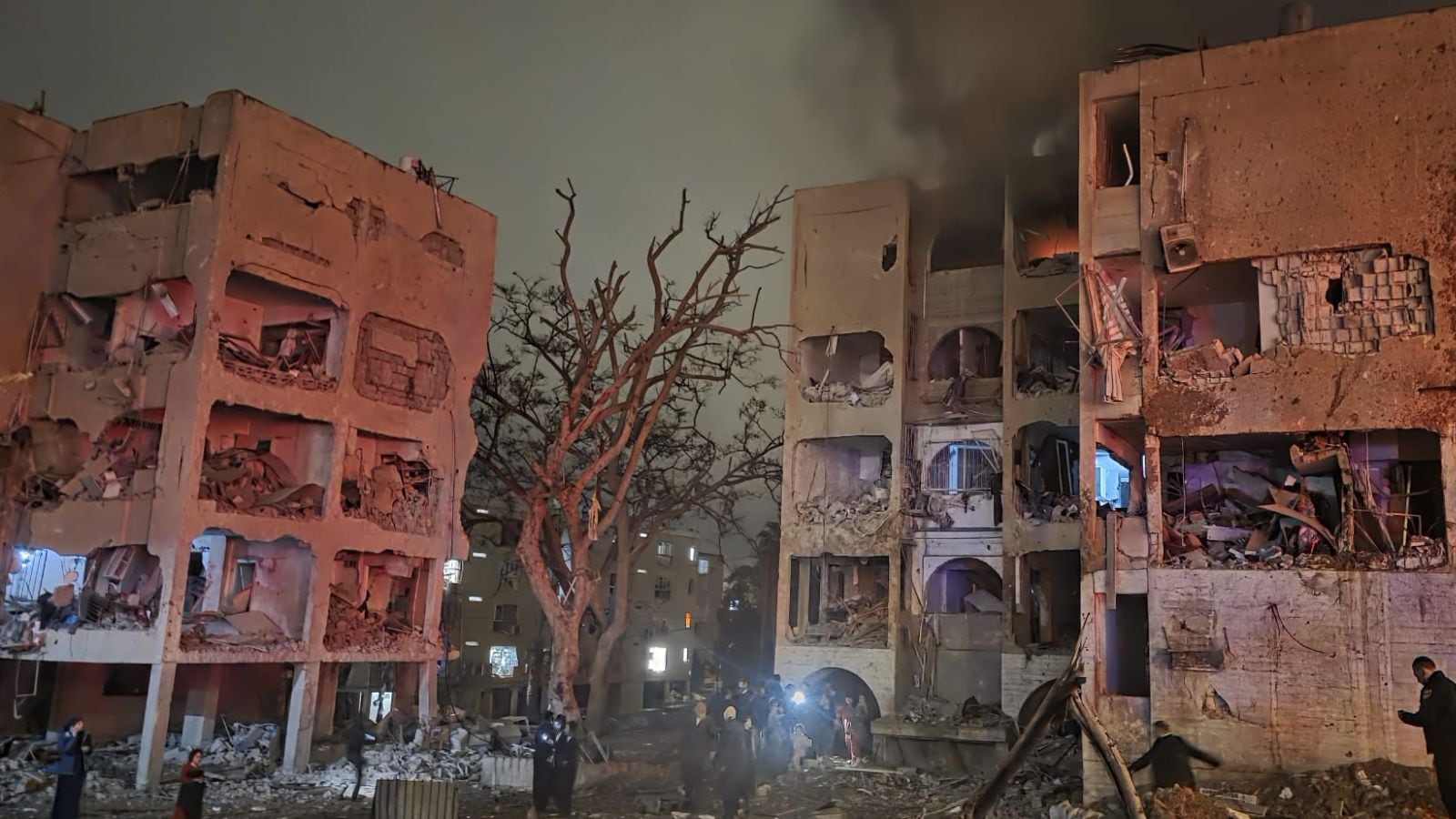
Consider the reality of a surgical strike. To the person behind the console in Tel Aviv, it is a pixelated thermal image. To the family in a nearby apartment block, it is the sound of glass turning into shrapnel. The "precision" of modern weaponry is a comfort only to those who don't have to sweep up the dust of their neighbors' homes the next morning.
The Shadow of the Return
The specter of Donald Trump looms over these desert batteries like a heat haze. His rhetoric of "winding down" military operations is often interpreted as a move toward isolationism, but in the Middle East, such words act as a starter pistol. If the U.S. intends to pull back its direct military presence, regional powers feel an urgent, almost primal need to settle scores now.
It is a desperate game of musical chairs played with ballistic missiles.
The uncertainty of American foreign policy doesn't just change budgets; it changes the chemistry of the region. When the "Global Policeman" hints at retirement, the local rivals start checking their ammunition. This isn't about peace. It’s about a frantic attempt to create a "new normal" where one side holds a decisive, bloody edge before the diplomats return to the table.
The Invisible Toll
We often talk about the iron dome, the interceptors, and the ballistic trajectories. We rarely talk about the psychological erosion.
Imagine living in a state of permanent "almost." You almost go to sleep. You almost finish a meal. You almost believe the sirens won't go off tonight. This constant adrenaline spike does something to a society. It creates a collective brittleness. In Tehran, the markets fluctuate not based on supply or demand, but on the perceived tone of a single press release from the IDF. In Haifa, the schools are open, but the teachers’ eyes are perpetually fixed on the windows.
The cost of this war isn't just measured in the craters left in the sand or the charred remains of a drone factory. It is measured in the missed developmental milestones of children who think the sound of a sonic boom is just what the sky sounds like. It is measured in the elderly who refuse to go to the shelters because their knees are too tired and they’ve decided that if the end comes, it can find them in their favorite chair.
The Logic of the Escalation
Why ramp up now? Why push the stakes higher when the world is calling for a ceasefire?
The answer lies in the brutal reality of leverage. In the grim theater of international relations, you do not negotiate from a position of quietude. You negotiate from the top of a smoking ruin. By increasing the intensity of the attacks, Israel seeks to degrade Iran's "Forward Defense" capabilities—the network of proxies and missile sites that act as a shield.
Iran, in turn, finds itself in a corner. To retreat is to invite further aggression. To retaliate is to risk a full-scale conflagration that could swallow the region whole. They are two boxers in the twelfth round, both bleeding, both exhausted, yet both swinging harder because they are terrified of what happens if they let their guard down for a single second.
The rhetoric of "winding down" from the West sounds like a lullaby, but to those in the line of fire, it sounds like a threat. It signals a shift in the gravity of the region.
The Horizon
As the sun sets over the Mediterranean, the light catches the wings of aircraft that aren't carrying passengers.
There is no "clean" way to end this. There are no "surgical" solutions that don't leave scars on the soul of the people living there. We see the headlines about military operations and strategic pivots, but we must remember the silence that follows the blast. It is a heavy, thick silence, filled with the smell of ozone and the realization that the world has changed again while we were sleeping.
The "winding down" will not be a quiet fading of lights. It will be a cacophony. It will be a final, desperate reach for power in a land that has already seen too much of it.
Sarah sits by her window in Isfahan. She watches the first few stars appear. One of them moves too fast to be a star. It tracks a steady, glowing line across the velvet blackness of the Persian night. She doesn't scream. She doesn't run. She simply closes her eyes and waits for the vibration to reach her feet, wondering if the men in the high offices realize that every time they "ramp up," a little more of the world’s humanity turns to ash.
The sky is no longer a place of wonder. It is a ceiling made of iron, and tonight, the bolts are rattling.