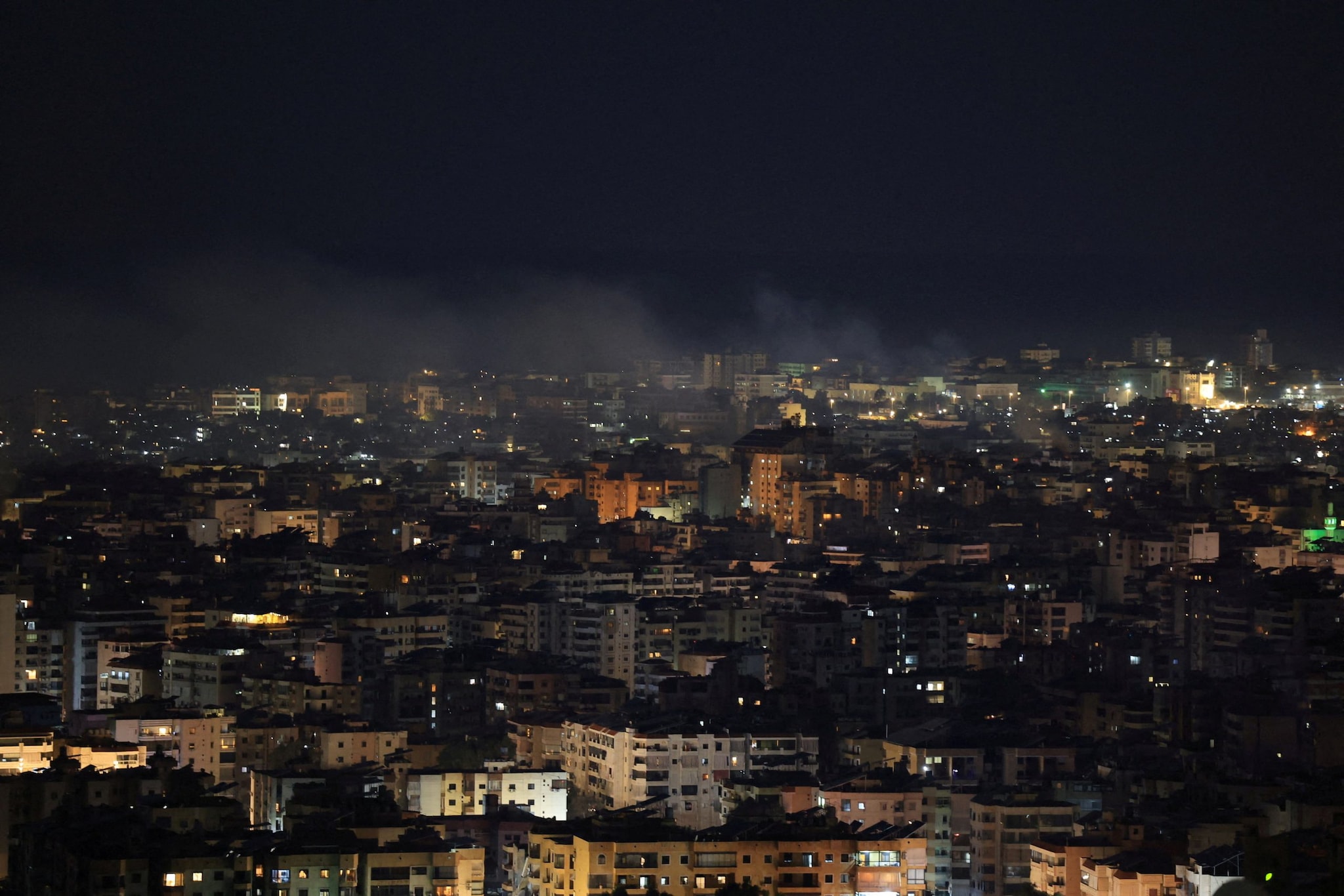
The siren in Tel Aviv doesn’t sound like a warning. It sounds like a mechanical animal screaming in pain. It is a rising and falling wail that cuts through the humid Mediterranean air, forcing dinner forks to freeze mid-air and making parents snatch sleeping children from their beds with a desperate, practiced agility. On this particular Tuesday, the sky didn't just carry the sound of war. It carried the light of it.
Imagine a young woman named Adina. She is twenty-four, a graphic designer who moved to the city for the cafes and the tech scene, not the ballistics. When the alerts flashed on her phone—not the usual localized warnings, but a nationwide red alert—she didn't go to the stairwell. She went to the window.
The horizon toward the east was pregnant with fire.
Iran had launched a massive volley of ballistic missiles, a swarm of kinetic energy traveling at hypersonic speeds, aimed directly at the heart of the country. This wasn't a skirmish in a border town. This was a direct, state-on-state confrontation that the world had feared for decades. The "Shadow War" had finally stepped into the light, and the cost was being measured in seconds.
The Geometry of Terror
Most people think of a missile strike as a single explosion. The reality is a terrifying sequence of physics and timing. As Adina watched, the Iron Dome and the Arrow interceptors rose to meet the incoming threats. These are not just machines; they are the thin, invisible line between a functioning city and a graveyard.
The sky became a grid of white streaks and orange blossoms. Each "boom" wasn't just a sound; it was a physical pressure that rattled the teeth. But even the most sophisticated defense systems in the world have a saturation point. When nearly 200 missiles are screaming through the atmosphere simultaneously, the math of survival becomes a cruel lottery.
Nine people.
That is the number the early reports settled on. Nine lives ended in the span of a few frantic minutes. We often consume these numbers as statistics, but for those on the ground, nine is a universe. It is nine empty chairs at breakfast. It is nine cell phones ringing in the pockets of the deceased, unanswered, as worried relatives call from across the globe.
The video footage that emerged shortly after the strikes didn't capture the politics. It captured the raw, unvarnished terror of the human spirit. In one clip, a family huddles in a reinforced room, the mother whispering prayers while the father stares at the ceiling, his hands shaking as he tries to maintain a facade of strength for his toddlers. In another, the camera shakes violently as a missile impact blows out the windows of a nearby apartment, the glass shattering like diamonds in the dark.
Beyond the Iron Dome
The geopolitical analysts will talk about "proportionality" and "strategic deterrents." They will map out the flight paths from Isfahan and Shiraz. They will debate whether this was a response to the killing of high-ranking leaders or a desperate play for regional dominance.
But talk to someone who spent forty minutes in a concrete box while the world outside sounded like it was being torn apart.
The psychological toll is a debt that never gets paid off. It lingers in the way a car backfiring makes a pedestrian jump. It hides in the anxiety of a clear, blue sky. This wasn't just an attack on infrastructure; it was an assault on the very idea of safety.
Iran’s decision to move from proxy warfare—using groups like Hezbollah or the Houthis—to direct strikes represents a fundamental shift in the Middle Eastern power dynamic. It removes the veil. It tells every civilian in the region that the old rules of engagement are buried under the rubble of the latest impact site.
The Silent Witness of the Rubble
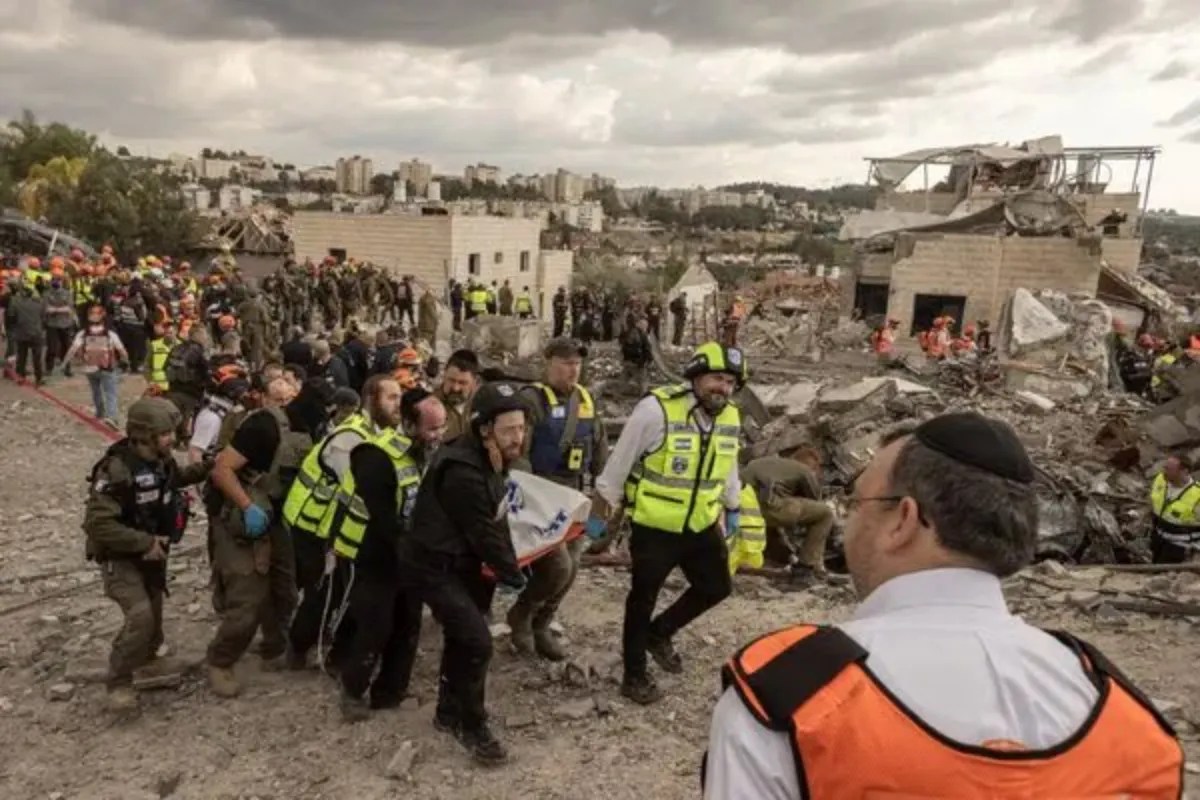
In the aftermath, the smell is what stays with you. It’s a mix of burnt ozone, pulverized concrete, and the acrid tang of high explosives. In the streets where the missiles found their mark, the scene is deceptively quiet.
Volunteers from emergency services move through the debris with a grim efficiency. They have done this before, but it never gets easier. They find a shoe. A charred textbook. A half-eaten sandwich. These are the artifacts of lives interrupted.
The tragedy of the nine who died is compounded by the millions who survived but are forever changed. When the state-run media in Tehran broadcasts footage of the launches with triumphalist music, they aren't showing the craters in civilian neighborhoods. They aren't showing the terrified eyes of children in bunkers. They are selling a narrative of strength to mask a reality of chaos.
Consider the ripple effect of a single strike. One missile misses a military target and hits a residential street. The immediate result is death and destruction. The secondary result is a shift in the global economy, as oil prices spike and airlines reroute flights. The tertiary result is a hardening of hearts. Every explosion makes the path to peace narrower, more treacherous, and less believable.
The Lottery of the Sky
Why did Adina survive while another woman, just three blocks away, did not? There is no moral logic to it. Ballistic missiles do not choose their victims based on merit or innocence. They are blunt instruments of gravity and fire.
The "painful death" mentioned in the headlines is a sterile way of describing the violent end of a human being. It doesn't capture the sensory overload—the blinding light, the sudden vacuum of air, the heat that melts metal.
The videos circulating on social media are often narrated by voices thick with shock. "Oh my God," a man says in Hebrew as a streak of light slams into the distance. He isn't thinking about the Revolutionary Guard or the IDF’s retaliatory capabilities. He is thinking about his home. He is thinking about the fragility of the walls surrounding him.
The international community watches these videos on high-definition screens, thousands of miles away. We analyze the trajectory. We identify the model of the missile—was it a Fattah? A Kheibar Shekan? We treat it like a technical puzzle.
But for those under the fire, the model doesn't matter. The only thing that matters is the silence that follows the explosion. That heavy, ringing silence where you wait to hear if your neighbor is still breathing.
The Long Shadow
The missiles have stopped falling for now, but the air remains thick with the expectation of what comes next. Retaliation is a gear that, once turned, is difficult to stop. The cycle of "eye for an eye" leaves the whole world blind, or so the old saying goes. In this case, it leaves cities scarred and families broken.
We are living in an era where the distance between a political decision in a palace and a tragedy in a living room has shrunk to zero. Technology has made it possible to kill from a thousand miles away with the push of a button, removing the killer from the sight of the blood.
But the blood is there. It’s on the pavement in Tel Aviv. It’s in the dust of the collapsed buildings. It’s in the tears of the families of those nine victims who, yesterday, were worried about their taxes or their grocery lists, and today are the lead story on every news cycle.
As the sun begins to rise over the Mediterranean, the smoke clears, but the horizon looks different. The sky is no longer just a source of light; it is a reminder of what can fall from it. People emerge from their shelters, blinking in the morning light, checking on their friends, surveying the damage. They will sweep up the glass. They will repair the walls.
But the sound of that siren—the mechanical animal screaming in the night—will echo in their sleep for a long, long time. The fire in the sky has gone out, but the cold reality of a new, more dangerous world is just beginning to sink in.
A child’s bicycle lies twisted in the gutter, its red paint chipped by a fragment of a missile that cost more than the neighborhood's combined annual income. It sits there, a silent testament to a night when the stars fell and the world held its breath, waiting for the next scream to begin.