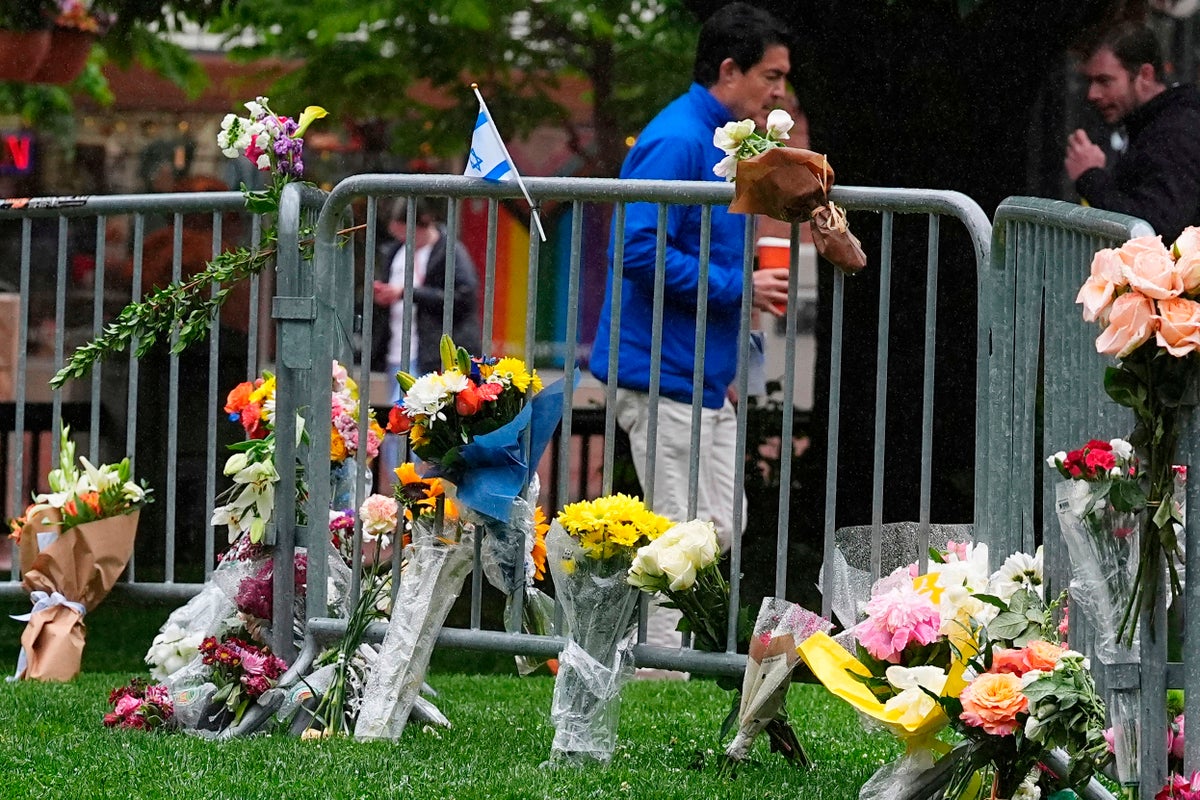
The air in Loveland, Colorado, usually carries the crisp, sharp scent of the Rockies, a reminder of the steady granite peaks that frame the horizon. But on a humid night in late July, that air curdled. It turned thick with the chemical stench of gasoline and the searing heat of a homemade bomb. In that moment, a quiet suburban intersection became a theater of political violence, and the life of a man named Benjamin Thorne ended before he even realized the fire had started.
We often talk about political polarization as if it were a weather pattern—something abstract that hovers over the national map in shades of red and blue. We look at charts. We track polling data. We analyze the "climate" of the country from the safety of our screens.
But for those standing on the asphalt that night, polarization wasn't a graph. It was a glass bottle filled with accelerant, flying through the dark. It was the sound of a shattering impact and the sudden, terrifying roar of a localized sun blooming on the pavement.
The Architect of the Flame
Lonnie Pebley didn't wake up that morning as a man destined for a life sentence. Or perhaps he did, and the world just hadn't caught up to the reality of his trajectory yet. Pebley, now 43, lived in a world where the stakes were constantly being raised by the digital echoes of anger. To understand how a person reaches the point of constructing an incendiary device to throw at fellow citizens, you have to look past the police report.
You have to look at the slow-burn isolation that precedes the literal fire.
Imagine a man sitting in the glow of a monitor, absorbing the idea that his neighbors are actually his enemies. It is a subtle poisoning. It happens in the quiet hours. When he finally walked out of his door with that firebomb, he wasn't seeing people; he was seeing symbols. He was seeing "demonstrators," a category of human that had been stripped of its humanity by months of escalating rhetoric.
The facts of the case are chilling in their simplicity. On July 25, during a summer defined by social unrest and a collective national fever, Pebley approached a group of people gathered to protest. He didn't come to argue. He didn't come to hold a sign of his own. He came with a weapon designed to consume.
The Anatomy of a Strike
When the bottle left Pebley’s hand, it followed a silent, tumbling arc. In physics, we call this projectile motion. In law, we call it attempted first-degree murder. But in the moment of impact, it is simply chaos.
Benjamin Thorne was there. He wasn't a high-ranking political operative or a faceless agitator. He was a human being standing in a public space. When the firebomb struck, the world turned orange. Gasoline is a hungry fuel; it doesn't just burn, it clings. It finds the fibers of a shirt, the skin of a forearm, the oxygen in a pair of lungs.
Thorne survived the initial blast, but the damage was done. The physical scars of a firebombing are often easier to track than the psychological ones. The skin grafts, the surgeries, the long months of physical therapy—these are the tangible costs of a moment of radicalized rage. Yet, the real victim that night wasn't just Thorne. It was the very idea that we can disagree in the light of day without trying to extinguish one another in the dark of night.
Pebley fled the scene. He left behind a scorched patch of road and a group of people whose lives had been permanently altered by the sudden intrusion of lethal violence into their suburban reality.
The Weight of the Gavel
For years, the legal system ground forward with its usual, agonizing slow motion. Case files grew thick. Attorneys argued over intent, over mental state, over the specific classification of the device used. Through it all, Pebley remained a figure defined by his actions on that single night.
The shift came recently in a Larimer County courtroom. Pebley, facing a mountain of evidence and the looming reality of a trial that would likely end in a conviction for attempted murder, chose to change his path. He agreed to plead guilty.
This isn't just a procedural update. It is a confession of the highest order. By pleading guilty to murder charges—even in the context of an "attempt" that resulted in life-altering injury—Pebley is admitting that the fire he started was meant to kill. There is no more room for the "it was just a protest" or "it was a lapse in judgment" defense.
When a person carries a firebomb into a crowd, the intent is written in the chemistry of the weapon. You don't throw fire to start a conversation. You throw it to end one.
The Invisible Stakes
Why does this matter to someone living three states away, or someone who has never stood on a picket line?
It matters because the firebombing in Loveland is the logical conclusion of a society that has forgotten how to see the "other" as a person. We are living through an era where the distance between a heated social media comment and a physical assault is shrinking every day.
Think of our social fabric like a bridge. Each time we engage in dehumanizing rhetoric, we pull a bolt. Each time we justify violence because "the other side started it," we saw through a support beam. We think the bridge is solid because we’re still standing on it. We don't notice the sway until the moment the concrete snaps.
Lonnie Pebley’s plea is a mirror. It forces us to look at the wreckage caused when the abstract becomes physical. The fire didn't care about the political affiliations of the people it burned. It didn't care about the nuances of the protest. It only cared about consumption.
The Silence After the Plea
The courtroom was likely quiet when the words were spoken. Guilty. It is a heavy word. It carries the weight of years in a cold cell and the permanent loss of freedom. For the victims, however, the word doesn't necessarily bring peace.
Peace isn't something that can be granted by a judge's signature. It is built over time, through the slow healing of burned tissue and the even slower rebuilding of a sense of safety. Benjamin Thorne and the others who stood on that street that night will always carry the memory of the heat. They will always glance over their shoulders when they hear the sound of breaking glass.
The tragedy of the Loveland firebombing isn't just that a crime was committed. It’s that the crime was entirely avoidable. It was the product of a mind that had been convinced that violence was a legitimate form of expression.
As Pebley prepares for his sentencing, the scorched asphalt in Loveland has long since been paved over or worn down by the tires of passing cars. People drive over that spot every day, unaware that for one terrifying minute, the world there was made of gasoline and screams.
But the stain remains. It is a stain on our collective conscience, a reminder that the flames we fanned online eventually find a way to catch in the real world. We are left with the image of a man in a jumpsuit, the ghost of a fire on a Colorado street, and the haunting realization that once the match is struck, no one truly knows where the burning will stop.
The fire is out, but the air is still thin.
.jpg)