At 6:15 in the morning, before the city buses start wheezing down the avenue and before the schoolchildren crowd the sidewalk for cheap juice boxes, the fluorescent lights inside a neighborhood bodega flicker on with a low, electrical hum.
The air smells of damp cardboard, roasted coffee beans, and bleach. For the person standing behind the scratched plexiglass counter, the day begins not with grand political calculations, but with math. Brutal, unforgiving, square-foot math. How many cartons of milk can fit into a humming cooler that was built in 1998? How many bags of dried lentils will sit untouched on a dusty bottom shelf until their expiration dates pass? How much spoiled produce can a razor-thin profit margin absorb before the padlock goes on the front door?
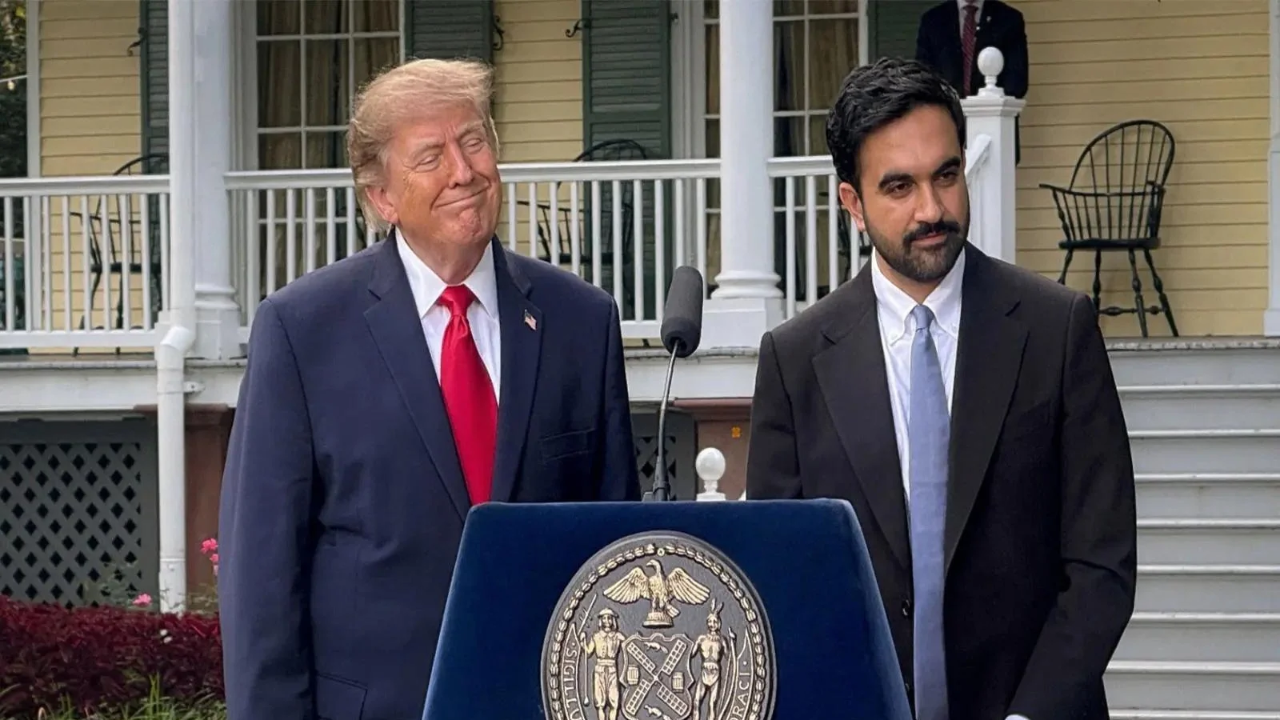
In late 2026, that quiet arithmetic became the unlikely center of a high-stakes truce between two political figures who agree on almost nothing. New York City Mayor Zohran Mamdani and President Donald Trump reached an agreement to delay federal Supplemental Nutrition Assistance Program stocking rules for ninety days.
On a cable news ticker, the headline looks like bureaucratic dust. Ninety days. Stocking rules. Federal compliance. You can almost hear the collective yawn of a public exhausted by regulatory jargon.
Yet if you stand on the cracked linoleum of a corner grocery store in the Bronx, or a family-run market in rural Appalachia, or a cramped convenience shop on the South Side of Chicago, ninety days is not dust. It is oxygen.
The Architecture of a Food Desert
To understand why a three-month pause matters, you have to understand what happens when well-intentioned policy collides with physical reality.
Federal food assistance rules—commonly known as SNAP stocking standards—exist for an honorable reason. The government wants to ensure that when low-income families swipe their Electronic Benefit Transfer cards, they are not limited to soda, potato chips, and sugary pastries. Regulators want real food on the shelves. They want fresh vegetables, whole grains, dairy, and lean proteins available within walking distance of every American home.
On paper, this looks like common sense. In practice, it often works like a trap.
Consider a hypothetical store owner—let us call him Mateo—who runs a 900-square-foot corner market three blocks from a subway station. Mateo knows every customer by name. He knows which grandmother needs her insulin kept cold when her apartment fridge breaks, and he knows which shift worker buys two eggs and a roll at midnight because that is all the cash left in their pocket.
Under tightened federal SNAP stocking rules, Mateo is suddenly required to maintain a rigid inventory of staple foods across multiple categories—fruits and vegetables, dairy, breads and cereals, meats or plant proteins—with specific minimum varieties and perishable counts stocked every single day of the week.
Here is the problem that rarely makes it into congressional hearing rooms. Mateo does not have a loading dock. He does not have a walk-in refrigerator the size of a shipping container, nor does he have a fleet of refrigerated trucks delivering wholesale pallets at discount rates. When Mateo buys crates of fresh spinach, blueberries, and whole-grain bread to satisfy a federal inspector's checklist, he pays retail-adjacent prices from small distributors.
Then he waits.
If his neighborhood customers—many working two jobs, cooking on hot plates, or managing tight weekly budgets—do not buy that fresh spinach within four days, it turns into black slime in the crisper. Mateo throws it in the dumpster. He loses the wholesale cost, he loses the shelf space, and if an inspector walks through the door an hour after the last bunch of wilted greens hits the trash, Mateo faces suspension from the SNAP program altogether.
Lose SNAP authorization, and Mateo loses forty percent of his revenue overnight. He closes. And when Mateo closes, the neighborhood does not magically sprout a gleaming organic supermarket. It becomes a true food desert, where the nearest gallon of milk is a forty-five-minute bus ride away.
An Unlikely Convergence
This is the quiet crisis that forced an extraordinary political alignment.
Politics usually runs on performance. A democratic socialist mayor from New York City and a populist Republican president occupy opposite ends of the American ideological universe. Their voters rarely share news feeds, let alone political vocabulary. Under normal circumstances, any policy touching federal welfare programs becomes an instant battlefield for cable television panels, complete with predictable speeches about government dependency on one side and corporate greed on the other.
But small-business survival does not care about party registration.
Across the five boroughs of New York—and in thousands of small towns across the country—independent grocers, bodega associations, and rural shopkeepers sounded the same alarm. The compliance deadline was barreling toward them like a freight train. Without extra time, thousands of small retailers risked failing inspections, losing their EBT terminals, and shutting their doors just as winter utility bills began climbing.
For Mayor Mamdani, the threat was immediate and visceral. In dense urban neighborhoods, bodegas are not merely retail outlets; they are social infrastructure. Pushing them out of the SNAP network would punish the exact working-class families his administration pledged to protect, stripping away neighborhood food access under the guise of improving nutrition.
For the Trump administration, the issue struck a different but equally resonant nerve: federal overreach crushing independent merchants. Small retailers had long argued that rigid Washington mandates were written with massive suburban superstores in mind—chains with algorithms, supply-chain teams, and sprawling square footage—while suffocating mom-and-pop operators under paperwork and spoilage costs.
So, behind closed doors, pragmatism beat ideology. The agreement to grant a ninety-day delay hit the pause button on enforcement, giving retailers a three-month window before facing penalties or disqualification under the stricter stocking thresholds.
What Ninety Days Actually Buys
A skeptic might ask what difference three months can possibly make. If a store cannot meet the stocking standards in November, how will it meet them in February?
That question misunderstands how small retail survives.
Think of a corner store's inventory like a tightly packed suitcase. You cannot simply shove three winter coats into a bag that is already bursting at the seams; you have to take everything out, refold the shirts, swap bulky items for compact ones, and rethink how you use every corner.
Ninety days gives independent grocers time to do three vital things that cannot happen overnight.
First, it allows store owners to renegotiate with suppliers. Small grocers operating alone have almost no bargaining power. When given breathing room, bodega associations and regional co-ops can band together to place collective wholesale orders for compliant staples—canned beans, frozen vegetables, shelf-stable milk, whole-wheat pasta—driving down unit costs and reducing the risk of catastrophic spoilage.
Second, it gives regulators and local officials time to clarify what actually counts. Confusion over stocking rules has historically caused as much damage as the rules themselves. Does a specific variety of dried legume count as a separate staple item? How are seasonal produce shortages treated when winter storms disrupt regional trucking? Without clear guidance, shopkeepers either overbuy perishable goods they cannot sell or underbuy out of fear, failing inspections on technicalities.
Third, and perhaps most crucially, it prevents a sudden winter shock to household food security. SNAP benefits already stretch thin against grocery inflation. When a neighborhood store suddenly loses its EBT machine, families do not smoothly transition to shopping elsewhere. They skip meals. They buy cheaper, calorie-dense shelf items with whatever loose cash they have left. A ninety-day buffer keeps existing doors open while transitional fixes are hammered out.
The Invisible Math of the Checkout Line
I still remember standing behind a young father at a neighborhood market a few winters ago, watching him do the silent calculation every low-income shopper knows by heart.
On the conveyor belt sat a carton of eggs, a loaf of bread, a bag of apples, a jar of peanut butter, and a box of macaroni. When the register flashed the total, his shoulders dropped half an inch. He reached out, picked up the bag of apples, and handed it back to the cashier. Not because he didn't want his kids to eat fruit, and not because the store failed to stock it, but because the margin between getting by and coming up short was four dollars and twenty-nine cents.
Policy debates love clean binaries. We want the story to be simple: either stores stock healthy food or they don't; either government enforces standards or it surrenders.
Reality refuses to cooperate. Nutrition security is not a single lever you pull in Washington; it is an ecosystem. If you force a tiny store to stock twenty varieties of fresh produce without helping them afford refrigeration, you get rotting vegetables and bankrupt owners. If you abandon stocking standards entirely, low-income neighborhoods get flooded with ultra-processed junk food because soda companies pay generous slotting fees that fresh broccoli never will.
The tension between those two failures is where millions of Americans actually buy their dinner.
Beyond the Truce
A ninety-day delay is a tourniquet, not a cure.
When the clock runs out in three months, the underlying physics of the corner store will not have changed. A 900-square-foot room will still be 900 square feet. Fresh produce will still bruise, wilt, and spoil faster than canned soup. Small independent grocers will still compete against corporate retail giants that treat entire city blocks as rounding errors on a quarterly earnings call.
If federal and local leaders treat this pause as an excuse to kick the problem down the road until the headlines fade, the exact same cliff will reappear ninety days later—only with less warning and worse weather.
Real progress requires using these three months to build bridges between public health goals and small-business economics. It means funding refrigeration grants for independent grocers in low-income tracts so they can actually keep fresh milk and vegetables cold without tripling their electric bills. It means expanding wholesale purchasing cooperatives so a family shop in Queens or rural Kentucky pays closer to what a national chain pays for a crate of oranges. And it means writing compliance standards that distinguish between a fifty-thousand-square-foot supercenter and a family business run by two people working fourteen-hour shifts.
For now, though, the immediate panic has subsided.
Tomorrow morning at 6:15, the fluorescent lights will buzz to life again over the scratched plexiglass counters. The coffee will brew. The EBT terminals will blink green, ready to accept the cards that keep millions of pantries from going empty. Behind the counter, the person doing the math still faces a hard day, a narrow margin, and a long winter—but for the next ninety days, at least, the lights stay on.