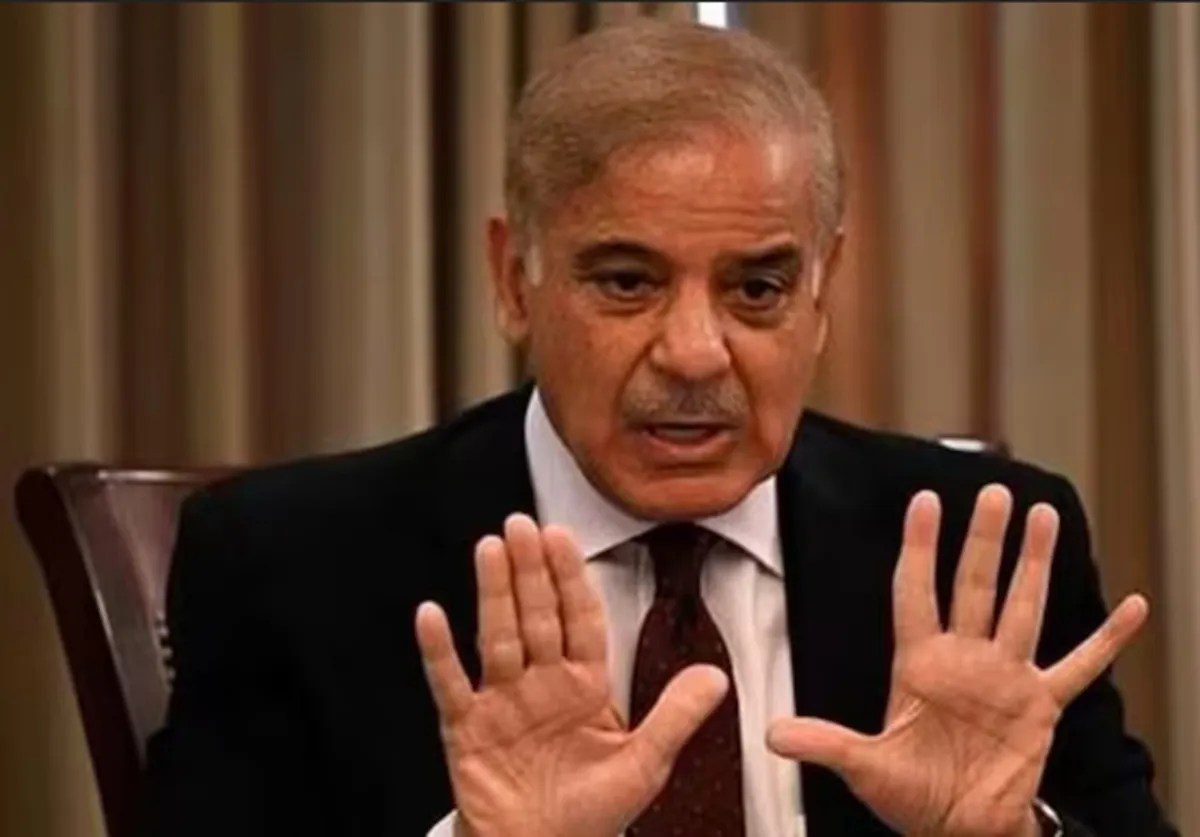
The Punjab Assembly recently witnessed a legislative move that blurred the lines between statecraft and satire. A resolution was formally tabled seeking a Nobel Peace Prize for Pakistan’s Prime Minister Shehbaz Sharif and Chief of Army Staff General Asim Munir. While the official narrative frames this as a tribute to their efforts in stabilizing a volatile economy and curbing domestic unrest, the move has triggered a wave of skepticism that cuts through the country’s polarized political atmosphere. To understand why a provincial assembly would propose the world’s most prestigious humanitarian honor for leaders overseeing a period of intense civil friction, one must look past the flowery language of the resolution and into the machinery of Pakistani power dynamics.
This isn't about international recognition. It is a calculated domestic maneuver designed to cement the standing of the current administration at a time when its popular mandate is under constant fire from the opposition.
A Resolution Born of Political Necessity
The resolution, introduced by Malik Muhammad Ahmad Khan of the PML-N, cites the leadership’s role in steering the country away from the brink of default. To the treasury benches, the avoidance of an economic collapse is a feat of historical proportions. They argue that the Prime Minister’s diplomatic outreach and the General’s "Green Initiative" are foundational pillars of a new, peaceful Pakistan.
However, the Nobel Peace Prize is rarely awarded for standard governance or maintaining the status quo of a military-civilian hybrid regime. By elevating the discourse to the level of the Nobel Committee, the provincial government is attempting to manufacture a veneer of global excellence. It is a classic signaling tactic. If you repeat a claim of greatness loudly enough within the halls of government, it becomes a documented part of the legislative record, regardless of how the public or the international community perceives it.
The timing is particularly pointed. Pakistan is currently navigating a labyrinth of IMF conditions, rising electricity costs, and a fractured social contract. Proposing a Peace Prize in this climate serves as a distraction from the immediate grievances of the electorate. It forces the opposition into a corner where they must either support a motion for the country's top leaders or appear "anti-state" by opposing it.
The Army’s Role in the Narrative Shift
Including General Asim Munir in the proposal is perhaps the most significant aspect of the filing. In Pakistan, the military is the ultimate arbiter of stability, but the last few years have seen the institution face unprecedented public criticism. The "establishment," as it is known locally, is currently engaged in an extensive image-rehabilitation campaign.
The resolution frames the Army Chief as a diplomat and an economic savior. By linking him to a "Peace Prize," the proponents are trying to redefine the military’s role in the eyes of the youth. They want to move away from the image of the hard-handed enforcer and toward the image of the visionary statesman. This is a tall order. The Nobel Committee typically looks for specific, life-altering peace mediations or long-term humanitarian commitments. Using the prize as a tool for domestic public relations ignores the rigorous, often years-long vetting process conducted by the Norwegian Nobel Institute.
Historical Precedent and the Reality of the Nobel Committee
Legislative bodies across the globe occasionally nominate their leaders for the Nobel Peace Prize as a show of loyalty. It happened in the United States with various presidents, and it happens frequently in nascent democracies. But these nominations rarely translate into actual shortlisting. The committee in Oslo is notoriously insulated from the political pressures of individual nations.
For a Pakistani leader to genuinely contend for the prize, there would need to be a verifiable de-escalation of regional tensions or a landmark shift in the country's human rights record. Currently, the "peace" being cited in the Punjab Assembly is an internal stability maintained through heavy-handed security measures and a suppression of dissent. This is what political scientists call "negative peace"—the absence of active conflict—rather than "positive peace," which involves the presence of justice and social equity.
The Gap Between Policy and Perception
- The Economic Front: The government claims credit for the Special Investment Facilitation Council (SIFC), a body meant to attract foreign capital. While this may stabilize the currency, the average citizen is grappling with inflation rates that make basic survival a challenge.
- The Security Front: Military operations against insurgent groups in the border regions are framed as peace-building. Yet, these operations often result in internal displacement and a deepening of old wounds in Balochistan and Khyber Pakhtunkhwa.
- The Political Front: The ongoing crackdown on the PTI and the imprisonment of its leadership create a global perception of political victimization rather than democratic harmony.
The Counter Argument from the Streets
Public reaction to the resolution has been a mix of derision and anger. On social media platforms, the hashtag "Nobel" became a lightning rod for criticism. Critics point out the irony of seeking a peace award while the country’s prisons are filled with political activists and journalists. The disconnect is profound.
When a government seeks international accolades while its own people are protesting in the streets over bread prices, the gesture backfires. It creates a "credibility gap" that no legislative resolution can bridge. The move in the Punjab Assembly reflects a leadership that is increasingly talking to itself rather than listening to the populace.
Why the Resolution Matters Despite Its Likely Failure
Even if the Nobel Committee never hears of Malik Muhammad Ahmad Khan or his resolution, the act of filing it serves a specific function within the PML-N’s internal hierarchy. It is a declaration of absolute loyalty. In the intricate dance of Pakistani politics, showing fealty to the "miltablishment" is the currency of survival.
By championing the General alongside the Prime Minister, the Punjab government is signaling that the hybrid model of governance is not just functional but "award-worthy." It is an attempt to institutionalize the partnership between the barracks and the parliament.
The Broader Impact on Pakistan’s Global Image
Pakistan has two Nobel laureates: Abdus Salam (Physics) and Malala Yousafzai (Peace). Both have complex legacies within their home country, often facing more criticism at home than they did abroad. This latest move trivializes that legacy. By attempting to use the prize as a partisan tool, the provincial assembly risks making the country’s serious diplomatic efforts look like political theater.
International observers and investors look for consistency and the rule of law. They are rarely swayed by symbolic gestures or legislative resolutions that lack the backing of a broad national consensus. If the government truly wants the world to see Pakistan as a land of peace, it will require more than a paper proposal in Lahore. It will require a return to constitutional norms, the holding of transparent elections, and an economic policy that prioritizes the welfare of the many over the optics of the few.
The resolution will likely pass the assembly given the lopsided majority, but its life cycle will end at the border. The Nobel Committee does not award prizes for political survival. It awards them for courage that changes the world. In the current Pakistani context, the most courageous act for peace would not be a nomination, but a genuine reconciliation between the state and its disenchanted citizens.
The machinery of the Punjab Assembly has moved, the speeches have been made, and the record has been updated. But the true measure of peace in Pakistan remains written in the lives of the people, not the accolades of the elite. Unless the fundamental issues of judicial independence and civil liberties are addressed, no amount of international posturing will change the underlying reality of a nation in crisis.
The move to nominate Sharif and Munir is a performance for an audience of two, played out on a stage that the rest of the country is struggling to afford. If this is the new standard for peace, then the definition of the word has been lost in translation. Stop looking at the nomination and start looking at why the nomination was felt necessary in the first place. Legitimacy is earned through the ballot and the market, not through a committee in Oslo.