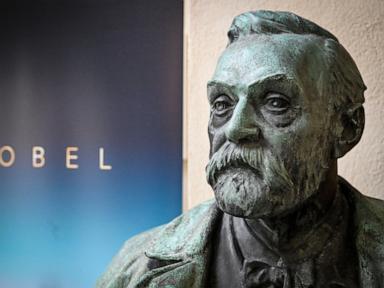
We love celebrating the finish line while ignoring that the road was built on quicksand. Francis Halzen securing the Nobel Prize in Physics for the IceCube Neutrino Observatory and the detection of astrophysical ghost particles is being hailed as a triumph of modern experimental design. Headlines across the globe are painting this as the moment humanity finally pinned down the elusive subatomic phantoms that pass through our bodies by the trillion every second without leaving a trace.
It makes for a great Hollywood script. Dig a hole a mile deep into the Antarctic ice, string up thousands of glass optical modules across a cubic kilometer of frozen wasteland, wait for a stray cosmic ray to smash into an atom, and watch the faint blue Cherenkov radiation flash in the dark.
Here is the inconvenient truth nobody in the mainstream science press wants to admit. Winning a Nobel for detecting high-energy neutrinos right now is like handing out a gold medal for inventing the horse-drawn carriage the day after the combustion engine was already running down the highway.
IceCube is a brute-force monument to an era of physics that is rapidly expiring.
When Francis Halzen started pitching this madcap scheme back in the late nineteen-nineties, the physics establishment laughed him out of the room. A cubic kilometer of ice as a particle detector? Funding agencies thought he was out of his mind. And they were right to be skeptical, just for the wrong reasons. They thought it was impossible; I argue it was simply a painfully expensive interim patch for a deeper analytical failure.
To understand why this Nobel feels premature, you have to look past the glowing press releases and examine what IceCube actually does. It is a bucket left out in a rainstorm hoping to catch a single drop of pristine water falling from a hurricane three billion light-years away. Sure, after decades of patient waiting and statistical wizardry, they caught a few drops. They traced high-energy neutrinos back to active galactic nuclei, pinning down the sources of cosmic rays that have puzzled astronomers for over a century. That is a genuine engineering marvel. Building a working laboratory inside the South China Sea or the Mediterranean using similar principles, or melting holes in the Antarctic ice with pressurized hot water drills, demands an absurd level of grit.
However, grit is not a substitute for architectural elegance.
The lazy consensus is that IceCube represents the peak of multi-messenger astronomy. Proponents argue that combining photon telescopes, gravitational wave detectors, and neutrino observatories gives us a complete stereoscopic view of the universe.
That view is built on a statistical mirage.
IceCube operates with an angular resolution that is embarrassingly fuzzy compared to traditional astronomy. When an optical telescope spots a blazar, it pinpoints its location down to milliarcseconds. When IceCube detects a high-energy muon neutrino, the directional uncertainty can span degrees. You are pointing a shotgun at the night sky and celebrating when one pellet happens to hit a distant target. We are mapping the violent cosmos using particle shrapnel that has been scattered, distorted, and averaged out over billions of light-years.
Worse still, the detector background noise is astronomical. Millions of atmospheric neutrinos—created by cosmic rays slamming into the upper atmosphere right above our heads—rain down into the ice every single year. Halzen and his team had to build massive statistical filters and machine learning classifiers just to dig the rare cosmic signal out of a deafening local haystack.
Imagine trying to appreciate a symphony while standing next to a jet engine, and you are wearing earmuffs stuffed with cotton. That is neutrino astronomy today.
The real breakthrough in our understanding of the cosmos will not come from building bigger buckets of frozen water. It will come from coherent radio detection arrays, miniaturized quantum sensors, and space-based detectors that bypass the opaque distortion of Earth entirely. By locking in a Nobel prize for a water-Cherenkov optical detector in the ice, the Nobel Committee has essentially rewarded the last chapter of a dying technical paradigm instead of funding the authors writing the next book.
We are cheering the fact that we can finally hear whispers across a crowded stadium, while ignoring the fact that we are still using analog tin cans tied together with string.
The universe is screaming at us through high-energy particles, gravitational ripples, and electromagnetic waves. Halzen proved that we possess the stubbornness required to listen to the faint echoes. But until we stop treating brute-force scaling as the ultimate measure of scientific progress, we will remain trapped in the dark, guessing at shapes by the flicker of blue light.