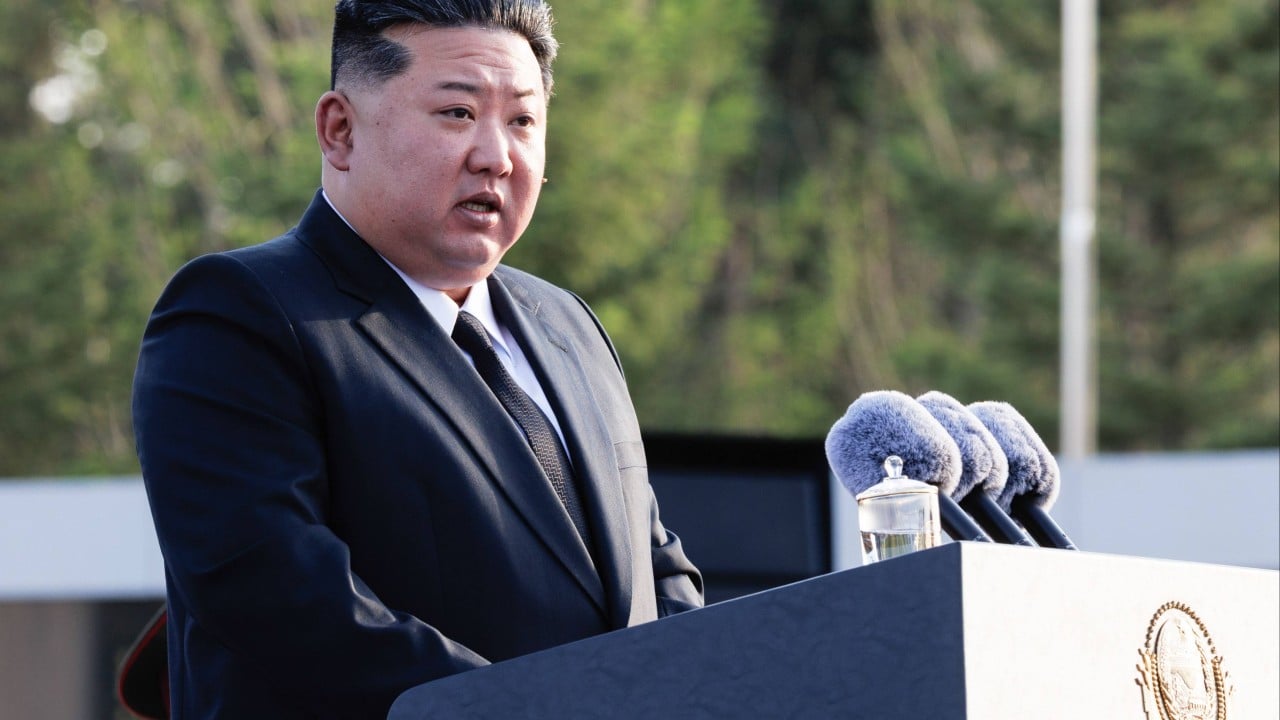
Kim Jong Un isn't playing a game of chicken anymore. He’s essentially divorced his neighbor and changed the locks. For decades, the world operated on a polite fiction: that North and South Korea were two halves of a broken whole, destined to reunite. That's dead. By rewriting its constitution to scrub out phrases like "peaceful reunification" and "fellow countrymen," Pyongyang has officially moved from a "one nation, two systems" fantasy to a "two states, two enemies" reality.
If you’re looking for a sign of peace, you won't find it in the rhetoric. But if you look at the legal plumbing, there's a weirdly pragmatic shift happening. North Korea is finally admitting it doesn't want to be "one" with the South. Honestly, that might be the most honest thing to come out of Pyongyang in years. If you found value in this piece, you might want to look at: this related article.
Why the Constitutional Divorce Matters Right Now
It’s easy to dismiss North Korean legal changes as theater. They aren't. In a system where the leader’s word is literal law, changing the constitution is how Kim Jong Un tells his military and his people that the South is no longer a long-lost brother. It's a foreign country. And not just any foreign country—a "primary foe."
This isn't about "peaceful coexistence" in the way we usually think of it. It’s not a cozy friendship. It’s more like two bitter exes who have finally signed the papers and agreed to stay on their own sides of the fence. By defining its territory for the first time—listing China, Russia, and the Republic of Korea (ROK) as its neighbors—the North is drawing a hard line in the dirt. For another angle on this development, check out the latest coverage from NBC News.
What was actually deleted
- The "One Nation" Myth: Gone are the references to the "northern half" of a single peninsula.
- Reunification Goals: The "Committee for the Peaceful Reunification of the Country" has been tossed into the trash.
- Ethnic Unity: The idea that Koreans share a unique, inseparable bloodline is being erased to make it easier for the North to justify using weapons against the South.
The Nuclear Command Center in the Fine Print
While everyone was looking at the "two states" headlines, Kim slipped something even more dangerous into the 2026 constitutional updates. He’s officially the "head of state" now, but with a massive upgrade. He has codified his personal command over the nuclear forces.
The constitution now explicitly states that the Chairman of the State Affairs Commission—Kim—can delegate the authority to use nuclear weapons. It’s a move that mirrors modern nuclear states, but it carries a chilling message. By treating South Korea as a foreign state rather than a domestic rebel, Kim is clearing the legal path to use nukes against Seoul without the "moral" baggage of nuking his own people.
Is This Actually Good for Stability?
It sounds counterintuitive, but some experts think this is the first step toward a "cold peace." If you stop trying to take over your neighbor’s house, and your neighbor stops trying to take over yours, you might actually stop fighting.
The South Korean public is already there. Recent polls show nearly 80% of South Koreans prioritize "peaceful coexistence" over the headache of reunification. They don't want the economic burden of absorbing a collapsing North, and they're tired of the constant threat. Kim is essentially meeting them halfway, albeit with a middle finger extended.
The Problem with the "Two State" Theory
- The Border Issue: The new constitution mentions a border but doesn't define where it is. It ignores the Northern Limit Line (NLL) in the sea, which is a massive trigger for naval skirmishes.
- The "Primary Foe" Label: You can't have peaceful coexistence while labeling your neighbor as an "invariable principal enemy."
- Russia’s Role: With North Korea shipping shells and missiles to Russia, Kim feels he doesn't need the South’s help or "reconciliation" money anymore.
Stop Waiting for the Grand Bargain
The era of summits and handshakes at the DMZ is over. If you’re waiting for a "Sunshine Policy" 2.0, don't hold your breath. Kim’s constitutional shift is a signal that he’s playing the long game with the US and Russia, while treating South Korea as a localized threat to be managed, not a partner to be courted.
For the international community, this means shifting focus. We need to stop talking about "denuclearization" as a short-term goal—that ship has sailed and is currently armed with ICBMs. The real task in 2026 is risk management. We're looking at a permanent, nuclear-armed North Korea that has legally detached itself from its southern neighbor.
The next steps for regional players aren't about "unification talks." They're about establishing hotlines to prevent a border misunderstanding from turning into a nuclear exchange. We’ve entered the "Hostile Coexistence" phase. It’s ugly, it’s tense, but it’s the most realistic look at the peninsula we’ve had in seventy years.
North Korea's Two-State Doctrine
This video breaks down how the new "Two Hostile States" policy fundamentally changes the legal and military landscape of the Korean Peninsula.