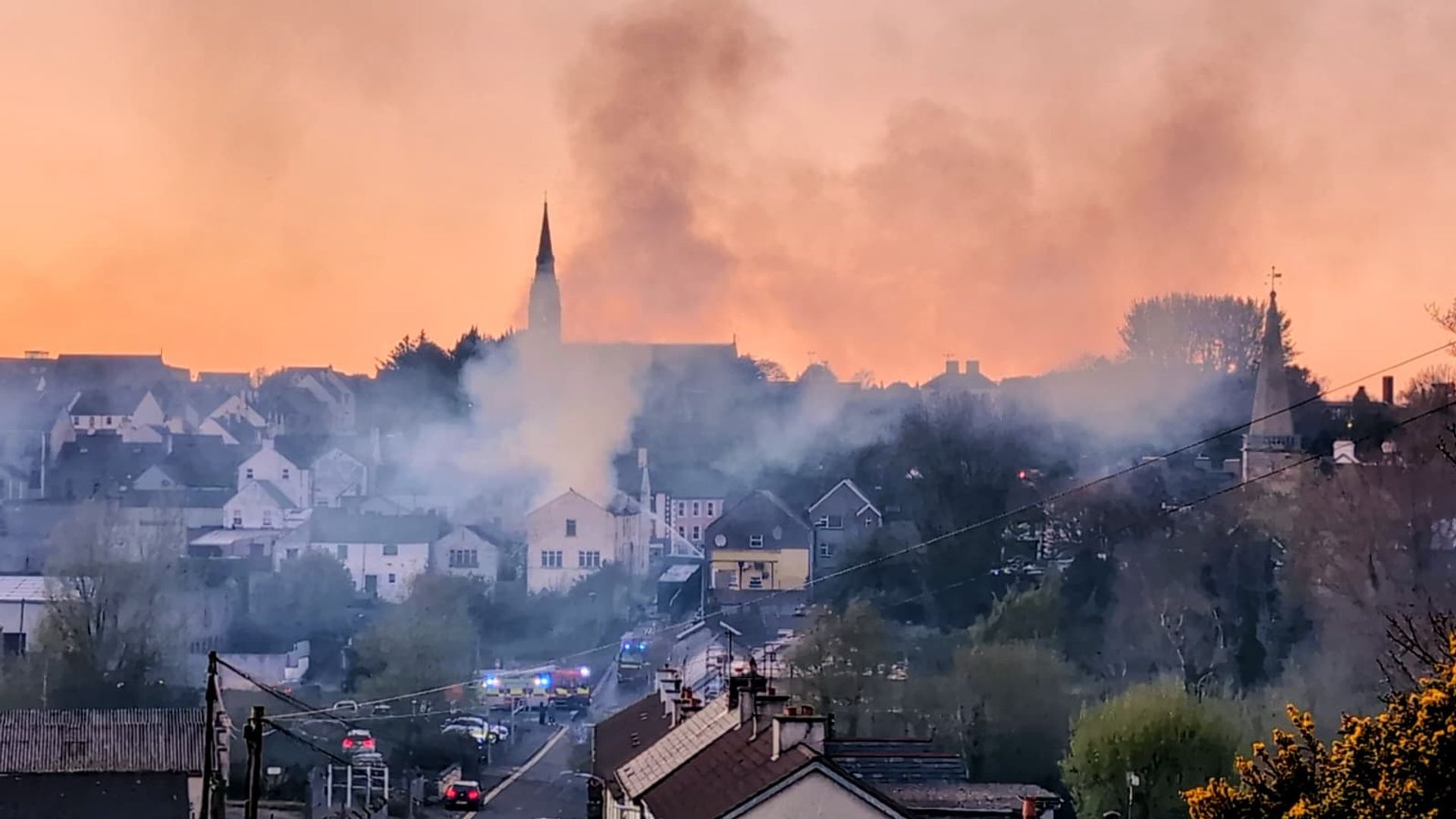
The smoke rising over Northern Ireland’s skyline has become a grimly familiar sight. When a historic building catches fire, the initial shock quickly gives way to a cynical sense of inevitability among those who track the region’s architectural heritage. On the surface, these fires appear as isolated tragedies—accidental sparks in dry timber or the work of opportunistic vandals. However, a deeper investigation into the burning of Northern Ireland’s historical assets reveals a systemic failure of policy, a lack of developer accountability, and a preservation framework that is toothless against the rising cost of restoration.
The recent blaze in a prominent historical structure in Northern Ireland is not just a loss of bricks and mortar. It represents the erasure of a specific cultural identity that once defined the industrial and social heart of the North. While emergency crews deserve praise for their bravery in the face of collapsing masonry, the real battle should have been fought years ago in the planning offices and council chambers. Don't forget to check out our recent article on this related article.
The Fire Before the Spark
Most "accidental" fires in historic buildings are the final chapter of a long story of "demolition by neglect." This process starts when a building is vacated and left without a viable use. Once the windows are boarded up, the clock begins to tick. Moisture ingress rots the floorboards, making the interior a tinderbox of dried-out timber and debris.
Security is often the first thing to go. Landowners, burdened by the high cost of maintaining a listed structure that they cannot easily develop, frequently provide only the bare minimum of protection. This invites squatters, lead thieves, and arsonists. When a fire eventually breaks out, the damage is often so extensive that the building is declared structurally unsound. Conveniently for the owner, this clears the path for total demolition and the construction of high-density modern units that would have been blocked by heritage laws just weeks prior. If you want more about the background here, BBC News offers an excellent summary.
We see this pattern repeated across Belfast and Derry. The legislation meant to protect these buildings—the Planning Act (Northern Ireland) 2011—grants the Department for Communities the power to issue urgent works notices. These notices can compel an owner to make a building weather-tight and secure. Yet, these powers are rarely invoked. The state is hesitant to step in, fearing the legal costs and the potential liability of taking over a crumbling asset. This hesitation creates a vacuum where neglect becomes a profitable strategy.
The Financial Reality of Heritage
Restoring a 19th-century linen mill or a Victorian townhouse is significantly more expensive than building from scratch. Modern building codes for fire safety, insulation, and accessibility are often at odds with the physical constraints of historical architecture.
For a developer, the numbers rarely add up. The cost of specialized craftsmanship, such as repointing with lime mortar or restoring original sash windows, can be three times the cost of modern alternatives. Without significant government subsidies or tax breaks—similar to the VAT exemptions seen in other European jurisdictions for heritage projects—the private sector views these buildings as liabilities rather than assets.
The VAT Disparity
In the United Kingdom and Northern Ireland, new builds often benefit from 0% VAT. In contrast, repairs and maintenance on existing buildings are subject to the standard 20% rate. This fiscal policy actively encourages the destruction of our built environment. It is cheaper to knock down a building and start over than it is to fix the roof of a historical landmark. This is a policy failure of the highest order, one that ensures the most sustainable buildings—the ones already standing—are the first to be discarded.
A Failure of Enforcement
Northern Ireland’s heritage protection relies on "Listing," a status that identifies buildings of special architectural or historic interest. However, listing a building without enforcing its upkeep is like locking a door but leaving the keys in the lock.
The Northern Ireland Environment Agency (NIEA) and local councils are often understaffed and lack the specialized legal expertise to take on well-funded developers in court. When a listed building is burned or illegally demolished, the fines are often treated as a mere "cost of doing business." If the fine for destroying a protected facade is $50,000, but the resulting development is worth $5 million, the law provides no real deterrent.
The legal framework lacks a "repair and recover" mechanism. In some jurisdictions, if a developer allows a building to fall into disrepair, the government can perform the repairs and place a lien on the property to recover the costs. In Northern Ireland, we watch from the sidelines as our history turns to ash, waiting for the "dangerous structures" notice that signals the end.
The Hidden Cost of Loss
When we lose a building like the one recently claimed by fire, we lose more than just an aesthetic landmark. We lose the physical record of Northern Ireland’s evolution. These buildings are the tangible links to our ancestors’ labor, their social lives, and their architectural ambitions.
The environmental impact is equally staggering. The "embodied carbon" within these structures—the energy already spent to create the bricks, transport the stone, and raise the walls—is lost forever when a building is demolished or burned. Replacing a 100-year-old brick building with a "green" modern structure often takes decades to reach carbon neutrality due to the massive emissions generated by new construction materials like concrete and steel.
A Shift in Strategy
If we are to stop the cycle of devastation, the approach must move from reactive to proactive. This requires a three-pronged strategy that addresses the financial, legal, and social aspects of heritage.
- Equalizing the Tax Burden: The government must align VAT on renovations with new builds. This single change would immediately make heritage projects more viable for small and medium-sized developers.
- Mandatory Security Standards: Owners of vacant listed buildings should be legally required to install monitored fire detection systems and 24-hour security. Failure to do so should result in daily fines that escalate over time.
- A Heritage Revolving Fund: Northern Ireland needs a state-backed fund that can step in to purchase at-risk buildings, stabilize them, and then resell them to developers with strict covenants for their restoration.
The current system is built on a hope that owners will do the right thing for the sake of history. Experience shows that hope is not a policy.
The Illusion of Progress
We are told that new developments bring jobs and modernity. While that may be true, a city that forgets its past has no soul. When we replace a unique historical structure with a glass-and-steel box that looks like it could be in any city in the world, we diminish the specific character that makes Northern Ireland a destination for tourists and a home for its people.
The rubble of the latest fire is still cooling. Already, there will be conversations behind closed doors about what can be built on the site now that the "obstacle" of the old building has been removed. We must recognize this for what it is: a failure of the state to protect its own heritage.
The "devastating" fires we read about are rarely a surprise to those who live near these neglected giants. They are the predictable outcome of a culture that values short-term profit over long-term preservation. Unless the legal and financial incentives change, the sirens will continue to wail, and the smoke will continue to rise.
Stop treating these fires as accidents and start treating them as the policy failures they are. Demand that the Department for Communities and local councils use the powers they already have to hold property owners accountable before the match is ever lit.