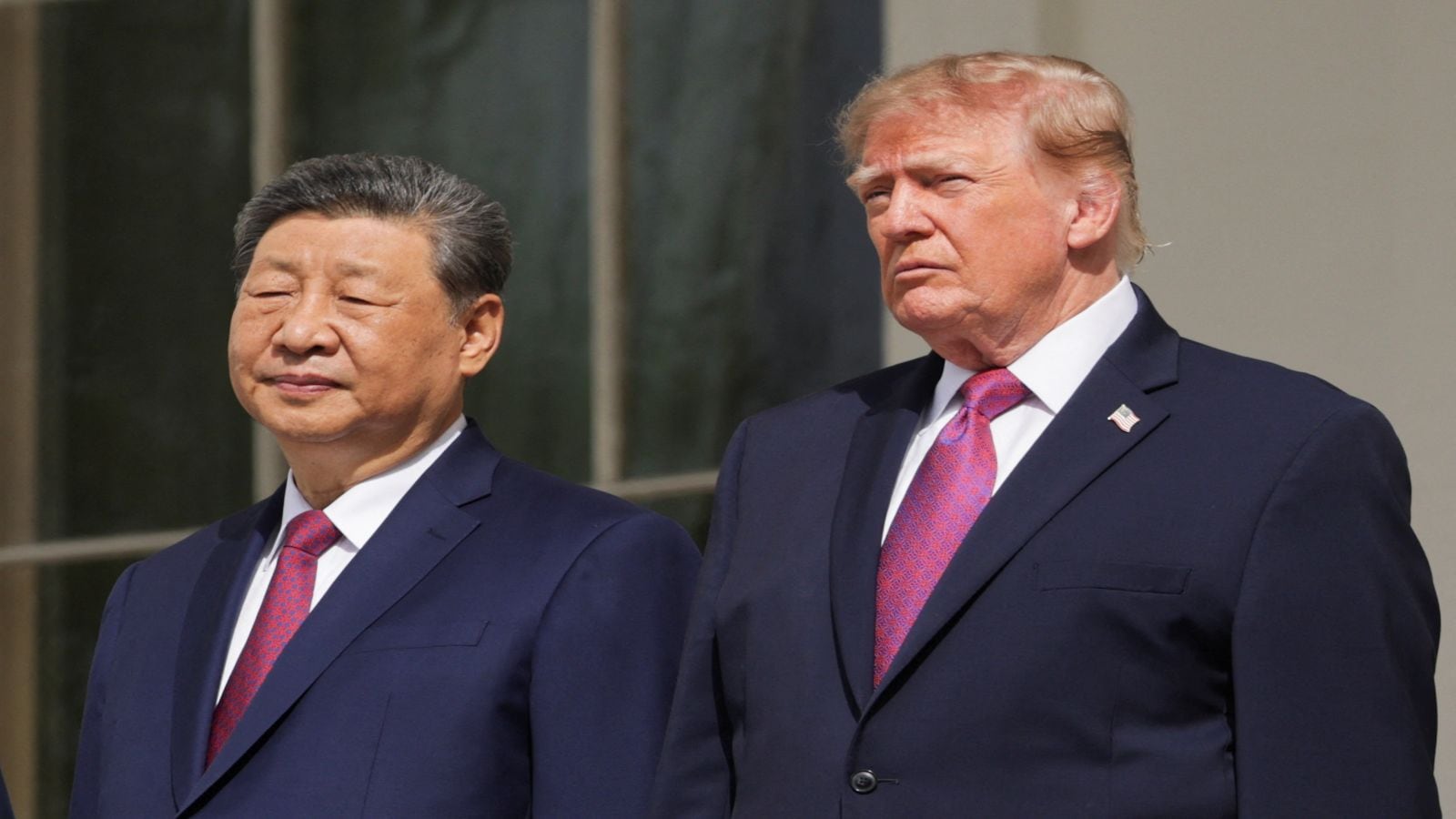
The global commentariat is having its monthly panic attack over a calendar. When acting president Delcy Rodríguez took the podium at the United Nations General Assembly, the predictable chorus of mainstream analysts immediately locked onto a single perceived omission: she promised a transition to full democracy, she dangled the prospect of future votes, but she refused to drop a concrete date on the table.
Cue the hand-wringing. Headlines erupted across international wires lamenting a lack of a definitive timeline, framing the speech as a masterclass in stalling, a bureaucratic dodge by a regime terrified of letting go. Building on this idea, you can find more in: The Ballistic Calculus of Asymmetric Deterrence in Saudi Air Defense.
This is lazy analysis. It treats state survival as a scheduling conflict.
If you are sitting in Washington, Madrid, or a think tank in D.C. waiting for Rodríguez to hand over a neatly laminated timeline with a circled election day, you misunderstand how structural power works in a post-transition state. The obsession with a calendar date is a comforting fiction. It allows foreign observers to pretend that political reality can be solved by an electoral decree, ignoring the deep structural plumbing that dictates whether any vote actually matters. Experts at NBC News have shared their thoughts on this matter.
Let us define terms. In international relations, the lazy consensus assumes that elections are the cause of democratic institutional health. They are not. Elections are the lagging indicator. They are the scoreboard, not the game. When a state undergoes tectonic shocks—such as the sudden removal and ongoing trial of Nicolás Maduro just blocks away from UN headquarters—dropping a random date into a microphone does not create stability. It creates a vacuum.
I have watched foreign policy pundits blow millions of words and countless hours tracking procedural breadcrumbs while ignoring the actual machinery of statecraft. Pushing for an arbitrary deadline without fixing the foundational architecture of the state is a recipe for institutional collapse. When Rodríguez stated that the right moment would be determined by the Venezuelan people and that institutions must be prepared to guarantee transparency, she was not just using diplomatic filler. She was describing the raw prerequisites of survival.
Look at the physical and financial realities on the ground. We are talking about an economy that has spent years under maximum-pressure sanctions, with sovereign assets tangled in foreign courts, and the reconstruction of national identity lagging far behind basic physical recovery. Rebuilding trust in public institutions cannot be rushed to appease the quarterly news cycle of Western cable networks. If an administration holds a hurried contest simply to satisfy foreign critics before the underlying institutional trust is restored, the result is guaranteed to be contested, fragile, and ultimately useless.
The contrarian truth is simple: a vague timeline is safer than a rushed lie.
Critics call it stalling. Realists call it risk management. When a government is managing the aftermath of historic political convulsions, foreign assets being redistributed under foreign oversight, and a fractured social fabric, giving an exact date to appease outside actors is political malpractice. The real fight inside Venezuela is not over when a ballot box opens, but who controls the fiscal levers, the security apparatus, and the normalization channels when it does.
Stop asking for a date. Start looking at the structural reforms happening beneath the noise. Until those institutional foundations are poured, any date on a calendar is just a target for the next crisis.