If you try to score unlimited fettuccine Alfredo with Olive Garden's coveted $100 Never-Ending Pasta Pass, you'll need to hand over a government-issued photo ID. If you show up to vote on Election Day in some states, you don't need one at all.
That contrast has become the center of a political flashpoint in Washington.
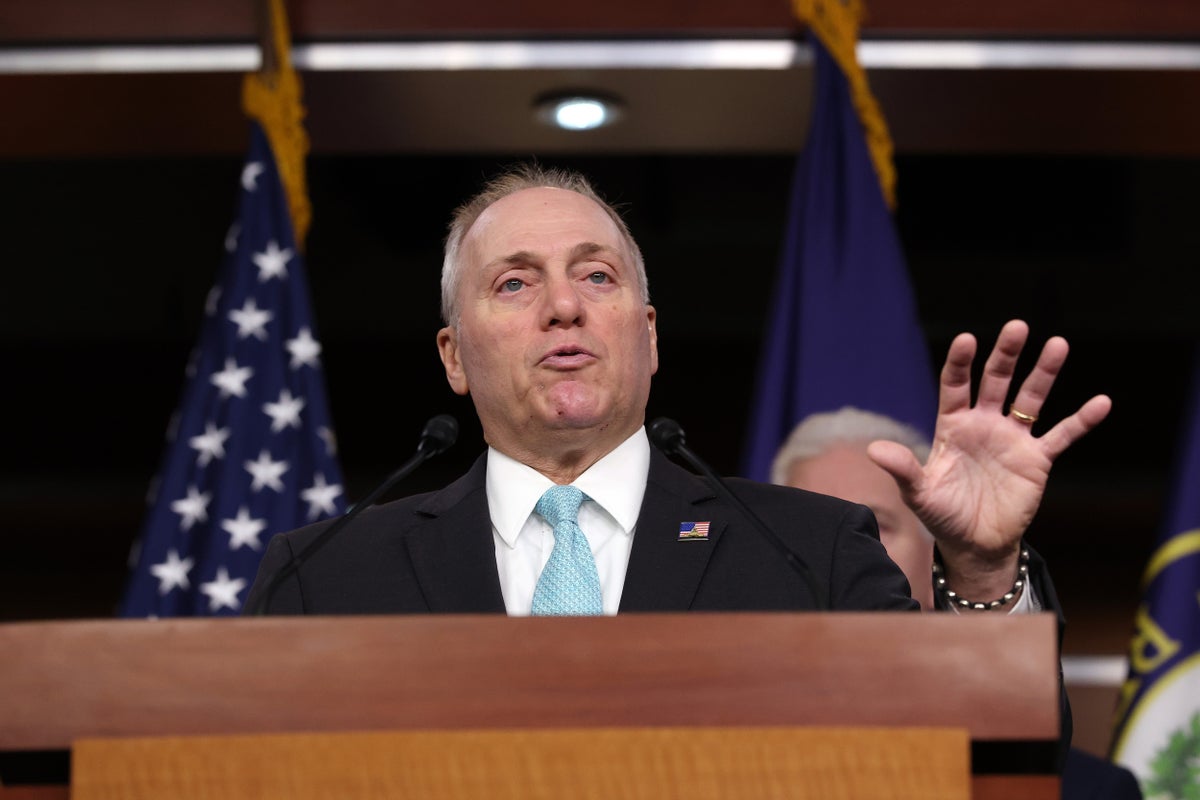
Top House and Senate Republicans are seizing on Darden Restaurants' fraud-prevention rules to push for nationwide voter ID requirements. House Majority Leader Steve Scalise brought it up during a televised interview on CNBC, asking why securing a bowl of carbs requires more identity verification than deciding who runs the country. Senator Mike Lee echoed the exact same line, arguing that American elections shouldn't be less secure than an endless pasta promotion.
It sounds like a quirky cable news soundbite. It's actually a deliberate strategy aimed at framing voter verification as everyday common sense rather than partisan policy.
The Carbs and Cards Comparison Taking Over Capitol Hill
The political logic behind the campaign is straightforward.
When Olive Garden brought back its Never-Ending Pasta Pass after a five-year hiatus, demand exploded. All 10,000 passes sold out almost instantly. To prevent scalpers from reselling passes or friends from sharing a single $100 ticket, Olive Garden imposed a strict condition: diners must show a photo ID that matches the name printed on the pass.
For GOP lawmakers push for the SAVE America Act, the corporate policy is a perfect talking point.
Scalise argued on CNBC that if everyday Americans routinely show photo identification to board an airplane, buy a pack of cigarettes, check into a hotel, or claim a plate of pasta, asking for an ID at the ballot box isn't a burden.
"Nowadays, if you want to go to Olive Garden and get unlimited pasta, you've got to show a picture ID," Scalise said. "This isn't complicated stuff."
The goal is to shift the debate away from legal minutiae and anchor it in everyday consumer habits. Most people carry a driver's license in their wallet. Most people pull it out without thinking twice when renting a car or buying restricted items. By framing voter ID around Olive Garden, conservative lawmakers want voters to wonder why election rules should operate under a completely different standard.
Why Private Corporate Rules Don't Work Like Public Voting Rights
Civil rights advocates and legal scholars view the analogy as wildly flawed.
Eating endless breadsticks at a commercial restaurant is a private commercial privilege. Voting is a constitutional right protected by the United States Constitution.
When a restaurant chain sets rules, it's protecting its bottom line against lost revenue. When a government sets voting rules, it's regulating how citizens exercise their voice in a democracy.
Critics point out several reasons why comparing pasta passes to polling places breaks down quickly:
- Private businesses can deny service to anyone who doesn't follow their internal terms of service. State governments cannot deny constitutional rights without meeting strict legal standards.
- Getting a state-issued photo ID costs time and money. For low-income citizens, gathering birth certificates, paying DMV fees, and taking off work amounts to a financial barrier that resembles a modern poll tax.
- Commercial identification requirements are voluntary. If you don't have an ID, you simply pay full price for a single bowl of soup and salad. If you don't have an ID at a polling place in a strict photo ID state, your vote isn't counted.
Civil rights groups highlight that roughly 21 million American citizens of voting age do not possess a current, government-issued photo ID with their present name and address. Driver's licenses are disproportionately held by higher-income, suburban, and older Americans. Students, urban residents who rely on public transit, low-income workers, and senior citizens whose licenses have expired often lack valid government identification.
When lawmakers insist that everybody has an ID because everybody buys pasta, they overlook millions of citizens who don't drive, don't fly, and don't spend $100 on promotional restaurant passes.
The Fight Over the SAVE America Act
The Olive Garden talking point isn't happening in a vacuum. It's the public relations spearhead for the Safeguard American Voter Eligibility (SAVE) Act.
The legislation would rewrite federal election guidelines. It would require proof of U.S. citizenship—such as a passport or birth certificate—to register to vote in federal elections, alongside photo ID requirements at the polls.
Proponents claim the measure is essential for maintaining trust in election outcomes. They point to public opinion polls showing that broad majorities of voters support requiring a photo ID to cast a ballot.
Opponents counter that non-citizen voting in federal elections is already illegal under federal law and exceedingly rare. Multiple academic studies and nonpartisan election audits show that instances of non-citizens casting ballots are practically nonexistent. Adding strict documentation requirements, voting rights groups argue, will mainly disenfranchise legitimate U.S. citizens who lack immediate access to their original birth certificates or passports.
The bill faces a steep uphill battle in the Senate. With a narrow Republican majority, proponents need 60 votes to overcome a Democratic filibuster—a barrier that appears insurmountable given total Democratic opposition.
That reality explains the intense focus on public messaging. If Republicans cannot pass the bill into law immediately, they want the issue front and center for the upcoming midterm elections.
What Real World Data Shows About Strict Voter ID Laws
Does requiring a photo ID actually stop election fraud? Does it suppress voter turnout?
The research presents a nuanced picture that neither political party fully embraces.
Academic studies on state-level voter ID laws yield complex results:
Impact on Turnout: Research published by the National Bureau of Economic Research (NBER) analyzed voter turnout data across states over multi-election cycles. The study found that strict voter ID laws slightly reduce overall voter turnout, with the largest drops occurring among minority voters, young voters, and low-income individuals. However, the overall decrease in total turnout is often smaller than partisans on either side claim.
Impact on Fraud: Studies consistently show that in-person voter impersonation—the specific type of fraud a photo ID prevents—is remarkably rare. A widely cited study by Loyola Law School found only 31 credible allegations of voter impersonation out of more than 1 billion ballots cast between 2000 and 2014. Most documented election infractions involve mail-in ballot irregularities or registration errors, which physical photo IDs at polling places do not address.
Public Perception and Trust: While strict ID laws don't dramatically alter aggregate election outcomes in most states, they do impact voter confidence. Polling consistently reveals that voters feel more confident in election security when photo ID rules are in place, even if actual rates of impersonation fraud are nearly zero.
This gap between public perception and legal reality is why political strategists love simple metaphors like the Olive Garden pass. It taps directly into existing public assumptions without getting bogged down in legal research or statistical data.
Where State Voter ID Laws Stand Right Now
Because election administration is decentralized under the U.S. Constitution, rules vary dramatically depending on where you live.
Right now, states fall into four main categories regarding voter identification:
- Strict Photo ID States: Voters must show a specific type of government-issued photo ID (like a driver's license, passport, or state ID). If you don't have one, you cast a provisional ballot and must return within a few days with valid identification for your vote to count. States like Georgia, Indiana, and Texas fall here.
- Non-Strict Photo ID States: Polling workers ask for a photo ID, but if you don't have one, you can sign an affidavit confirming your identity under penalty of perjury, or another voter can vouch for you.
- Non-Photo ID States: Voters can present non-photo documents, such as a utility bill, bank statement, or paycheck showing their name and address.
- No Document Required States: Election workers verify identity by matching signatures or verifying personal details against registration rolls, without requiring physical documents at the door.
This patchwork system means an American moving from one state to another faces entirely different rules at the ballot box. It also fuels national political friction, as federal lawmakers attempt to standardize rules that states have managed independently for over two centuries.
How to Check Your Local Voting Requirements
While politicians trade barbs over pasta and polling rules, individual voters need to know where they stand before election day arrives.
If you want to ensure your vote counts without surprise hurdles at your local polling station, take these concrete steps right now:
- Verify Your State's ID Standard: Visit Vote.gov or your state Secretary of State's official website to review exact identification requirements. Don't rely on social media posts or national news summaries, as state laws change frequently.
- Check Name and Address Uniformity: Ensure the name on your voter registration record matches the exact name on your photo ID. Discrepancies like missing middle names or outdated addresses can trigger provisional ballot procedures in strict states.
- Update Expired Identification: If your driver's license or state ID card has expired, renew it well ahead of registration deadlines. Some states accept recently expired IDs, but others enforce strict expiration rules.
- Obtain Alternative Free IDs: If you lack a driver's license, many states that enforce strict photo ID laws are required by law to offer free voter identification cards through their local DMV or registrar's office.
- Secure Supporting Documentation Early: If your state requires proof of U.S. citizenship for new voter registration, request official certified copies of your birth certificate or apply for a passport several months in advance to avoid processing delays.