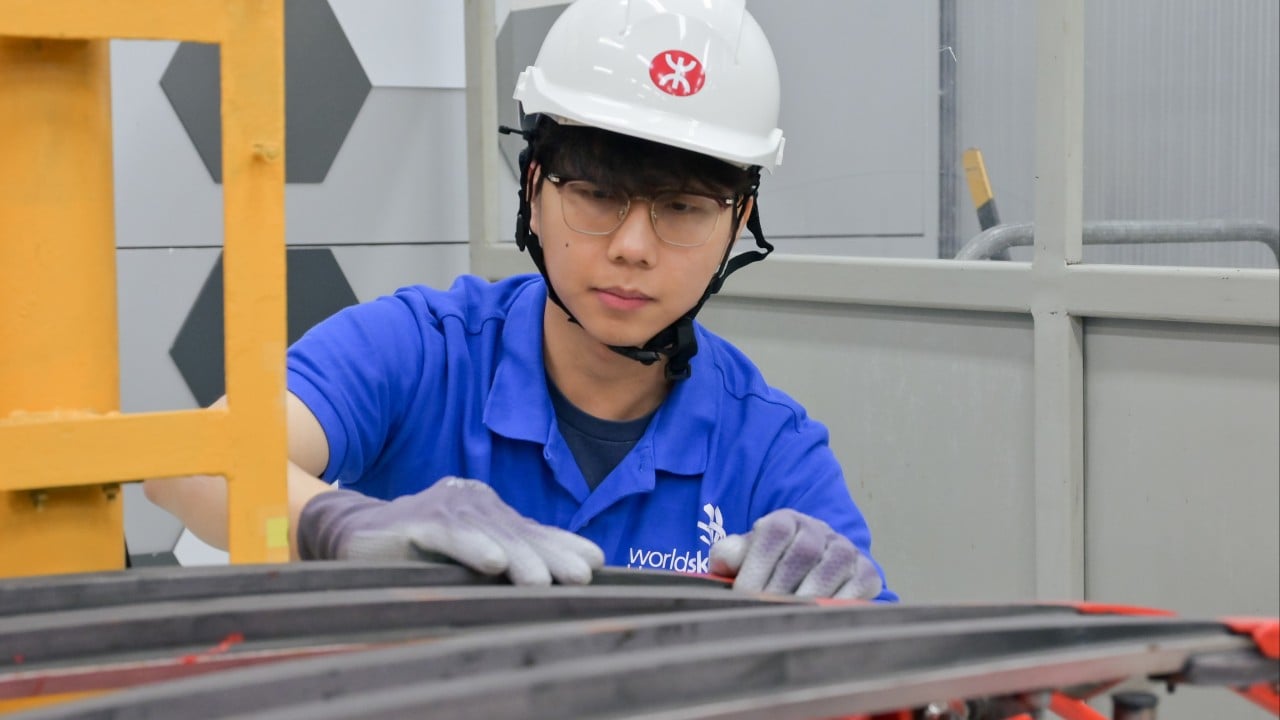
Mass transit systems rely on silent perfection. When a train glides away from a platform in Hong Kong or London, millions of commuters trust invisible engineering and the technicians who keep microscopic tolerances intact. Recently, an MTR technician returned home from a major international vocational competition with a gold medal. Headlines praised the achievement as proof of corporate excellence. Beneath the celebration lies a quieter, more urgent narrative. The rigorous training required to win medals on a global stage exposes the widening chasm between elite skill sets and the day-to-day reality of aging infrastructure.
The Reality of Global Vocational Competitions
WorldSkills and similar international vocational showcases attract the sharpest young tradespeople from dozens of countries. Competitors spend months drilling complex scenarios under laboratory conditions. They wire high-speed control panels, diagnose phantom electrical faults, and calibrate sensors with industrial equipment that often outclasses what is installed in active depots. Winning requires precision under severe psychological pressure.
Yet, training for a controlled arena differs vastly from maintaining rolling stock that has carried billions of passengers over decades. When a competitor returns to a depot, they face legacy hardware, missing documentation, and tight turnaround times dictated by peak-hour headways. The gold medal proves individual capability. It does little to solve systemic bottlenecks.
Inside the Depot
Maintenance facilities operate in perpetual motion. Trains enter the shed for brief overnight windows where technicians swarm carriages to inspect brake assemblies, pantographs, and signaling computers. Speed is currency. Every minute a train sits on a jack is a minute it is unavailable for revenue service.
In this environment, theoretical perfection collides with practical constraints. A technician might know the exact mathematical resistance of a circuit board component from competition manuals, but in the field, they confront corrosion, grime, and obsolete parts manufactured by companies that went bankrupt in the nineties.
Experienced engineers understand that maintenance is triage. Decisions are made under pressure using incomplete data. The introduction of elite competition winners into routine rosters provides a temporary boost in diagnostic speed, but it also highlights how heavily transit agencies depend on extraordinary individuals rather than resilient systems.
The Automation Paradox
Mass transit is shifting toward unattended train operation. Automatic train protection and communication-based signaling systems promise higher frequency and fewer human errors. Simultaneously, these digital upgrades increase complexity. A modern rail car is essentially a data center on wheels, featuring thousands of input nodes transmitting telemetry back to central servers.
When a fault occurs on a legacy mechanical linkage, a seasoned mechanic relies on tactile feedback and acoustic cues. When a fault occurs on a modern software-driven network, the technician becomes an IT troubleshooter. They stare at diagnostic logs, looking for intermittent software glitches that defy standard wiring diagrams.
This technological evolution changes the definition of skill. The traditional grease-stained mechanic is being replaced by a hybrid technician who must understand both mechanical stress and network protocols. Competitions are slowly adapting to this shift, but vocational education systems globally struggle to keep pace with the rate of software updates deployed by train manufacturers.
The Talent Pipeline Crisis
Rail operators across the globe face a looming demographic cliff. Veteran technicians who mastered mechanical systems during the rapid expansion eras of the late twentieth century are retiring in droves. They take with them decades of institutional memory—the subtle knowledge of how a specific gear sounds when it is about to fail or how to bypass a faulty relay safely.
Replacements are harder to recruit. Vocational trades often suffer from a PR problem, viewed by young job seekers as less prestigious than white-collar desk jobs, despite offering competitive pay and high job security. Agencies attempt to bridge the gap by establishing internal academies and partnering with technical institutes.
These programs produce competent graduates, but retention remains a persistent challenge. Shift work, underground environments, and the physical demands of heavy engineering deter workers who have digital-first career expectations. Celebrating a single gold medalist creates a heroic narrative, but it distracts from the unglamorous work of building a broad, sustainable talent pipeline.
Bridging the Gap
Translating international competition insights into everyday depot operations requires structural changes. Winning technicians often return with ideas about workflow optimization, modular tool design, and diagnostic efficiency. Forward-thinking management teams listen to these insights, granting returning champions the autonomy to redesign maintenance checklists or mentor junior staff.
Without institutional backing, however, individual brilliance burns out against bureaucratic friction. If a technician suggests a more rigorous diagnostic protocol that adds ten minutes to an overnight inspection, schedulers often reject it to protect morning departure times. Safety margins are managed carefully, yet the pressure to maintain punctuality metrics can silently erode preventive maintenance routines.
The real test of an award-winning technician is not how fast they can assemble a training rig in a foreign convention center, but whether they can influence the culture of their home depot. Modern transit networks cannot rely on gold medals to guarantee safety. They require an ongoing commitment to upgrading infrastructure, modernizing training facilities, and listening to the workers who spend their nights in the dark beneath the carriages.