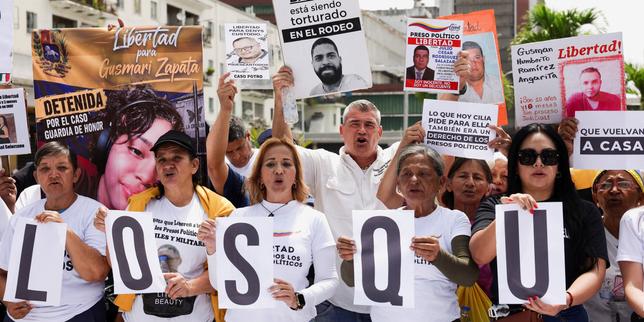
The iron gate does not make a sound when it finally swings inward. It is a heavy, rusted thing, scarred by decades of bad weather and bitter politics, but tonight, it yields.
Outside, a woman stands clutching a plastic bag. Inside that bag are three items: a plastic comb, a worn paperback with the cover torn off, and a folded handkerchief embroidered by a grandmother who may no longer remember her own name. She does not run. She cannot run. Her legs, unaccustomed to uneven pavement and wide, open streets, tremble beneath her like dry twigs.
She is one of roughly thirty.
For months, perhaps years, their universe was measured in concrete centimeters. A hard bunk, a sliver of gray light slicing through a high, barred window, and the deafening silence of an isolation cell where time stopped caring about human breathing. They were names on a ledger in a distant ministry, pawns in a high-stakes chess match played out across mahogany tables while flashbulbs popped and diplomats spoke in soothing, meaningless cadences about democratic transitions and renewed dialogues.
Then came the handshake.
In the capital, cameras recorded the latest cycle of talks between the ruling power and the fractured opposition. Hands were clasped, smiles were manufactured for the evening news, and ink dried on parchment that ordinary citizens read with a mixture of desperate hope and profound cynicism. To the political elites, the release of thirty-odd prisoners was a calculated gesture—a pressure valve turned slightly to let off steam, a tactical concession to appease international monitors and ease crushing economic sanctions.
To the woman with the plastic bag, it was the resumption of a heartbeat.
We talk about political crises in macroeconomics and geopolitical leverage, as if nations were mere columns on a spreadsheet. We dissect the maneuvers of strongmen and the tactical retreats of resistance leaders. But history is written in the cramped margins of individual lives. It is felt in the hollow cheeks of a father who missed his daughter's first steps, and in the exhausted eyes of a mother who spent every Tuesday for five years standing outside a prison gate that refused to open.
Consider the architecture of such confinement. It is designed not just to punish, but to erase. When a government detains political dissidents, journalists, and activists, the objective is two-fold: isolate the physical body and murder the collective memory. They want you to forget that dissent is a natural human reflex. They want the public square to grow so quiet that the sound of a falling leaf feels like an act of sedition.
Yet, silence is a fragile construct.
Even within the damp, suffocating corridors of the detention facilities, a subterranean culture of survival takes root. Scraps of toilet paper become writing paper. A tap on a concrete wall becomes a telegraph system carrying news of the outside world, a fractured sentence of encouragement passed from cell to cell like a smuggled jewel. Hold on. They are talking. We are not forgotten.
When the guards finally arrived with the paperwork late that evening, there were no triumphant cheers. Fear is a chronic condition; it does not vanish simply because a stamp is pressed onto a release form. Prisoners packed their meager belongings in total silence, half-expecting a cruel joke, a sudden reversal, a captain changing his mind in the stairwell. Only when they crossed the threshold into the humid night air—only when the wind hit their faces without a layer of steel mesh intercepting it—did the reality begin to sink in.
They are free. But freedom, after years of systemic erasure, is a disorienting landscape.
The streets of the capital look different now. Prices are higher, storefronts have changed, and the ambient anxiety of daily survival has grown sharper, more desperate. The country they left behind in spirit is not the one they are returning to in flesh. The economic collapse that birthed the protests in the first place has only deepened, turning the entire nation into a giant, open-air waiting room where everyone is either trying to leave or trying to survive until tomorrow.
And so these thirty individuals step out into a society that is both thrilled by their return and terrified of its own shadow.
Opposition leaders hail the releases as proof that pressure works, that persistence pays off in the grinding gears of negotiation. Government mouthpieces frame the gesture as an act of magnanimity, a testament to the state's enduring stability and commitment to national reconciliation. Both narratives miss the quiet, devastating human truth.
No amount of political posturing can restore the lost years. No diplomatic communique can stitch back together a family torn apart by midnight raids and secret tribunals. The ink on the negotiation agreement is fresh, but the scars on the national psyche are decades deep.
Down a dimly lit side street away from the cameras and the speechmakers, the woman with the plastic bag finally stops walking. She sets her meager belongings down on a stone stoop and looks up at the night sky. There are no stars visible through the thick, smoggy haze of the city, only the dull, amber glow of streetlamps casting long, crooked shadows against the peeling paint of old apartment buildings.
She reaches into her pocket, pulls out the small, torn paperback, and runs her thumb across the worn paper.
Behind her, somewhere in the dark heart of the city, the iron gate remains unlocked, waiting for the next cycle, the next compromise, the next fragile breath of hope in a place that has forgotten how to exhale.



