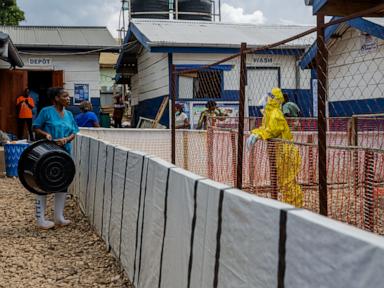
Uganda’s mandate imposing a 21-day quarantine on returning citizens with travel history from the Democratic Republic of the Congo (DRC) functions as an epidemiological circuit breaker designed to contain viral hemorrhagic fevers—primarily Ebola Virus Disease (EVD) and Marburg Virus Disease—before community transmission establishes an exponential growth curve. Standard news reporting treats border closures and isolation periods as simple administrative announcements. In reality, enforcing a three-week detention window across a porous, 870-kilometer land border represents a complex exercise in epidemiological mathematics, supply chain logistics, and behavioral compliance economics.
To understand why Kampala deploys this specific protocol, one must examine the biological constraints of filoviruses, the structural vulnerabilities of the Albertine Rift borderlands, and the operational bottlenecks that determine whether a quarantine succeeds or collapses under the weight of informal migration.
The Biological Mandate Behind the 21-Day Window
A 21-day quarantine is not an arbitrary bureaucratic duration; it is dictated entirely by the upper bound of the incubation period for Orthoebolavirus and Orthomarburgvirus species. When a pathogen enters a human host, it undergoes a replication phase before triggering clinical symptoms such as fever, severe headache, muscle pain, and eventual hemorrhagic manifestations.
Epidemiological surveillance data from historical outbreaks across Central and East Africa demonstrates that while the mean incubation period for Ebola sits between 8 and 10 days, the distribution tail extends to 21 days in roughly 95 to 99 percent of documented cases. Cutting the quarantine window to 14 days—a standard duration for respiratory coronaviruses—would allow approximately 5 percent of infected, pre-symptomatic carriers to exit isolation and enter dense urban centers like Kampala or Entebbe while actively shedding virus.
This creates a strict operational binary. Because filoviruses rarely transmit prior to symptom onset, identifying and isolating an exposed individual before the onset of pyrexia (fever) reduces the effective reproduction number ($R_t$) of that specific transmission chain to zero. The quarantine facility acts as a temporal buffer, forcing the virus to reveal itself inside a controlled containment zone rather than an unmonitored household or public transit hub.
The Three Structural Chokepoints of Border Containment
Implementing a mandatory 21-day isolation protocol for returning citizens requires synchronizing three distinct operational layers. Failure in any single layer invalidates the protective capacity of the other two.
1. Port of Entry Detection and Travel History Verification
The primary vulnerability of any travel-history-based quarantine is reliance on self-reporting. Official border crossings—such as Mpondwe, Bunagana, and Goli—account for only a fraction of daily human movement between Uganda and eastern DRC. Decades of shared kinship networks, cross-border agricultural trade, and localized market cycles mean that thousands of individuals cross unmarked footpaths daily without encountering an immigration officer.
Even at formal checkpoints, screening relies on two imperfect mechanisms:
- Thermal Screening: Infrared thermometers detect elevated core body temperatures, which catches symptomatic travelers. They are entirely blind to individuals in days 1 through 20 of the incubation window.
- Documentation Audits: Passport stamps and national identity cards track formal transit, yet citizens frequently hold dual documentation or travel on temporary border passes that obscure deeper movement into affected provinces like North Kivu or Ituri.
When screening relies on honest disclosure of DRC travel history, imposing a punitive 21-day detention creates an immediate perverse incentive. Travelers who would otherwise pass through official checkpoints with symptom monitoring instead divert to unmonitored informal crossings to avoid three weeks of lost income.
2. Institutional Quarantine Capacity and Nosocomial Amplification
Once a returning citizen is flagged for quarantine, the state assumes full custodial responsibility. Holding cohorts of travelers for three weeks requires dedicated physical infrastructure—typically repurposed boarding schools, district hospital annexes, or temporary tented camps—equipped with strict infection prevention and control (IPC) protocols.
The greatest operational risk inside these facilities is nosocomial or intra-facility amplification. If 50 returning citizens are housed in a single facility and share sanitation blocks, dining areas, or transport vehicles, a single infected individual who becomes symptomatic on day 12 can infect dozens of otherwise healthy detainees. When this occurs, the quarantine clock must reset for the entire cohort, compounding facility overcrowding and public resistance.
To prevent the quarantine center from becoming an incubator, administrators must enforce individual rooming, dedicated latrine assignments, twice-daily temperature logging, and rapid polymerase chain reaction (PCR) testing at the slightest onset of non-specific symptoms—a difficult standard to maintain when malaria and typhoid produce identical early clinical presentations.
3. The Socioeconomic Cost Function of Prolonged Detention
For the average cross-border trader, transporter, or seasonal laborer, a 21-day quarantine represents an acute financial shock. Unlike salaried professionals who may negotiate remote work or paid medical leave, informal sector workers operate on daily liquidity. Three weeks of forced inactivity equates to a 100 percent loss of gross revenue during the period, alongside uncompensated costs for dependents left behind.
Unless the state subsidizes the economic cost of compliance—by providing free meals, basic stipends, and guaranteed job protection—compliance rates degrade rapidly. Field observations from previous regional health emergencies confirm that when detainees perceive quarantine conditions as punitive, unhygienic, or financially ruinous, escapes from isolation centers spike. An absconding detainee immediately breaks the epidemiological surveillance chain, forcing health ministries to deploy expensive contact-tracing teams across multiple districts.
Asymmetric Friction in Regional Trade and Mobility
The impact of a 21-day quarantine does not distribute evenly across the population; it creates sharp economic friction along specific commercial corridors. Eastern DRC relies heavily on Ugandan transport networks, fuel supplies, and manufactured goods moving westward from the port of Mombasa through Kampala.
While commercial freight drivers are frequently subject to modified protocols—such as relay driving systems where cargo is handed off at the border without the driver entering the destination country—returning Ugandan citizens engaged in small-scale commerce bear the full brunt of the mandate. The distinction between essential logistics and personal movement introduces regulatory ambiguity:
- Supply Chain Bottlenecks: Delays at border posts increase turnaround times for commercial vehicles, driving up transport costs per metric ton and inflating food and fuel prices in border districts like Kasese and Kisoro.
- Informal Sector Diversion: Small-scale traders who cannot absorb a 21-day delay shift their operations to nighttime smuggling routes, bypassing both customs taxation and health screening simultaneously.
- Diplomatic Reciprocity: Unilateral quarantine mandates often trigger retaliatory border restrictions from neighboring states, complicating regional coordination under East African Community (EAC) health frameworks.
Calibrating Containment Versus Evasion
Public health authorities face a continuous optimization problem: maximizing pathogen interception while minimizing behavioral evasion. Overly aggressive containment measures—such as indefinite detention in poorly provisioned facilities—produce high theoretical protection on paper while generating low real-world compliance on the ground.
Alternative epidemiological models prioritize tiered risk stratification over blanket 21-day institutional detention for all returning citizens:
- High-Risk Exposure Cohorts: Individuals with confirmed contact with known cases, attendance at unsafe burials, or visits to active outbreak health facilities require mandatory, fully subsidized institutional quarantine with daily clinical monitoring.
- Moderate-Risk Geographic Cohorts: Returning citizens from affected provinces without known direct exposure can be managed through active community-based surveillance. This involves registering the traveler’s destination, deploying Village Health Teams (VHTs) for twice-daily in-person temperature checks, and enforcing localized movement restrictions rather than centralized facility detention.
- Low-Risk Transit Cohorts: Citizens returning from unaffected regions of the DRC require point-of-entry screening, health education briefings, and automated SMS symptom reporting systems.
Risk stratification preserves institutional quarantine beds for individuals with the highest probability of seroconversion while removing the incentive for low-risk travelers to evade border checkpoints.
Limitations of Border-Centric Containment
Even when executed with military precision, a 21-day quarantine on returning citizens suffers from three inherent structural limitations:
First, it addresses only legal, documented citizen returnees while leaving foreign nationals, asylum seekers, and undocumented migrants outside the tracking architecture unless parallel reception centers operate simultaneously. Second, border quarantines consume disproportionate amounts of a health ministry’s finite operational budget—diverting trained epidemiologists, laboratory reagents, and personal protective equipment away from frontline clinics where an undetected index case is most likely to first seek care. Third, quarantine is purely defensive; it buys time for surveillance and ring vaccination teams to operate, but it cannot extinguish an outbreak at its source across the border.
The Strategic Imperative for Border Health Operations
To prevent the 21-day quarantine mandate from collapsing into widespread border evasion and facility overcrowding, health authorities must immediately shift from a punitive enforcement posture to an incentivized compliance model. This requires three concrete operational adjustments: decoupling quarantine costs from the detainee by guaranteeing state-funded nutrition and basic household stipends during the 21-day window; transitioning low-exposure returning citizens from centralized camps to Village Health Team-monitored home isolation; and deploying rapid mobile diagnostic laboratories directly to high-volume border crossings like Mpondwe to isolate symptomatic cases within hours rather than days. Without subsidizing the economic burden of the 21-day hold, the policy will inevitably drive high-risk travelers off main roads and into unmonitored borderlands, neutralizing the epidemiological barrier it was built to create.