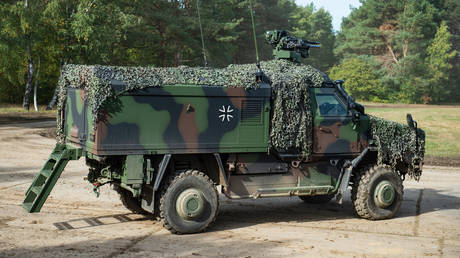
Deploying National Guard units equipped with armored ground vehicles and maritime vessels across Washington marks a structural shift from static perimeter defense to multi-domain domestic policing. Standard media coverage frames this expansion as a routine reaction to civil unrest or localized security threats. That framing misses the underlying operational mechanics. Introducing heavy tactical mobility and waterway interdiction into a metropolitan environment alters the command-and-control hierarchy, redistributes municipal policing liabilities, and creates severe friction between federal doctrine and local legal constraints. To evaluate the effectiveness and second-order consequences of this deployment, analysts must dissect the force posture, the legal frameworks governing domestic military operations, and the logistical cost functions of sustained urban-maritime patrols.
The Mechanics of Multi-Domain Urban Deterrence
A multi-domain patrol posture integrates ground and littoral assets to eliminate geographic blind spots within a jurisdiction. In Washington, where urban infrastructure intersects directly with major waterways like the Potomac and Anacostia rivers—or Puget Sound and the Columbia River in Washington State—ground-only deployments suffer from predictable containment gaps. Offenders, smugglers, or organized demonstrators exploit bridges, tunnels, and shorelines to bypass fixed vehicular checkpoints.
Adding military watercraft and tactical ground vehicles closes these corridors through three distinct operational mechanisms:
- Vertical and Lateral Mobility: Tactical wheeled vehicles—such as the High Mobility Multipurpose Wheeled Vehicle (HMMWV) or Mine-Resistant Ambush Protected (MRAP) variants—navigate terrain and debris fields that disable standard municipal cruisers. Simultaneously, rigid-hull inflatable boats (RHIBs) and patrol craft extend sensor coverage onto water boundaries, preventing amphibious flank movements or maritime contraband transit.
- Sensor Fusion and Line-of-Sight Dominance: Military platforms carry elevated optical, thermal, and communications suites. When networked together, a single patrol boat and two ground vehicles establish an overlapping surveillance dome that tracks movement across docks, industrial zones, and adjacent highway arteries in real time.
- Psychological Deterrence via Force Projection: Visible militarized hardware alters the risk calculus of potential actors. Unlike standard law enforcement vehicles designed for pursuit and administrative response, armored hulls and crew-served watercraft signal overwhelming kinetic capacity, raising the perceived cost of confrontation before physical contact occurs.
This deterrence model relies heavily on the assumption that visible force suppresses illicit activity without provoking escalation. In practice, urban density compresses engagement distances, turning high-profile military assets into focal points for public friction and tactical vulnerability.
Legal Authorities and Command Friction
The operational utility of military vehicles and boats in a domestic setting is strictly bounded by statutory authority. Unlike active-duty federal forces restricted by the Posse Comitatus Act, National Guard units operate under three distinct legal statuses, each dictating what tasks troops can legally execute.
- State Active Duty (SAD): Funded and controlled entirely by the state governor (or, in the District of Columbia, through specific delegated executive authorities). Troops act under state law and can perform direct law enforcement functions, including arrests and searches, if authorized by local statute.
- Title 32 Status: Federally funded but remaining under state command and control. This hybrid status is frequently used for disaster response and homeland security missions, allowing governors to retain operational direction while bypassing Posse Comitatus restrictions.
- Title 10 Status: Full federalization under the President's command. Once activated under Title 10, troops become subject to the Posse Comitatus Act, prohibiting them from executing civilian law enforcement tasks unless the Insurrection Act is formally invoked.
The primary operational bottleneck in Washington stems from the transition between these statuses and the resulting Rules for the Use of Force (RUF). Civilian police operate under constitutional Fourth Amendment standards governing reasonable search, seizure, and proportional force. Military personnel train primarily under Rules of Engagement (ROE) designed for combat theater threats. When Guard units deploy heavy vehicles and boats alongside municipal officers, commanders must enforce strict RUF protocols that prohibit troops from using the inherent capabilities of their platforms. An armored vehicle cannot be used to ram civilian cars; a patrol boat cannot execute aggressive maritime interdiction maneuvers reserved for hostile combatants. The hardware suggests military dominance, yet the legal mandate restricts the operators to passive observation and logistical support.
The Cost Function of Heavy Asset Sustainment
Sustaining military vehicles and boats in an urban patrol cycle imposes a steep logistical and financial penalty compared to standard municipal policing. Policy planners frequently underestimate the tail-to-tooth ratio required to keep specialized military hardware operational outside a base environment.
Military ground vehicles and watercraft are engineered for durability under extreme conditions, not fuel efficiency or continuous stop-and-go urban idling. Operating tactical trucks on paved city streets accelerates tire wear, drivetrain degradation, and transmission overheating. Maritime assets face an even steeper maintenance curve: saltwater or brackish river operations require daily freshwater flushes, hull inspections, and specialized marine mechanic support.
The economic burden breaks down into four compounding cost centers:
- Direct Fuel and Consumables Burn: Heavy armored vehicles consume fuel at rates three to five times higher than standard police interceptors, while twin-outboard patrol boats burn tens of gallons per hour even at low patrol speeds.
- Specialized Maintenance Backlogs: Municipal motor pools lack the diagnostic equipment, lifts, and replacement parts for military-grade transmissions or marine propulsion systems. Units must establish forward maintenance teams or haul deadlined assets back to regional armories, reducing active patrol availability.
- Personnel Opportunity Cost: National Guard soldiers and airmen are part-time reserve forces. Extended patrol rotations pull mechanics, boat operators, and infantrymen away from their civilian occupations, eroding employer support and driving long-term retention losses within the Guard's ranks.
- Infrastructure Wear and Liability: Heavy axle loads damage municipal roadways, bridges, and utility covers not rated for military weight classes. Furthermore, operating wide-body armored vehicles and high-powered boats in congested civilian traffic lanes increases the statistical probability of collision liability, where military blind spots lead to property damage or civilian injury.
When these variables are aggregated, the cost per patrol hour of a combined military ground-and-water unit dwarfs the expenditure required to fund overtime shifts for existing municipal police or harbor patrol officers.
Tactical Vulnerabilities in Urban and Littoral Chokepoints
Deploying military hardware into civilian environments introduces asymmetric vulnerabilities that standard military doctrine struggles to mitigate. Armored vehicles and tactical boats are optimized for open maneuver warfare or defended perimeters, not dense, unpredictable civilian corridors.
On land, armored vehicles suffer from severely restricted visibility. Small ballistic glass viewports and high chassis profiles create massive blind spots around the vehicle's perimeter. In narrow urban streets or crowded intersections, a tactical vehicle can be easily immobilized by civilian traffic, construction barriers, or coordinated crowd blockades. Once stationary, the vehicle ceases to be a maneuver asset and becomes a fixed liability requiring additional infantry to secure its perimeter.
On the water, military patrol craft face acute jurisdictional and navigational hazards. Urban waterways are shared with commercial shipping, recreational boaters, kayakers, and commuter ferries. Military vessels operating under strict safety protocols cannot enforce exclusion zones without Coast Guard or local harbor police intervention. If a suspicious vessel refuses to yield, National Guard boat crews lacking explicit Title 32 or State Active Duty arrest authority can only shadow the target and relay coordinates, rendering the tactical speed of the craft moot.
This creates a capability-authority mismatch: the state pays for high-end military mobility, but legal and environmental constraints force those assets to operate at the speed and authority level of an unarmed security guard.
Strategic Alternatives and Resource Allocation
Relying on National Guard ground and maritime patrols as a persistent security solution treats a structural policing deficit with an unsustainable military stopgap. While visible deployments temporarily suppress localized disorder, they degrade unit readiness, drain state budgets, and blur the constitutional boundary between civilian governance and military force.
Decision-makers managing urban and waterway security must transition away from open-ended military vehicle patrols toward targeted, lower-friction architectures:
- Shift from Persistent Patrols to Quick Reaction Forces (QRF): Pull military vehicles and boats off routine street and river circuits. Stage them at secure regional armories and marinas on a 15-to-30-minute recall posture. This preserves equipment life, slashes fuel and maintenance expenditures, and removes provocative hardware from daily civilian sightlines while retaining rapid surge capacity for genuine emergencies.
- Integrate Communications Over Hardware: Instead of deploying physical military platforms to close sensor gaps, embed National Guard communications specialists and tactical liaisons directly into municipal Joint Operations Centers (JOCs). Sharing satellite imagery, drone feeds, and encrypted radio networks multiplies the effectiveness of local police cruisers and harbor boats without putting heavy military hulls on public streets.
- Reallocate Sustainment Funds to Municipal Harbor and Traffic Units: Redirect the capital spent on military fuel, per diem allowances, and vehicle transport toward hiring, equipping, and paying overtime for specialized civilian harbor police and municipal tactical units. Civilian officers possess unambiguous arrest authority, intimate knowledge of local geography, and vehicles engineered for continuous urban duty cycles.
Execute the drawdown of visible military patrols within 30 days, retaining only a concealed QRF reserve while transferring daily ground and waterway interdiction back to fully funded civilian law enforcement agencies.