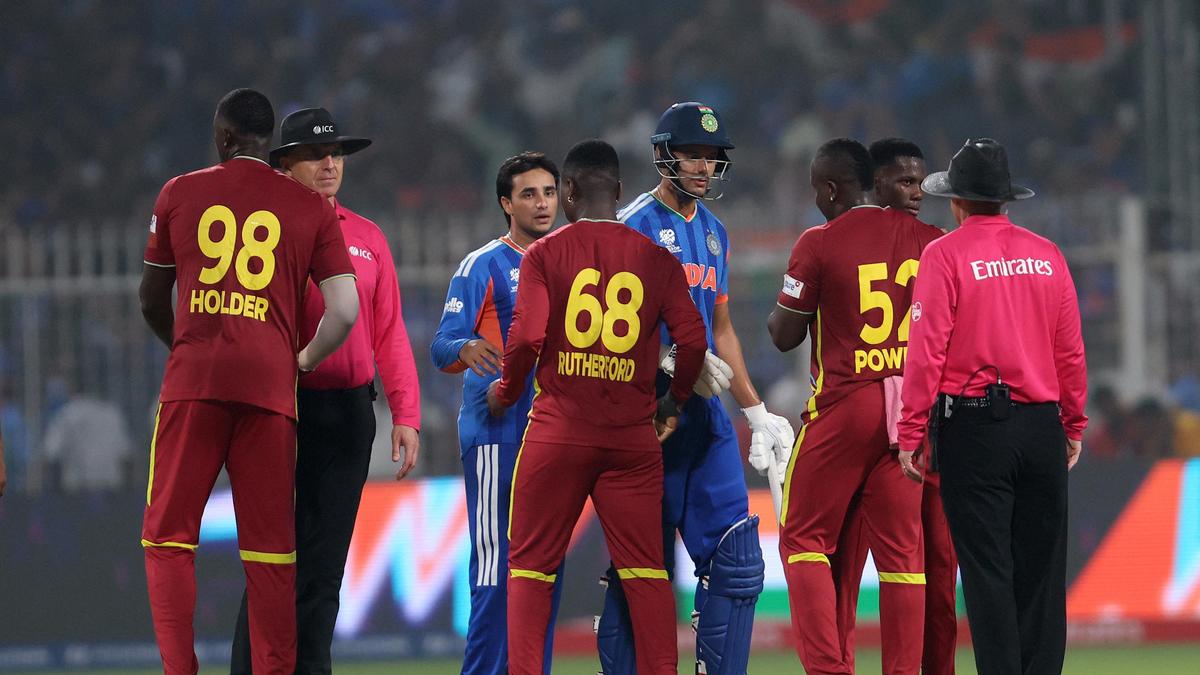
The stranding of the West Indies cricket team in India serves as a critical case study in the failure of "Just-in-Time" logistics within the international sports industry. While initial reports focused on the inconvenience to athletes, the underlying mechanics reveal a systemic inability to manage geopolitical risk and regulatory volatility. The situation is not a simple travel delay; it is a breakdown of the Tripartite Coordination Model—the essential synchronicity between national governing bodies, private charter entities, and civil aviation authorities.
When international airspace restrictions are imposed, the transition from a standard commercial movement to a diplomatic logistics operation occurs. The West Indies' inability to exit Indian soil underscores a specific vulnerability in how modern sports franchises manage their most valuable assets: the players' recovery time and competitive readiness.
The Taxonomy of Logistical Paralysis
To understand why a world-class sporting organization can become effectively trapped, one must declassify the variables into three distinct pressure points.
1. The Regulatory Bottleneck
International flight paths are governed by Bilateral Air Services Agreements (BASAs). When a sudden restriction occurs—whether due to regional conflict, sovereign airspace closures, or health-related lockdowns—the existing flight permits (Non-Scheduled Flight Clearances) are rendered void. For a sports team, the "Cost of Rerouting" is not merely financial; it is a function of:
- Permit Latency: The time required to secure "overflight" rights from secondary and tertiary nations.
- Crew Duty Limitations: Legal caps on flight crew hours that become exhausted during ground delays.
- Technical Stop Availability: The necessity of identifying airports that can handle heavy-load charters on short notice without prior diplomatic clearance.
2. The Asset Degradation Variable
In high-performance sports, time spent in transit is categorized as "Non-Productive Stress." The West Indies squad faces a measurable decline in physiological readiness. This degradation follows a predictable decay curve:
- Circadian Misalignment: Every hour of delay in a high-stress environment (an airport or hotel-bound lockdown) compounds the metabolic cost of travel.
- Nutritional Inconsistency: The shift from controlled team diets to "opportunity-based" fueling during a crisis.
- Psychological Fatigue: The erosion of the "Performance Bubble," where athletes lose the mental compartmentalization necessary for elite competition.
3. The Financial Liability Matrix
The contractual obligations between Cricket West Indies (CWI) and the Board of Control for Cricket in India (BCCI) likely contain Force Majeure clauses. However, these clauses rarely account for the specific "Opportunity Cost of Displacement." Every day the team is stranded, the hosting board incurs escalating "Hotel and Security Burn Rates," while the visiting board faces potential breach-of-contract penalties for subsequent series.
The Mechanics of Airspace Volatility
The current crisis highlights the difference between Linear Logistics (Point A to Point B) and Dynamic Logistics (Continuous Re-routing). Most sports boards operate on a linear model to minimize overhead. This creates a single point of failure.
When airspace closes, the "Critical Path" of the team’s itinerary is severed. The recovery of this path requires a Multi-Vector Approval Process.
- Sovereign Intervention: The Ministry of External Affairs (India) must interface with the counterpart in the destination or transit country.
- Charter Broker Pivot: The private entity managing the aircraft must re-file flight plans under a "Special Category" status, often reserved for humanitarian or diplomatic missions.
- Slot Recovery: Finding a take-off slot in India’s congested corridors (like Mumbai or Delhi) after the original window has lapsed.
This process is inherently slow because civil aviation authorities prioritize scheduled commercial traffic over unscheduled sports charters during periods of instability. The West Indies team effectively fell into the "Priority Gap," where they lacked the sovereign weight of a government flight but possessed a larger footprint than a standard commercial passenger group.
The Economic Shadow of Displacement
The financial impact of a stranded international team extends beyond the immediate charter cost. We can define the Total Impact Value (TIV) using the following components:
- Direct Sunk Costs: Non-refundable charter deposits, expired ground transport contracts, and emergency accommodation.
- Performance Penalties: If the delay forces the cancellation of a subsequent match, the loss of broadcasting revenue can reach seven figures per fixture.
- Brand Equity Erosion: The perception of administrative incompetence can deter future commercial partners and sponsors who prize stability.
The "Burn Rate" for a traveling party of 25–30 individuals (players, coaching staff, and medical personnel) in a Tier-1 Indian city is substantial. When security detail costs are factored in—necessary for high-profile international athletes—the daily expenditure increases by approximately 40% over standard corporate travel.
Structural Deficiencies in Crisis Management
The West Indies situation exposes a lack of Redundancy Protocols in sports administration. Most boards do not maintain a "Logistics Contingency Fund" or "Pre-Approved Transit Corridors." Instead, they rely on "Best-Effort" clauses from travel agencies.
The reliance on a single geographic exit point is the primary tactical error. In a more resilient framework, the team would have "Tiered Exit Strategies":
- Option Alpha: The primary charter flight.
- Option Beta: Splitting the squad into smaller groups to utilize commercial "Hub-and-Spoke" networks.
- Option Gamma: Moving the team to a neutral third-party country with broader diplomatic ties to facilitate easier onward travel.
The failure to execute Option Beta or Gamma suggests either a lack of liquidity to purchase last-minute commercial blocks or a rigid "All-in-One" mentality that prioritizes administrative ease over player welfare.
Quantifying the High-Performance Toll
The physiological impact on the players is not anecdotal; it is quantifiable. Research into elite athlete travel indicates that for every day of unplanned delay, a player requires approximately 0.5 days of additional recovery to return to baseline "Power-to-Output" ratios.
If the West Indies team is stranded for four days, the first two days of their next competitive engagement are statistically compromised. This leads to an increased risk of soft-tissue injuries, as the body’s "Sympathetic Nervous System" remains in a state of high alert due to the uncertainty of the environment.
The Recovery Bottleneck
- In-flight Compression: Long-haul travel after a delay increases the risk of Deep Vein Thrombosis (DVT) and general muscle stiffness.
- Cognitive Load: The stress of logistical uncertainty depletes the "Pre-frontal Cortex" resources required for high-speed decision-making on the pitch.
Strategic Recalibration for Global Sport
To prevent a recurrence, international sports organizations must move toward an Agile Asset Deployment model. This involves three specific shifts in operational strategy.
Sovereign-Level Liaisons
Sports boards must treat international tours as "Semi-Diplomatic Missions." This involves establishing a dedicated desk within their national government’s foreign office to fast-track airspace clearances during crises. The "Sports Passport" concept—where athletes are given secondary priority status behind diplomats—is the only way to bypass standard civil aviation queues.
Decentralized Logistics
The "All-on-One-Plane" philosophy is an antiquated cost-saving measure that creates total exposure. A "Distributed Travel Model," where the squad is split across two different carriers or routes, reduces the probability of a total stranding by 50%. While this increases the management burden, it effectively "Insures" the series against total cancellation.
Real-Time Risk Mapping
Boards should integrate "Geopolitical Heat Maps" into their tour planning. If a region shows a 15% or higher probability of airspace closure (based on current diplomatic tensions or regulatory trends), the tour must require a pre-funded "Emergency Extraction Bond." This bond ensures that the logistics team has immediate, liquid access to secondary charter providers without waiting for board-level financial approvals.
The West Indies' current predicament is a symptom of an industry that has grown in commercial value but remained stagnant in operational sophistication. The "Invisible Infrastructure" of global sport—the permits, the corridors, and the diplomatic nuances—is now just as important as the talent on the field. Without a radical shift toward proactive risk modeling, the next "logistical anomaly" will not just strand a team; it will bankrupt a series.
The immediate move for CWI is to pivot from a "Wait-and-See" posture to an "Active Extraction" maneuver. This involves bypassing the Indian hub entirely and utilizing a land-to-sea or land-to-air multi-modal transfer to a neutral territory, even if the per-capita cost is triple the original budget. The long-term preservation of the players' physical capital and the board's commercial reputation outweighs the short-term ledger hit.