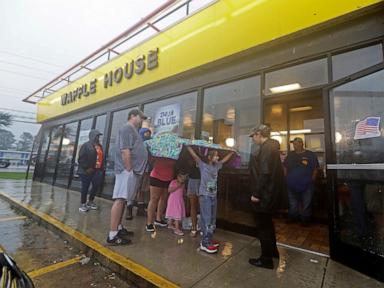
Traditional disaster recovery frameworks rely on centralized bureaucratic signaling, municipal assessments, and top-down resource allocation that routinely suffer from high latency and severe information asymmetry. When a catastrophic weather event strikes, municipal leadership requires time to aggregate damage reports, verify infrastructure integrity, and prioritize routing for emergency services. This creates a critical administrative blind spot during the immediate post-impact window where economic triage and community stabilization are most urgent.
To overcome this data latency, emergency management strategists and logistics planners increasingly rely on a high-frequency operational proxy known informally as the Waffle House Index. By mapping the functional status of a ubiquitous, 24-hour decentralized commercial footprint against localized meteorological severity, stakeholders can assess infrastructure damage and utility failure with remarkable speed. This operational framework bypasses traditional municipal reporting bottlenecks, trading administrative precision for real-time situational awareness.
The Economic Mechanics of Commercial Continuity
The utility of a decentralized retail footprint as a disaster indicator lies in its strict operational triage matrix. Unlike standard commercial entities that operate on predictable daytime schedules, continuous-service enterprises maintain standardized supply chains, on-site generator redundancy, and a heavily optimized menu architecture that minimizes dependency on complex external fresh-food logistics.
When a severe hurricane or severe convective storm approaches, these locations operate under a tiered protocol dictated by corporate risk thresholds and local infrastructure degradation. The operational states break down into three distinct functional tiers:
- Green Operations: Full menu availability, full staff mobilization, and uninterrupted municipal power grid dependency. This indicates that wind shear and precipitation levels remain below structural disruption thresholds, and local utility distribution networks are intact.
- Yellow Operations: Restricted menu offerings, partial staffing, or transition to auxiliary generator power. This state signals municipal grid failure, compromised local logistics, or localized flooding that restricts workforce transit while structural integrity remains uncompromised.
- Red Operations: Complete facility shutdown. This represents a critical failure of multiple environmental parameters, including total structural breach risks, absolute potable water loss, or mandatory evacuation orders enforced by civil authorities.
By observing which locations transition from green to yellow or red, emergency logistics analysts construct a spatial map of grid failure without waiting for official utility company status reports. The commercial entity effectively acts as a distributed sensor network across vulnerable geographic corridors.
Information Asymmetry and the Latency Gap in Disaster Response
In any acute crisis, the primary enemy is not just physical destruction, but information latency. Municipal emergency management agencies face severe structural delays in assessing damage because their standard reporting hierarchy is inherently linear. Field units must conduct visual inspections, relay findings up a chain of command, aggregate data at county or state EOCs, and verify metrics before public release.
Decentralized commercial networks bypass this linear friction through decentralized local decision-making. Store managers possess autonomous authority to close or maintain operations based on real-time environmental inputs. Consequently, the operational state of a commercial location serves as an instantaneous, crowdsourced proxy for ground-truth conditions.
| Metric Dimension | Traditional Municipal Reporting | Decentralized Commercial Proxy |
|---|---|---|
| Information Latency | 12 to 72 hours post-impact | Near real-time (continuous polling) |
| Data Granularity | Regional aggregate estimates | Hyper-local node-specific status |
| Failure Mode | Bureaucratic bottlenecks and verification lag | False positives from corporate policy variance |
The Federal Emergency Management Agency integrates this proxy data into its initial resource staging models. If commercial nodes in a specific county remain functional on auxiliary power, logistics staging areas can be safely positioned closer to the impact zone, reducing supply chain friction for heavy relief equipment.
Systemic Vulnerabilities and Limitations of Commercial Proxies
While high-frequency operational proxies offer unprecedented speed, they are not without structural limitations. Relying on private sector entities for public infrastructure diagnostics introduces systemic blind spots that require analytical adjustment.
The primary limitation is corporate policy variance. Not all commercial footprints maintain identical corporate risk tolerance or identical physical hardening standards. A facility built to modern wind-load engineering specifications will remain operational longer than older infrastructure in the same storm vector, creating a false divergence in local damage assessment.
Furthermore, supply chain interdependencies can force a facility shutdown even when local electrical grids and structural integrity are entirely sound. If regional distribution hubs are cut off by flooded interstate corridors, a location may close due to inventory starvation rather than direct environmental impact. Analysts must parse these operational closures to avoid misinterpreting inventory logistics failures as catastrophic structural damage.
Strategic Deployment of High-Frequency Proxies
The broader lesson of decentralized operational metrics extends far beyond emergency management. In complex adaptive systems, centralized authorities frequently suffer from cognitive overload and data starvation during high-velocity disruptions.
Organizations seeking to build structural resilience must identify decentralized, high-frequency proxies within their own operational ecosystems. By monitoring edge-node behavior rather than waiting for aggregated executive reporting, decision-makers can reduce operational latency, optimize resource pre-positioning, and maintain situational dominance when traditional reporting channels fail.