A Room Filled with Heavy Air
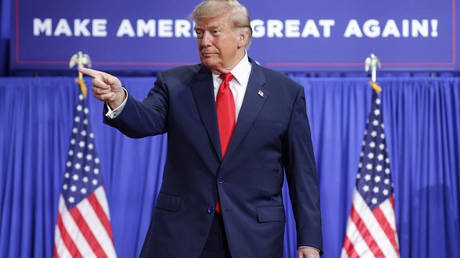
In a grand room lined with historic portraits and gold leaf, a man speaks into a cluster of microphones. His tone is casual, almost offhanded, as if he were discussing a real estate deal that has dragged on a few days too long.
Donald Trump sits back, assessing a war that has burned across eastern Europe for years. He offers a calculation that catches diplomatic circles entirely off guard: Vladimir Putin, he asserts, wants a Ukrainian peace deal far more than Volodymyr Zelensky does.
To the casual observer, the claim sounds upside down.
Ukraine is the nation under siege. Its power grids flicker under constant barrage. Its cities bear the physical scars of artillery, and its families are divided across borders and frontlines. Standard logic suggests that the party suffering the visible, immediate damage would be the one desperate to stop the bleeding.
Yet power dynamics in global geopolitics rarely follow standard logic. Beneath the surface of troop movements and territorial maps lies a quiet, desperate psychological contest. Understanding why a sitting or former American leader would frame the war this way requires peeling back the public bravado to look at the invisible pressures crushing both Moscow and Kyiv.
The Cold Economics of Strategic Patience
Consider a simple metaphor: two men hanging from a ledge by their fingers.
The first man is battered, bleeding, and visibly exhausted. Anyone watching expects him to drop at any second. The second man appears calm, holding on with two hands, shouting down instructions to the crowd below. But what the crowd cannot see is that the second man’s grip is rapidly slipping due to a hidden tear in his shoulder. He cannot hold on forever, and unlike the first man, he has nowhere to land without crashing down completely.
For Vladimir Putin, the war in Ukraine has turned into that torn shoulder.
Moscow presents a front of endless resources and stoic endurance. The Russian state economy has been retooled entirely around war production, creating a temporary illusion of industrial strength. Factories hum around the clock producing shells, armor, and uniforms. On paper, GDP figures seem resilient.
Look closer, and the structural cracks appear.
A war economy is a fire that consumes its own oxygen. When a country spends its reserves to produce artillery shells instead of commercial infrastructure, medical technology, or consumer goods, it creates a artificial high followed by a long, brutal crash. Inflation eats away at domestic savings. Shortages of skilled labor grow acute as hundreds of thousands of young men are pulled from tech firms, farms, and factories into the armed forces or flee the country entirely.
Moscow’s strategic math is decaying. Every month the war drags on, Russia becomes more economically dependent on external trade partners who purchase discounted energy resources on their own aggressive terms. Putin needs an exit—or at least a frozen pause—that allows him to claim victory, lock in territorial gains, and relieve the grinding pressure on Russia’s internal stability before the economic foundation buckles.
He wants a deal, but only if that deal looks like a triumph.
The Unyielding Wall in Kyiv
Across the border, the view from Kyiv operates on an entirely different emotional frequency.
Volodymyr Zelensky faces a political and moral reality that defies standard negotiation tactics. When an invading force occupies your land, casualties are not just abstract tallies on a briefing document; they are friends, relatives, and neighbors.
To sign a premature deal—one that cedes vast tracts of land and leaves millions of citizens under foreign occupation—is not simply a political concession. For Ukraine, it feels like an existential surrender.
Zelensky’s reluctance to jump at quick settlement terms isn't born of a desire for endless conflict. It is driven by the acute awareness of what comes after. A ceasefire without rock-solid security guarantees is merely a pause button, giving an aggressor time to rest, resupply, and strike again in five years.
Kyiv’s leadership knows that an incomplete peace can be far more dangerous than an ongoing war. If a deal guarantees future destruction, the incentive to sign it vanishes.
This is the central paradox Donald Trump highlighted: Putin seeks an ending because the timeline works against his long-term national foundation, while Zelensky resists a quick patch because a bad ending threatens the very survival of his state.
The Rhetorical Shift in Washington
When American leaders alter their public narrative on foreign conflicts, the world takes notice. Trump’s assertion marks a fundamental pivot in how the war is framed for the public.
By suggesting that Moscow is more eager for a resolution than Kyiv, the narrative shifts pressure away from the Kremlin and places it directly on Ukrainian decision-makers. It reframes the conflict not as a struggle between an aggressor and a defender, but as a stubborn stalemate where the party receiving aid is portrayed as the roadblock to peace.
This maneuver carries profound consequences for international diplomacy.
- Foreign Policy Strategy: It sets the stage for future negotiations where U.S. aid could be used as leverage to force Kyiv to the bargaining table.
- Domestic Public Opinion: It appeals to an audience weary of foreign financial commitments, framing a quick settlement as the pragmatic choice.
- Geopolitical Posturing: It signals to Moscow that future American leadership might be far more receptive to ending the conflict on terms that prioritize speed over total territorial restoration.
Negotiations are rarely about justice; they are about leverage. When global powers signal a desire to wrap up a conflict quickly, the leverage shifts overnight.
The Unseen Human Cost
Strip away the political commentary, the press conferences, and the strategic posturing, and you are left with the human reality on the ground.
In a dimly lit apartment in Kharkiv, an elderly woman sits by a window listening to the distant rumble of generators. In a trench near Pokrovsk, a tired soldier wipes mud from his rifle, wondering if the decisions made in distant capital cities will mean he goes home next month or remains in the cold dirt for another year.
In Moscow, a mother checks her phone in silence, waiting for a message from a son who hasn't called in three weeks, hoping against hope that the state’s confident announcements match the reality on the front line.
Wars end in polished rooms with heavy wooden tables, where men in tailored suits sign thick documents with fountain pens. But the pressure that forces those pens onto paper builds far away from those rooms. It builds in broken budgets, depleted pantries, dwindling military stockpiles, and the quiet despair of populations waiting for an end to uncertainty.
Whether Putin truly wants a deal more than Zelensky is not merely a point of political debate. It is a question of whose clock is ticking faster.
As the diplomatic maneuvers accelerate and leaders trade sharp statements across headlines, the world watches the dynamic unfold. The illusion of strength is easy to maintain behind a podium. The reality of endurance is written in the soil, the balance sheets, and the quiet resilience of those living through the storm.
The war will eventually end not when one side decides it has won, but when the invisible cost of continuing finally exceeds the visible cost of stopping.


