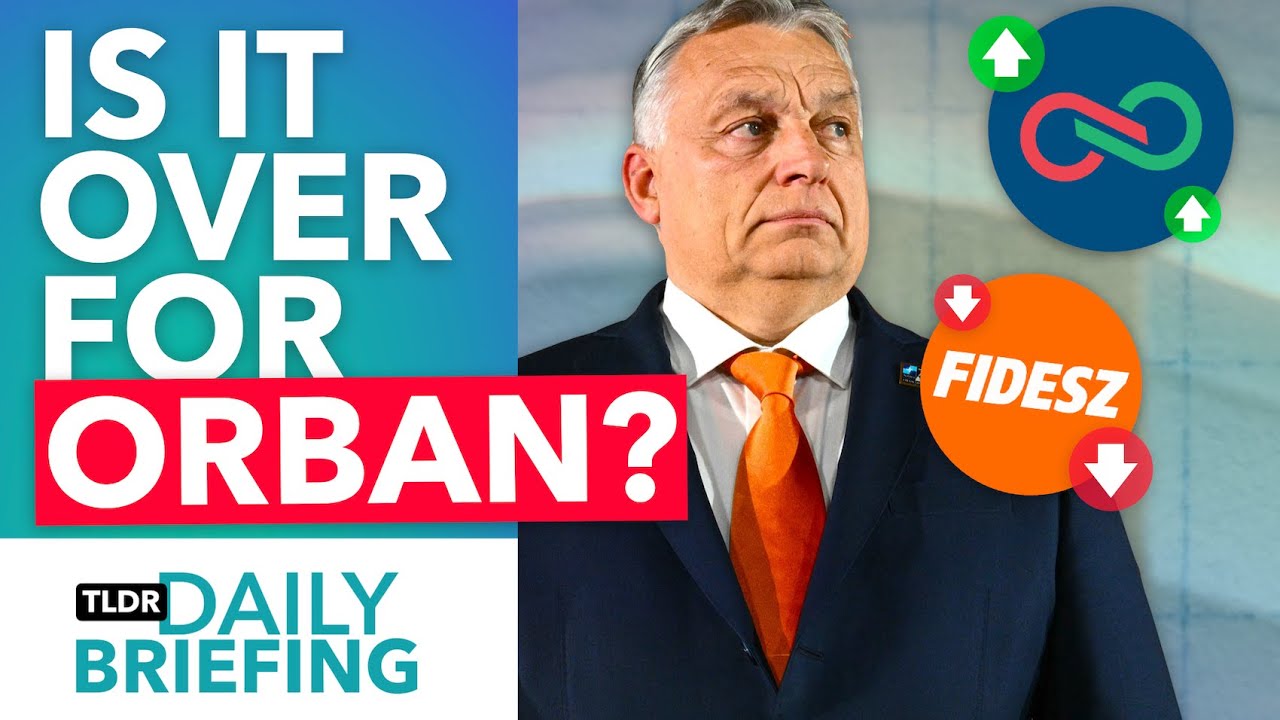
The impossible just happened. After 16 years of tightening his grip on every lever of power in Hungary, Viktor Orbán is out. On April 12, 2026, the man who pioneered "illiberal democracy" didn't just lose; he got crushed.
If you're looking for the exact moment the tide turned, it wasn't some grand geopolitical shift. It was a massive 79.5% voter turnout that effectively broke the system Orbán built to keep himself in power. Péter Magyar, a man who was part of the inner circle just two years ago, led his Tisza Party to a landslide victory. They didn't just win a majority; they secured 138 seats out of 199. That's a two-thirds supermajority.
The Fall of the Unstoppable Machine
Orbán's Fidesz party has been the dominant force in Central Europe since 2010. They rewrote the constitution, took over the media, and redrew voting districts to ensure they could never lose. But they forgot one thing: people eventually get tired of being poor while the elite gets rich.
Economic stagnation finally caught up with them. While Orbán's family was busy acquiring Habsburg-era estates and filling them with exotic zebras, regular Hungarians were bringing their own toilet paper to hospitals. The "BYOTP" (Bring Your Own Toilet Paper) reality became a symbol of a failing state. You can't run a country on "Christian nationalist" rhetoric forever when the healthcare system is literally crumbling.
The 2024 presidential pardon scandal was the first real crack. When it came out that a close ally had helped cover up a child abuse case, the "family values" mask slipped. That’s when Péter Magyar walked away from Fidesz and started a movement that basically ate Orbán's lunch.
Who is Péter Magyar and Can He Be Trusted
You're probably wondering how a former Fidesz loyalist became the savior of Hungarian democracy. It's a fair question. Magyar knows where the bodies are buried because he helped dig the graves. He’s a lawyer, a former diplomat, and the ex-husband of Orbán's former Justice Minister, Judit Varga.
He didn't run on a platform of high-minded liberal theory. He ran on corruption, healthcare, and fixing the relationship with Europe. He used the very same populist energy Orbán used but pointed it at the government's own failures.
- The Tisza Strategy: Magyar bypassed the traditional opposition, which he called "dead weight."
- Social Media Warfare: He used Facebook and YouTube to reach voters, ignoring the state-controlled TV stations that refused to give him airtime.
- The Nationalist Flip: He didn't abandon Hungarian pride; he argued that being a "real" Hungarian meant being part of a prosperous Europe, not a vassal of Russia.
It's risky, honestly. Magyar now has the same "unrestrained" power Orbán had. With a two-thirds majority, he can change the constitution tomorrow. The big test is whether he'll actually rebuild the democratic checks and balances or just install his own people in the same seats.
What This Means for Europe and the World
This isn't just a local story. This is a massive blow to the global far-right. Orbán was the "cool kid" for the MAGA movement and a key ally for Vladimir Putin in the EU. Just days ago, U.S. Vice President JD Vance was in Budapest trying to boost Orbán's campaign. It didn't work.
Expect Hungary to stop blocking aid to Ukraine immediately. The "Huxit" talk—the idea of Hungary leaving the EU—is dead. Magyar has already pledged to unlock the billions in EU funds that were frozen because of Orbán's corruption. That money is desperately needed to fix those hospitals and schools.
Russia just lost its most reliable "Trojan horse" inside NATO. That's a huge shift in the geopolitical balance of power in Eastern Europe.
The Hard Road to Recovery
Winning the election was the easy part. Now Magyar has to govern a country that has been hollowed out by 16 years of cronyism.
Fidesz loyalists are still embedded in the courts, the central bank, and the universities. They won't go quietly. Magyar's first few months will likely be a brutal "de-Orbánization" process. He'll need to pass laws to restore media freedom and make the judiciary independent again.
If you're an investor or just someone watching from the outside, watch the currency markets. The Forint has been volatile, but the prospect of EU funds returning should stabilize things.
The Orbán era ended not with a coup, but with a record-breaking line at the ballot box. It’s a reminder that no matter how much you tilt the playing field, you can’t win if the entire stadium turns against you. Keep a close eye on Budapest over the next 100 days—the transition will be messy, loud, and incredibly important.
Start following the new cabinet appointments. If Magyar fills them with experts instead of party loyalists, we'll know the change is real. If he starts appointing his own "inner circle" to lifelong positions, well, we've seen that movie before.