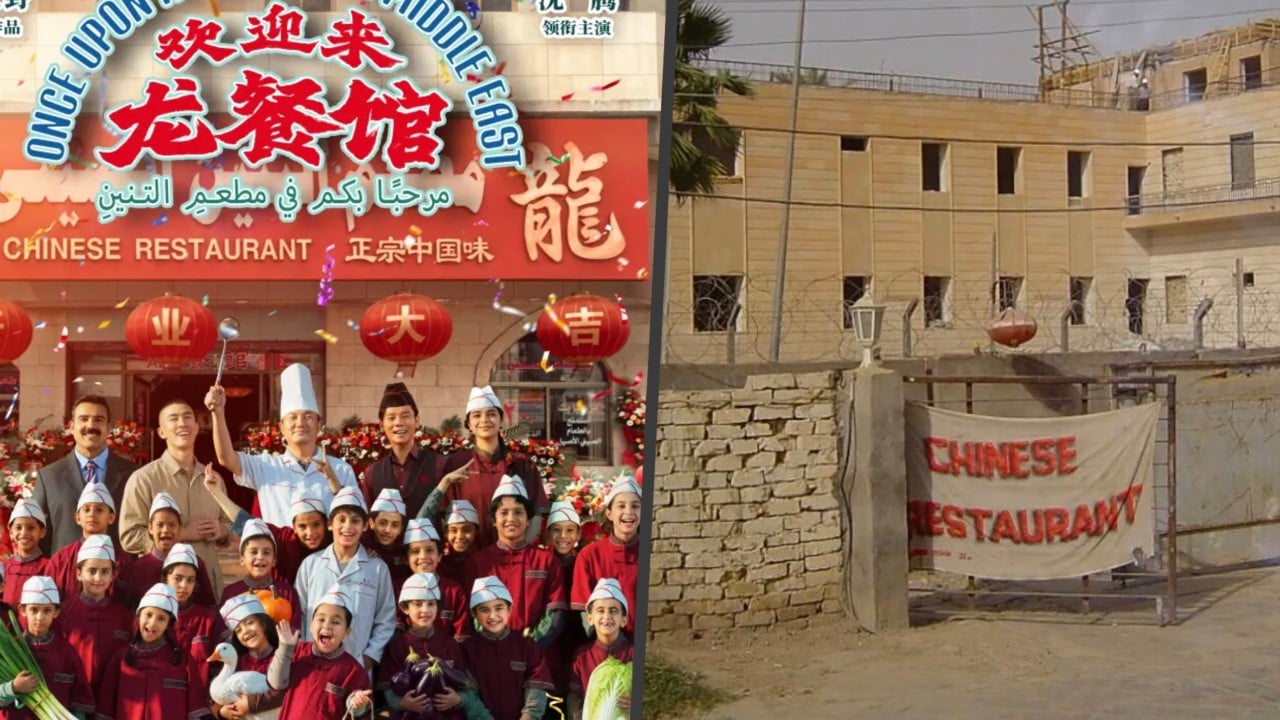
Everyone loves a warm bowl of soup in a warzone. Put real people in front of a camera, stick them inside a restaurant while artillery rattles outside, and slap an awards-season label on it. Instant prestige. Instant empathy. Instant Oscar bait.
Except it is rarely that simple. And when a state-backed awards submission centers on a real-life "safe haven" restaurant during the Iraq War, the lazy consensus writes itself. Critics praise the grit. Publicists sell the humanity. Readers nod along as if watching a documentary of real people in a war zone automatically equals moral clarity or artistic truth. For a deeper dive into similar topics, we recommend: this related article.
It does not. In fact, that exact framing often hides the hardest questions about how war stories get packaged, exported, and judged for international awards.
The Lazy Consensus Around "Real People" in War Cinema
Conventional awards coverage treats real people and real locations as an automatic shield against skepticism. If events happened, or if ordinary workers kept cooking while chaos raged outside, the story gets treated as inherently noble. To get more details on this topic, in-depth coverage can be read at Entertainment Weekly.
That is lazy thinking. Reality is raw material, not a finished argument. A restaurant in a conflict zone is not a neutral island floating above politics, survival economics, or power. People eat, work, negotiate, and stay or leave for reasons far messier than a neat safe haven narrative allows.
I have watched prestige campaigns burn millions of dollars assuming that emotional intimacy alone carries a film across international juries. Voters in the Academy of Motion Picture Arts and Sciences do not reward sincerity in a vacuum. They watch hundreds of submissions every autumn. Most of them blur together because they rely on familiar tropes: ordinary civilians, shared meals, sudden danger, and a quiet triumph of the human spirit.
When a film uses real people to anchor an awards push, audiences often confuse authenticity of casting with honesty of framing. Having real individuals play versions of themselves—or drawing directly from real lives—adds texture. It does not automatically remove selection bias, dramatization, or diplomatic polish.
You Are Asking the Wrong Question About Oscar Submissions
When headlines announce that a film about a real-life restaurant during the Iraq War will represent a country at the Oscars, the usual reflex is to ask: Does this movie have a real shot at a nomination?
Wrong question. A nomination in Best International Feature Film is not a referendum on a film's moral purity or its factual completeness. It is the outcome of a multi-stage lobbying, screening, and voting machine shaped by distribution muscle, festival momentum, cultural legibility, and strategic positioning.
A better question is: What version of history is being made legible to foreign voters, and what gets cropped out of the frame?
International awards voters bring their own blind spots into the screening room. Many Western critics and academy members approach Middle Eastern conflicts through a narrow set of reference points—often filtered through American media history rather than the lived realities of Iraqis, Chinese expatriates, or local service workers on the ground. A safe haven restaurant offers an easy entry point. Food is universal. Hospitality is legible. Danger is cinematic.
Yet convenience is the enemy of depth. A dining room can become a convenient stage where complex geopolitical pressures are softened into human-interest warmth.
Dismantling the "People Also Ask" Premises
If you search around stories like this, the same predictable questions pop up. Most of them start from shaky premises.
"Does using real people make a war movie more accurate?"
No. Accuracy is a discipline of evidence, context, and proportion—not a byproduct of casting non-actors or basing a script on true events. Real people can still be placed in composite scenes, compressed timelines, or emotionally heightened moments to serve dramatic pacing. Even when subjects are genuine, the camera chooses where to point and where to look away. A real person serving tea in a dining room tells you something real about human resilience. It does not automatically explain supply chains, local militias, economic coercion, or foreign policy.
"Why do safe haven stories perform well in awards seasons?"
Because they offer relief without asking voters to wrestle with total moral ambiguity. Pure combat films can exhaust viewers or trigger resistance over politics and violence. A gathering space—a kitchen, a café, a restaurant—gives the audience a place to sit down, breathe, and feel virtuous for caring. That emotional comfort is often mistaken for profundity.
"Does an Oscar submission mean the film reflects mainstream domestic taste?"
Not necessarily. National selection committees frequently pick films tailored to appeal to international festival circuits and foreign awards bodies rather than what packed local multiplexes. A film can be engineered—consciously or not—for exportability while telling a story that feels distant or selective to people living through the actual history.
The Mechanics Behind International Awards Positioning
To understand why a safe haven restaurant film becomes an awards contender, look at how international feature campaigns actually work.
First, there is the gatekeeper filter. A country selects one entry. That choice already reflects institutional priorities, industry politics, and calculations about what might survive the Academy's shortlist process.
Second, there is the festival and distributor flywheel. A submission without strong theatrical or festival backing rarely breaks through, no matter how moving its premise sounds on paper. Distributors look for hooks that can be pitched in a single sentence: a real restaurant, an active war zone, ordinary lives, extraordinary survival.
Third, there is narrative compression. Feature films have roughly two hours to turn years of tension, shifting allegiances, and quiet dread into a cohesive arc. Real life rarely moves in clean acts. To make a war-era restaurant feel cohesive on screen, filmmakers must decide which threats feel immediate, which characters get voice, and which political realities stay off-screen.
Imagine a scenario where a filmmaker spends months interviewing real staff at a restaurant operating during an occupation. Some workers stayed because they had nowhere else to go and needed every dinar or yuan to feed relatives. Others had ties to local networks that made staying possible in ways outsiders would not guess. A tidy "safe haven" label flattens those divergent motives into one comforting mood. That is how storytelling works, and why viewers should stay sharp when watching it.
What Veterans of Film and Criticism Miss
In film criticism and awards analysis, heavy hitters like Pauline Kael, Roger Ebert, and André Bazin argued—each in very different ways—that cinema's power comes from how form shapes perception, not merely from subject matter. Bazin famously cared about cinema's relationship to reality, yet even he understood that cinematic realism is a constructed art, never a raw mirror. Ebert constantly reminded readers that a movie is not about what it is about, but how it is about it.
Too much modern awards coverage ignores that lesson. It treats subject matter like currency. "Real people + war + restaurant + Oscar submission" gets read as a complete value proposition before anyone interrogates tone, perspective, or omission.
I have seen campaign strategists treat real-world tragedy like a cheat code for critical acclaim, only to watch a film stall when voters sense sentimentality outrunning rigor. Audiences are smarter than awards pundits give them credit for. When a film leans too heavily on comforting human warmth inside a brutal setting, sharp viewers start asking what is missing outside the door.
Where My Contrarian View Has Real Downsides
Being skeptical of "safe haven" awards narratives carries its own risks, and I will own them plainly.
Cynicism can become its own lazy habit. If you assume every hopeful or human-centered story in a war zone is sanitized propaganda or cheap Oscar bait, you can miss genuine acts of courage, humor, and solidarity that really happened. People really do crack jokes in bad situations. Strangers really do share food when everything else is falling apart. Dismissing tenderness out of hand is just as blind as worshipping it.
There is also a practical blind spot for filmmakers and marketers. Nuance does not always sell easily in a crowded awards race. Nuance takes time to explain. A punchy logline travels faster than a complicated historical caveat. If you strip away every simple hook in pursuit of total complexity, you risk making a film that feels academic or detached rather than alive.
What to Do Instead If You Care About War Cinema
If you want to watch, write about, or program films like this without falling for awards-season hype, change how you approach them.
- Watch the margins, not just the table. Pay attention to who is served, who is turned away, who cleans up, and what happens the moment someone steps outside. The edges of a safe haven reveal its real limits.
- Separate historical testimony from dramatic polish. Treat a film featuring real people as a starting point for inquiry, not the final word on a conflict. Check the timeline, the geography, and the political context around the events depicted.
- Judge craft over noble intent. Good intentions do not rescue flat pacing, predictable beats, or unearned emotional swells. Ask whether the filmmaking earns its tension or coasts on the gravity of the war itself.
- Push past the Oscar angle. Whether a film lands a nomination or gets ignored in January says very little about whether it tells a lasting truth. Let the work stand or fall on what happens inside the frame.
Do not confuse a warm room in a war zone with the whole truth of the war.