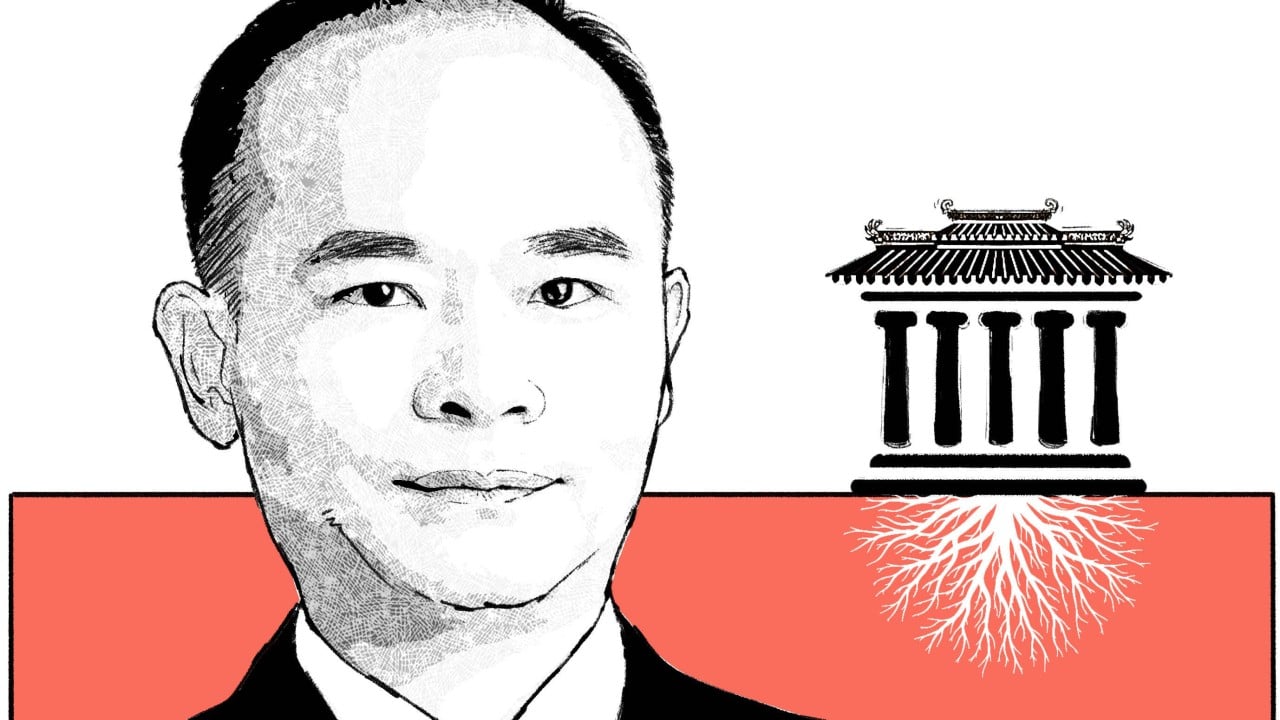
The fluorescent lights of the high-tech industrial park in Suzhou do not hum. They are too new for that. Inside a pristine glass office on the fourth floor, Zhang Wei stared at a spreadsheet that felt less like a business document and more like a high-stakes eviction notice. On his desk lay two objects: a breakthrough solid-state battery prototype that worked brilliantly under laboratory conditions, and a three-hundred-page government subsidy application that required him to alter the description of how that very battery worked.
If he told the absolute truth about the messy, unpredictable timeline of true scientific discovery, he would lose the grant. If he ticked the boxes the local bureaucrat needed to see to fulfill a provincial five-year plan, he would get the cash, but he would bind his company to an impossible, rigid milestone.
He was trapped. It is a trap thousands of builders across the country walk into every single day.
To understand why breakthroughs fail to catch fire in this environment, Western observers usually point to a lack of intellectual property laws or a shortage of venture capital. They are looking at the wrong map. The real friction is not economic. It is deeply structural, baked into the very DNA of a governance system that has spent millennia perfecting the art of top-down control.
When the West looks at innovation, it assumes a playground of chaotic collision. Someone builds a better mouse trap in a garage, a VC funds it, market forces decide its fate. But here, innovation is treated less like a wild garden and more like a massive, highly coordinated military campaign.
The strategy works beautifully when you need to build ten thousand miles of high-speed rail. It stumbles when you ask a scientist to discover something no one has ever seen before.
The Ghost of the Imperial Exam
Every morning, local officials across various districts sit at desks not unlike Zhang Wei’s, facing their own spreadsheets. These are the cogs of a vast administrative machine. For centuries, the Chinese state has managed its massive population through a meritocratic, highly competitive bureaucratic ladder. In the past, it was the imperial civil service exams. Today, it is the Key Performance Indicator (KPI).
Consider how a local mayor climbs the ranks. They do not get promoted by fostering long-term, invisible scientific shifts that might bear fruit in twenty years. They get promoted because their district hit its GDP targets this quarter, because they built the designated tech incubator on time, or because they registered a specific number of new patents.
Notice what happens to the definition of progress under this pressure. It becomes quantifiable. It becomes rigid.
To understand this system, think of a massive corporate headquarters trying to manage millions of remote workers without any Slack channels or video calls. The only way the executives at the top can ensure the workers at the bottom are doing their jobs is by demanding strict, easily verifiable metrics.
So, the order comes down from the capital: We must dominate in artificial intelligence.
The provincial governor hears the mandate and translates it for the city mayors: Produce AI companies.
The city mayors translate it for the district chiefs: Give out subsidies to anyone with "AI" in their corporate registration.
Suddenly, a company that used to manufacture basic automated sorting scales for fruit rebrands itself as an advanced computer-vision robotics enterprise. They apply for the grant. The district chief ticks the box. The mayor reports a victory to the governor. The capital sees a massive spike in AI startups. On paper, the campaign is a roaring success.
But back in the pristine glass office, Zhang Wei is looking at a battery that cannot be rushed by a political calendar.
True innovation is ugly. It involves failing ninety-nine times out of a hundred. It requires a founder to look an investor in the eye and say, "I don't know when this will work, or if it will work at all."
In a system where a local official’s career depends on predictable, upward-trending graphs, saying "I don't know" is dangerous. Fear drives the pen.
The Local Protectionism Paradox
There is an old saying that the mountains are high and the emperor is far away. Historically, this meant local officials had vast autonomy to run their fiefdoms. In the modern economic era, this autonomy triggered an incredible burst of growth. Local governments competed fiercely against each other, offering cheap land, tax breaks, and fast-tracked permits to attract businesses. It was a race to the top that lifted hundreds of millions out of poverty.
But this intense local competition has a dark twin.
Let us use a hypothetical scenario to see how this plays out on the ground. Imagine two neighboring cities, City A and City B. The mayor of City A invests heavily in a local electric vehicle battery manufacturer. They pour state-backed bank loans into the factory. They give it prime real estate.
A year later, a startup in City B develops a battery that is twice as efficient and half the cost.
In a pure market economy, the startup in City B wins. The factory in City A goes bankrupt. The market clears out the inefficient player.
But in this ecosystem, City A's mayor cannot let that factory fail. A bankruptcy means massive job losses, bad loans on the books of local state-owned banks, and a glaring black mark on the mayor’s record just as promotions are being decided.
The response is predictable. City A builds an invisible wall.
They might pass a local regulation stating that all public transit vehicles in City A must use batteries manufactured within city limits. They might stall the safety certifications for City B's vehicles at the border. They protect their own, even if it means starving the superior technology of a market.
The result is a fragmented economy where inefficient firms are kept on permanent life support by local patrons. True innovators find themselves fighting not just market competitors, but the political survival instincts of provincial bureaucrats. The scale that should be a massive advantage becomes a series of isolated fortresses.
The Burden of the Red Stamp
We often confuse compliance with progress.
When Zhang Wei finally submitted his grant application, he spent three weeks gathering physical stamps from four different government bureaus. Each stamp required a different set of guarantees. The environmental bureau wanted promises of zero chemical runoff during the testing phase. The security bureau wanted to ensure the data servers were localized to a specific state-approved vendor. The economic planning bureau wanted a guarantee of headcount growth over the next twenty-four months.
By the time the money hit his bank account, Zhang Wei’s day was no longer consumed by studying chemical degradation in lithium cells. He was managing compliance.
He had become an administrator of his own dream.
The psychological toll on creators in this framework is immense. In conversations with founders in these tech hubs, a common weariness emerges. It is the exhaustion of playing a game where the rules are written by people who have never built a product. There is a profound sense of vulnerability in realizing that your business can be wiped out or fundamentally altered not because consumers rejected your product, but because a single policy directive shifted the national definition of what constitutes a priority.
This reality creates a specific type of entrepreneur. It rewards the navigators. It rewards the people who are brilliant at reading the tea leaves of government white papers and aligning their corporate phrasing with the buzzwords of the season.
The brilliant, eccentric misfits—the ones who don't play well with authority, the ones who cannot format a compliance report to save their lives—are quietly pushed to the margins. Yet, historically, those misfits are precisely the people who stumble into the world-changing breakthroughs.
The Reversal of Risk
We are taught that capitalism is about risk-taking. The higher the risk, the higher the return.
In this non-Western governance framework, the calculation is reversed. The higher the risk, the greater the political peril.
If an official funds a safe, mediocre project that yields a predictable 5% growth rate and creates fifty stable jobs, they are secure. If they fund a radical, moonshot project that has an 80% chance of total failure but a 20% chance of changing the world, the arithmetic changes completely. If it fails, they are liable to be accused of wasting state funds, or worse, corruption. The upside is a distant feather in someone else's cap; the downside is professional ruin.
So, the system naturally tilts toward the incremental. It tilts toward the visible.
It is easy to celebrate the massive factories, the gleaming silicon valleys rising from rural farmlands, and the sheer volume of patents filed every year. But if you look closer at those patents, a troubling pattern emerges. The vast majority are utility patents—small tweaks to existing designs—rather than invention patents that signify a fundamental leap in capability.
It is a monument of paper built to satisfy a hunger for metrics.
The Unseen Horizon
The sun was setting outside Zhang Wei’s office, casting long shadows over the rows of identical office towers stretching toward the horizon. His engineers were still at their benches, working under the fierce discipline of the tech industry's grueling schedules. They had the talent. They had the work ethic. They had the raw will to build something magnificent.
But as Zhang Wei looked at the battery prototype, he realized he would have to slow its development down. He needed to alter its design slightly to match the specific parameters detailed in the subsidy approval form he received that morning. To fix the real-world problem with the battery, he would have to violate the bureaucratic fiction he had sold to the state.
The fiction won. It almost always does.
The great challenge facing this economic engine is not a lack of ambition, nor is it a lack of brains. It is the weight of an ancient, hyper-organized state machinery trying to dictate the exact coordinates of lightning before it strikes. Until the system learns to tolerate the chaos of the unknown, the true breakthroughs will remain locked away in the minds of creators who are simply too tired, or too afraid, to fight the red stamps.