The fluorescent lights in Room 204 hum at a frequency that only seems audible after four o'clock in the afternoon. By then, the smell of floor wax, dry-erase markers, and thirty-two damp winter coats has settled into the cinderblock walls.
Picture a hypothetical teacher sitting at a scratched laminate desk in that room. Let’s call her Elena. She teaches eleventh-grade history in a mid-sized Ohio district where forty percent of the students qualify for free lunch, and where the district’s reading specialist was hired using federal Title I dollars. Elena doesn't watch cable news panels about congressional procedure. She doesn't track the mechanics of the Congressional Review Act or the finer points of appropriations riders. She tracks whether Leo, sitting in the third row, will get the speech therapy written into his Individualized Education Program before spring testing arrives. You might also find this connected story useful: Big Bend Border Construction by the Numbers: What Most People Miss.
Yet five hundred miles east, inside the marble corridors of the Rayburn House Office Building, a newly empowered Democratic majority in the House of Representatives is sharpening the exact procedural instruments that will determine whether Leo keeps that therapist.
They have won the gavel. They have won the subpoena pen. They have won the right to call cabinet secretaries before television cameras and demand answers under oath. What they have not won is a magic wand. As reported in detailed articles by USA Today, the results are significant.
To understand the quiet panic—and the fierce, methodical resolve—animating Capitol Hill right now, you have to strip away the theatrical roar of Washington politics and look at the cold machinery of the United States Constitution. When a new congressional majority vows to rein in a sitting president’s education agenda, the public hears a promise of immediate reversal. Reality is far messier. A House majority, acting alone against a determined White House and a divided Senate, is not a wrecking ball. It is a brake pedal.
And sometimes, even the brake lines have leaks.
The Architecture of Frustration
I spent three years covering state-level school board battles before ever setting foot in a congressional press gallery, and if there is one lesson burned into my memory from watching parents weep at folding microphones, it is that federal education policy feels completely abstract until the exact Tuesday a funding stream dries up. Suddenly, a line item in a thousand-page omnibus bill becomes a locked door outside a special education classroom.
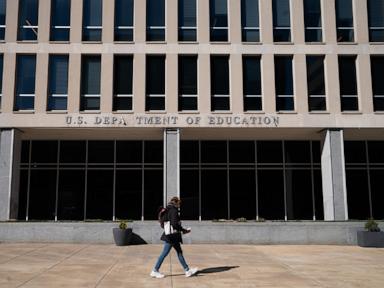
When President Donald Trump returned to the White House with an ambitious, aggressive blueprint to reshape American schooling, the goals were unmistakable. His administration moved quickly to expand private school choice through federal tax credits, strip away federal civil rights guidance protecting transgender students under Title IX, scale back student loan forgiveness programs, and pursue the long-standing conservative ambition of dismantling—or at least hollowing out—the U.S. Department of Education itself.
For millions of families, these policies represented long-awaited liberation from federal overreach. For millions of others, they felt like an existential assault on public schools and vulnerable children.
Then came the midterm shift. Voters handed Democrats control of the House of Representatives, delivering what party leaders immediately framed as a mandate to check the administration’s overhaul of public education. Overnight, the committee chairs flipped. The hearing schedules changed. The rhetoric turned muscular.
Pause.
Look at the actual chessboard.
In the American system of divided government, passing a standalone bill to block an executive order is mostly an exercise in messaging. Even if House Democrats pass sweeping legislation tomorrow morning to codify student loan relief, protect Title IX definitions, or lock in federal funding formulas, that bill still has to survive a Senate filibuster—requiring sixty votes—and then land on the desk of the very president whose agenda it seeks to dismantle. A veto pen takes three seconds to uncap. Overriding that veto requires two-thirds majorities in both chambers, a mathematical impossibility in a polarized Congress.
So if you are a newly minted Democratic chair of the House Committee on Education and the Workforce, and you cannot pass laws over a presidential veto, what exactly do you hold in your hands?
You hold three things: the purse, the spotlight, and the delay.
Follow the Money, Find the Leverage
Think of the federal government not as a single engine, but as a massive municipal water system. The president controls the pumps and hires the engineers who decide which neighborhoods get priority maintenance. Congress, however, owns the reservoir. Not a single dime can legally flow out of the U.S. Treasury unless the House of Representatives agrees to open the valve.
This is the power of the purse, and it is the sharpest blade in the Democratic toolkit.
Every fall, Congress must pass appropriations bills to keep the government funded, including the tens of billions of dollars allocated to the Department of Education. Most of that money goes out the door through two massive, deeply entrenched pipelines: Title I grants, which send roughly eighteen billion dollars annually to high-poverty schools, and the Individuals with Disabilities Education Act, which sends another fifteen billion dollars to help states educate students with disabilities.
Here is where the hidden leverage lives. While House Democrats cannot force the president to sign a new law, the president cannot spend money Congress refuses to authorize—nor can he legally refuse to spend money Congress has explicitly mandated, thanks to the Impoundment Control Act of 1974.
When the administration attempts to divert existing federal funds toward private school vouchers, or tries to starve specific civil rights enforcement offices within the Education Department by leaving positions vacant and freezing budgets, House appropriators can write surgical restrictions—known in Capitol Hill jargon as "riders"—directly into the must-pass spending bills. They can specify, down to the dollar, how much money must be spent on the Office for Civil Rights. They can prohibit the use of federal funds to implement specific regulatory changes. They can turn a routine budget negotiation into a high-stakes standoff where the price of keeping the lights on in Washington is leaving public school funding untouched.
Yet even the power of the purse comes with a terrifying catch. Playing hardball with appropriations is like threatening to blow up the bridge while your own troops are still standing on it. If negotiations collapse into a government shutdown, federal grants stall, Head Start programs scramble to make payroll, and school districts across the country—districts like Elena’s in Ohio—are forced to freeze hiring while politicians trade blame on Sunday morning talk shows. Democrats know that voters rarely reward the party holding the detonator, no matter how noble their motives.
The Theater of the Subpoena
If the budget is a blunt instrument, oversight is a scalpel—though one that cuts slowly.
For the past two years, congressional oversight of the Education Department largely focused on conservative priorities: investigating campus antisemitism, scrutinizing diversity initiatives, and questioning how pandemic relief funds were spent. Now, the chairs have swiveled.
With subpoena power firmly in hand, House Democrats can compel Education Department officials to turn over internal emails, legal memos, and communication logs with outside advocacy groups. They can force senior leaders to sit under harsh committee lights and explain, line by line, why certain civil rights investigations were dropped, how student loan servicers are being policed, or what happens to rural school districts if federal oversight is stripped away.
Skeptics love to dismiss congressional hearings as pure political theater. Honestly, sometimes they are. We have all watched five-minute blocks of grandstanding designed purely to generate a thirty-second fundraising clip for social media. It is easy to feel cynical watching that performance.
That cynicism misses how bureaucracy actually works.
Federal agencies run on caution. Career civil servants—the thousands of lawyers, statisticians, and grant administrators who remain at the Department of Education regardless of who occupies the Oval Office—document everything when they know hostile committee investigators are reading their paper trail. When a cabinet secretary knows that every shortcut in the regulatory process will be dissected in a public hearing, and potentially handed over to federal judges presiding over lawsuits brought by state attorneys general, the agency slows down.
Rulemaking under the Administrative Procedure Act is an arduous, multi-step marathon. To repeal an existing federal rule—say, regulations governing borrower defense to repayment for defrauded college students, or rules defining sex discrimination under Title IX—an agency cannot simply issue a press release. It must publish a proposed rule, open a public comment period, respond substantively to tens of thousands of public comments, and provide a reasoned justification that will survive judicial review.
Congressional oversight throws sand directly into those gears. By exposing procedural flaws, highlighting human casualties, and building a public evidentiary record, House Democrats essentially do the homework for the state attorneys general and civil rights organizations suing the administration in federal court. The hearing room becomes the staging ground for the courtroom.
What About the Nuclear Option of Dismantling the Department?
Every few weeks, a viral headline sparks fresh panic in teachers' lounges from Maine to California: Will the Department of Education actually be abolished?
Let’s state the legal reality plainly, without hedging. The president cannot abolish the Department of Education with the stroke of a pen. Congress created the department as a cabinet-level agency in 1979 under President Jimmy Carter, and only an act of Congress—passed by both the House and the Senate—can legally dissolve it. With Democrats controlling the House, outright abolition is dead on arrival.
That does not mean the department is safe.
You do not have to demolish a house to make it uninhabitable; you can simply rip out the copper wiring and stop fixing the roof. An administration determined to shrink the federal footprint in education can relocate offices, decline to fill key leadership posts, narrow the scope of federal investigations, and push aggressive block-grant proposals that hand federal dollars to states with virtually no strings attached.
Consider what happens next in that scenario. Suppose Washington decides that federal civil rights oversight should take a back seat to state autonomy. On paper, nothing has been abolished. The building on Maryland Avenue still has its sign out front. In practice, a family in a district that refuses to accommodate a child with severe autism loses its federal backstop. When local officials shrug and say there isn't enough money in the budget for an aide, there is no longer an aggressive federal investigator three states away threatening to withhold federal funds unless the district complies with the law.
This is the invisible stake that rarely makes it into horserace political coverage. When Democrats talk about using their limited tools to "rein in" the administration, they are largely fighting to preserve that invisible safety net—the quiet, unglamorous enforcement mechanisms that only matter when a local system fails a child.
The Limits of a Single Chamber
Still, honesty requires admitting what those tools cannot touch.
They cannot stop the administration from using the bully pulpit to reshape the cultural conversation around public education, curriculum, and parental rights. They cannot prevent the Department of Justice from shifting its legal posture in major Supreme Court cases involving religious charter schools or public funding for private religious instruction. And perhaps most painfully for millions of borrowers watching their balances tick upward, a House majority alone cannot resurrect sweeping student loan forgiveness plans once the executive branch decides to narrow eligibility or let existing repayment programs wither through administrative neglect.
Watching the limits of legislative power up close can feel deeply disorienting. You expect a functioning democracy to offer clean levers: pull this one to help, pull that one to stop harm. Instead, you find a system intentionally designed by eighteenth-century framers to make decisive action agonizingly slow, even when millions of families are caught in the crossfire.
There is a particular kind of exhaustion that settles over parents and educators when they realize that the people they voted for to protect their schools can mostly only offer investigations, budget standoffs, and delayed implementation. It feels like bringing a stack of legal briefs to a house fire.
Yet history suggests that friction itself has a way of altering the trajectory of a presidency. During the first Trump administration, repeated congressional pushback—even from members of his own party—prevented deep proposed cuts to Title I and federal work-study programs from ever becoming law. The proposals grabbed headlines in February; by December, quiet bipartisan appropriations deals had largely preserved the underlying funding streams. The noise was deafening, while the actual machinery moved inches rather than miles.
Back in Room 204
Think again of Elena, packing her canvas tote bag as the afternoon sun drops below the strip mall across from her school in Ohio.
Tomorrow morning, the bell will ring at 7:45. Thirty-two teenagers will file past her door, carrying backpacks heavy with battered textbooks, cheap earbuds, and quiet anxieties they rarely voice aloud. None of them will mention the Congressional Review Act. None of them will ask about appropriations riders or the Administrative Procedure Act.
They will simply look at the whiteboard to see what is expected of them today, trusting that the adults in the room—and the adults in the distant capital they only read about in chapter four of their civics textbook—have kept the floor solid beneath their feet.
In Washington, the gavels are already falling, the subpoenas are being drafted, and the battle lines over the future of American classrooms are hardening by the hour. It is a smaller shield than many voters hoped for, forged out of procedural rules and budget deadlines rather than sweeping new laws. But in a divided capital, a paper shield held steady is often the only thing standing between a policy proposal and a classroom door.