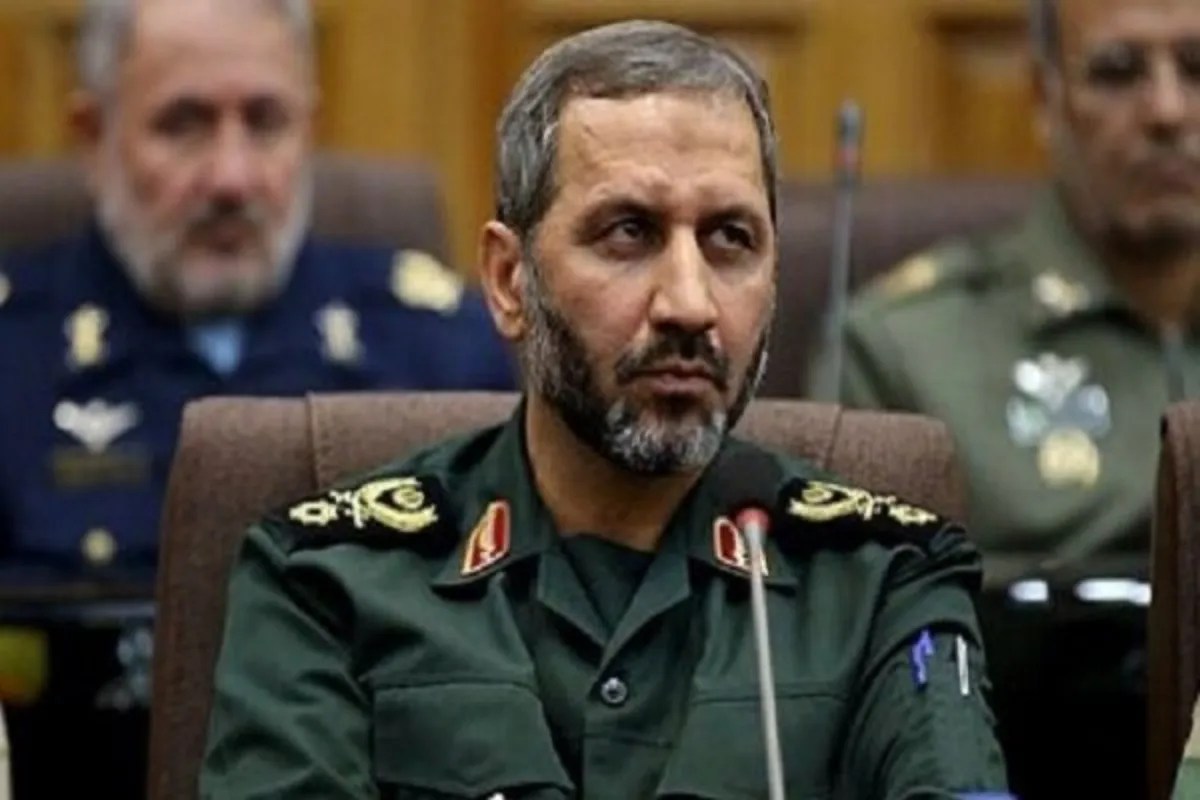
The media is addicted to the theater of Middle Eastern apocalypse. Every time an Islamic Revolutionary Guard Corps commander steps up to a microphone and promises to turn the region into a burning hellscape for American forces, newsrooms across the globe slam the panic button. They paint a picture of imminent global conflict, soaring oil prices, and catastrophic miscalculations.
It is a comfortable, predictable narrative. It is also entirely wrong. For a different view, read: this related article.
The lazy consensus among foreign policy pundits is that we are always one aggressive quote away from a kinetic war between Washington and Tehran. When Majeed Mousavi or any other high-ranking IRGC official threatens to unleash hell, analysts treat it as a operational briefing. They analyze the threat vectors, calculate missile ranges, and warn of a regional conflagration.
They are missing the entire point of Iranian strategic doctrine. Further reporting regarding this has been provided by BBC News.
The Currency of Calculated Deterrence
Iran does not want a direct conventional war with the United States. The leadership in Tehran is highly rational, hyper-aware of its military limitations, and deeply invested in regime survival. When an IRGC commander delivers a fiery speech, he is not announcing a battle plan. He is executing a carefully calibrated public relations strategy designed for two specific audiences: domestic hardliners and regional proxies.
To understand why a hot war is highly unlikely, you have to look at the massive asymmetry in conventional military spending.
| Country | Approximate Annual Defense Budget | Primary Strategic Focus |
|---|---|---|
| United States | Over $800 Billion | Global Power Projection & Conventional Supremacy |
| Iran | Less than $25 Billion | Regional Asymmetry & Proxy Network Maintenance |
Iranian leadership reads these numbers clearly. They know that in a conventional war, their air force—largely comprised of aging cold-war era jets—would be neutralized within forty-eight hours. Their navy, while capable of causing temporary logistical headaches in the Strait of Hormuz through swarm tactics, cannot match a Western carrier strike group in open water.
Therefore, the rhetoric is the weapon. By projecting an image of irrational willingness to destroy everything, Iran creates a psychological deterrent that far exceeds its actual conventional capabilities. They want the West to believe they are volatile enough to trigger mutual assured destruction in the Gulf. The moment they actually start that war, the illusion shatters, and the regime faces existential ruin.
Dismantling the Myth of the Strait of Hormuz Chokepoint
Open any mainstream geopolitical analysis and you will find the standard warning: Iran will close the Strait of Hormuz and collapse the global economy.
This is a classic example of flawed premise. Yes, Iran has the capability to disrupt shipping. They can plant mines, launch anti-ship missiles, and harass tankers. But actually closing the strait completely for an extended period is an entirely different logistical reality.
First, closing the strait hurts Iran more than it hurts the West. Tehran relies heavily on maritime trade networks to export its remaining sanctioned crude, mostly to buyers in Asia. If the strait is blocked, Iran chokes off its own economic lifeline.
Second, a total closure of a vital international waterway violates the foundational rules of global trade, alienating the very superpowers Iran relies on for diplomatic cover. Beijing is not going to sit quietly while its primary energy transit corridor is shut down by an ally's ideological temper tantrum.
The Proxy Doctrine is Designed to Avoid War, Not Start It
The real strength of Iranian foreign policy lies in its gray-zone operations—using proxies like Hezbollah, the Houthis, and various militias in Iraq and Syria to project power without triggering a direct state-on-state response.
Western analysts often view these proxies as fuses that will inevitably detonate a larger war. In reality, the proxy network functions as a pressure valve. It allows Tehran to strike back at its adversaries, signal its displeasure, and maintain regional leverage, all while maintaining plausible deniability.
- The Blueprint: Iran supplies funding, intelligence, and asymmetrical technology.
- The Execution: The proxy carries out localized strikes.
- The Result: The target country retaliates against the proxy, leaving Tehran untouched.
This setup is brilliant, cost-effective, and fundamentally risk-averse. Why would a regime that has spent decades perfecting the art of fighting through intermediaries suddenly throw away that advantage to fight a direct war against a nuclear superpower? They wouldn't. The proxy doctrine exists precisely so Iran never has to fight the United States directly.
The Flawed Questions Everyone Keeps Asking
If you watch mainstream cable news, you will constantly hear variants of the same two questions. Both are fundamentally broken.
Will Iran's aggressive rhetoric eventually force a pre-emptive strike by the West?
No. Military planners in the Pentagon do not base operational decisions on translated press releases from IRGC commanders. They look at troop movements, satellite imagery, enrichment levels, and radar signatures. The shouting matches on state television are viewed as background noise. The West understands the theatrical nature of these threats; they are not going to launch a trillion-dollar war over a provocative soundbite.
Can diplomacy completely eliminate the threat of a regional outbreak?
This question assumes that tension is an accident that needs fixing. In reality, managed tension is the desired equilibrium for both sides. The current status quo—where Iran barks loudly and operates in the shadows, while the West applies sanctions and maintains a defensive posture—is sustainable. It allows politicians on both sides to look tough for their domestic bases without having to bear the catastrophic costs of actual combat.
Stop Reading the Subtitles, Watch the Board
The danger in modern geopolitical analysis is taking political theater at face value. When a commander promises to turn the Gulf into hell, he is looking for a headline, not a fight. He wants to force a concession, rally his base, or deter an adversary from taking tighter economic measures.
The real indicators of escalation are quiet, slow, and rarely make the front page. Watch the cyber budgets. Track the transfer of dual-use technologies. Monitor the banking channels in third-party countries.
If you are waiting for the bombs to drop every time a microphone gets shoved in front of a general, you are going to spend decades being anxious for nothing. The shouting matches are loud because the room is empty. The real players know that the loudest dog in the yard is usually the one chained to the fence.