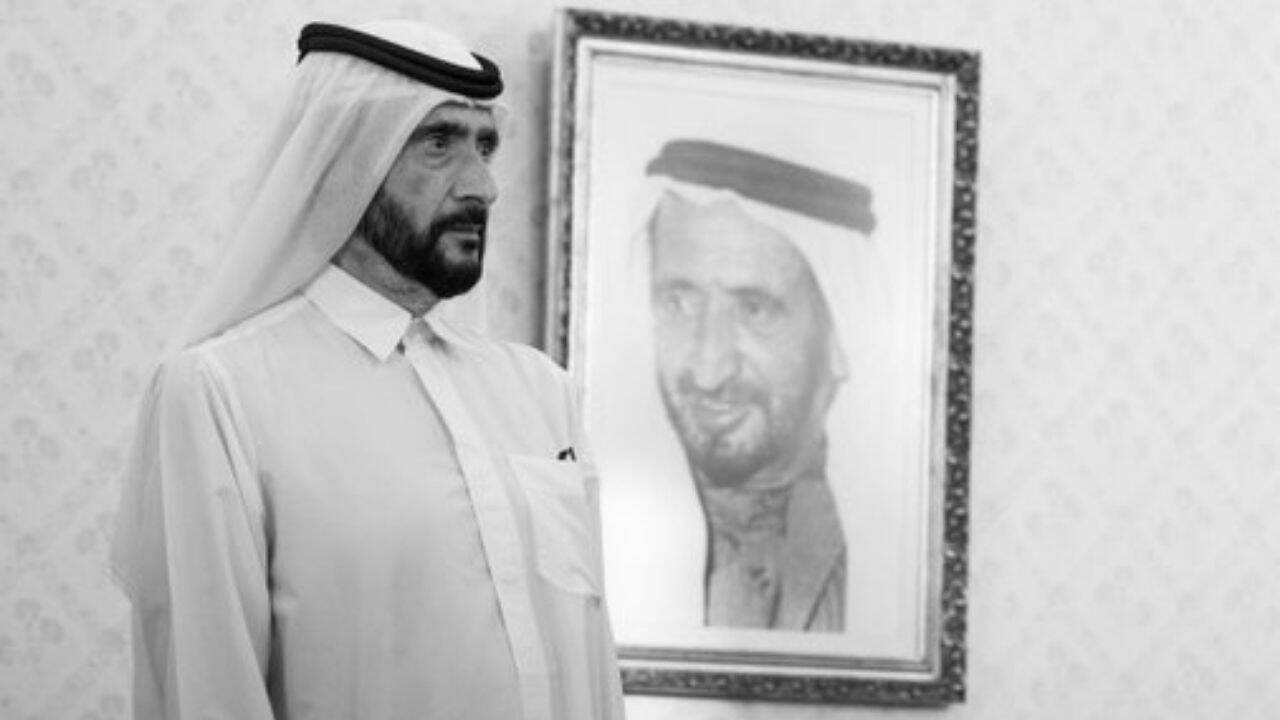
The death of Sheikh Ahmed bin Rashid Al Maktoum at the age of 76 marks the closing chapter for a specific generation of Dubai's ruling family—men whose lives bridged the quiet coastal trading port of the mid-20th century and the gleaming global metropolis of the 2000s. Official announcements from the Dubai Media Office confirmed a 10-day period of mourning across the emirate, flags lowered to half-mast, and government entities shuttered. Yet beyond the state protocols and the predictable chorus of condolences from regional leaders, the loss of Sheikh Ahmed prompts a wider inquiry into the transition of power, family dynamics, and institutional continuity within the ruling House of Maktoum.
To understand Sheikh Ahmed bin Rashid is to understand a deliberate posture of discretion. While his brothers—most notably the ruler of Dubai, Sheikh Mohammed bin Rashid Al Maktoum—commanded international headlines through high-profile real estate megaprojects, global sporting ventures, and sweeping government modernization programs, Sheikh Ahmed maintained a quieter footprint. His public profile was largely anchored in heritage, tradition, and the preservation of sporting institutions that defined Emirati culture long before skyscrapers began dominating the skyline of Sheikh Zayed Road.
For decades, Sheikh Ahmed was perhaps best known for his lifelong association with thoroughbred horse racing and football. As the patron of the Jebel Ali Racecourse, he built a reputation as a horseman who valued the sport for its traditional roots rather than solely as an instrument of global soft power. In an era when Dubai's leadership transformed racing into a multi-billion-dollar international spectacle centered around the Dubai World Cup at Meydan, Sheikh Ahmed’s operations in Jebel Ali retained a distinct, community-focused charm. Trainers, jockeys, and local racing enthusiasts often noted his hands-on approach and deep knowledge of bloodlines, viewing him as a custodian of equestrian tradition rather than a corporate magnate.
The declaration of a 10-day mourning period in Dubai is not merely a sign of respect; it is a meticulously calibrated expression of state gravity. In a constitutional monarchy like the United Arab Emirates, the stability of the ruling families is the primary pillar of political and economic predictability. When a senior member of the ruling family passes away, the apparatus of the state pauses to reinforce national unity. The temporary suspension of non-essential government operations and the cancellation of public celebrations serve a dual purpose: honoring the deceased and signaling to international investors, expatriate residents, and regional allies that the apparatus of governance remains orderly, united, and secure.
Yet beneath the public displays of grief lies the quiet, structural reality of generational succession. The generation of leaders who built modern Dubai from the ground up—navigating the discovery of oil, the formation of the federation in 1971, and the rapid diversification into trade, aviation, and finance—is inevitably passing the torch. Sheikh Ahmed’s passing serves as a stark reminder of the mortality facing this founding vanguard. As younger royals assume greater responsibilities across government portfolios, the challenge is maintaining the cohesion and rapid decision-making capacity that allowed Dubai to scale at an unprecedented velocity over the past four decades.
The economic and geopolitical stakes of this transition are high. Dubai’s model relies heavily on perception: the belief that strong, centralized leadership can insulate the emirate from regional volatility while maintaining an open, business-friendly environment for global capital. While Sheikh Ahmed did not hold the executive levers of daily economic policy in the same manner as his ruling brother, the solidarity of the Al Maktoum family remains the bedrock of that perception. Internal unity is the invisible currency that underpins every foreign direct investment, property acquisition, and corporate headquarters relocation to the desert city.
In the days following the announcement, tributes poured in from across the Gulf Cooperation Council. Leaders from Abu Dhabi, Saudi Arabia, Oman, Bahrain, and Kuwait dispatched formal condolences, underscoring the tight-knit dynastic alliances that govern the Arabian Peninsula. These diplomatic gestures are rituals of high-stakes statecraft, reinforcing regional borders and royal solidarity at a time when the Middle East faces persistent geopolitical friction.
As the flags return to full mast and the 10-day mourning period concludes, Dubai will inevitably pivot back to its relentless forward momentum. Cranes will continue to turn across the coastline, stock markets will trade, and the tourist arrivals will swell. But the architectural and political landscape of the emirate will feel slightly different. The passing of figures like Sheikh Ahmed bin Rashid reminds observers that behind the glass facades, artificial islands, and hyper-modern governance frameworks lies a traditional tribal lineage whose personal histories remain inextricably bound to the soil and sea of the Trucial States. The chapter is closing on the men who remembered Dubai when it was little more than a creek lined with mud-brick homes, leaving the future entirely in the hands of those who only know it as a global capital.