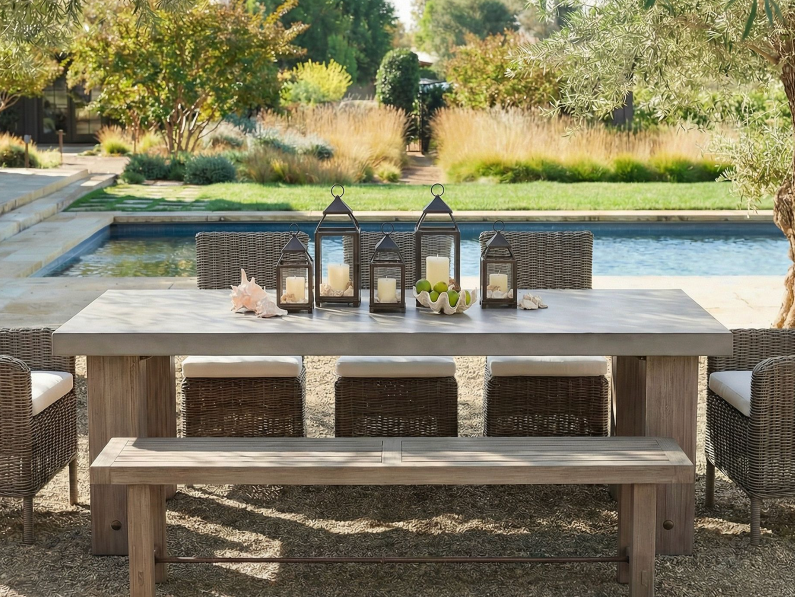
The modern guide to buying outdoor furniture is a setup. It follows a predictable, lazy formula: classify your taste into a neat bucket—modernist, bohemian, or traditional—and then show you a low, medium, and high-priced version of the exact same cheap resin wicker or flimsy powder-coated aluminum.
The industry wants you to believe that "budget" means getting a five-piece sectional for $499, and "luxury" means spending $5,000 for a famous brand name version of that exact same structural design. Both assumptions are fundamentally wrong. Having spent fifteen years tracking supply chains and manufacturing standards for commercial and residential outdoor spaces, I can tell you that the consumer patio market relies on planned obsolescence masquerading as lifestyle curation.
Stop buying temporary furniture for permanent spaces.
The Low-Cost Myth of the All-Weather Sectional
Let's address the elephant on the concrete slab. Those interlocking wicker sectionals that dominate every budget guide are engineered to last exactly two seasons before the UV stabilizers degrade and the plastic straps snap under the weight of a standard human.
When a retailer promises "all-weather resin," they rarely disclose the thickness of the extrusion or the composition of the plastic. True commercial-grade High-Density Polyethylene (HDPE) is dense, heavy, and infused with UV inhibitors throughout the entire material. The stuff you buy at a big-box store for a few hundred dollars is typically low-density polyethylene (LDPE) or PVC. It acts like a sponge for solar radiation. It becomes brittle in the winter and gummy in the summer.
You think you are saving money by buying a cheap set now and upgrading later. What you are actually doing is paying a recurring subscription fee to look at ugly, sagging furniture.
The Real Math of Patio Materials
If you want to understand what you are actually buying, skip the style quiz and look at the weight and construction methods.
| Material Type | Hidden Vulnerability | Real Lifespan | Cost Per Year of Use |
|---|---|---|---|
| Thin-Wall Aluminum | Internal condensation causing hairline cracks during freezes | 2–3 Years | High (Frequent replacement) |
| Low-Density Resin Wicker | UV degradation causing splitting and unravelling | 1–2 Years | Very High |
| Untreated Plantation Teak | Rapid checking and splitting if harvested too young | 3–5 Years | Medium |
| Cast Wrought Iron | Paint chipping leading to structural rust tracks | 10–15 Years | Low |
| Solid Marine-Grade Polymer | Heavy, visually blocky, limited traditional styling | 20+ Years | Extremely Low |
Why Style Categories Are Sucking the Money Out of Your Pocket
Curators love to segment your choices. They tell you to pick a "vibe." If you like clean lines, you get funneled into minimalist aluminum. If you like warmth, you get pushed toward wood. This is a brilliant marketing trick because it forces you to buy a matching set from a single collection.
Matching patio sets are the ultimate sign of design laziness. They turn your backyard into a mid-tier hotel courtyard.
Worse, sticking to a single style category forces you to accept inferior materials for specific use cases. An all-aluminum dining table is a terrible idea if your patio gets direct afternoon sun; it becomes a literal frying pan. A plush, bohemian deep-seating sofa made of cheap fabric is a nightmare if you live in a humid climate, regardless of how many "water-resistant" tags the manufacturer hangs on it.
Dismantling the "Water-Resistant" Lie
Let's be brutal about textiles. "Water-resistant" means absolutely nothing when a thunderstorm hits. The water goes right through the seams, gets trapped inside the cheap polyurethane foam core, and creates a thriving ecosystem for mold and mildew.
If the cushion does not feature solution-dyed acrylic (like Sunbrella or Outdura) combined with reticulated reticular foam (fast-drying foam that allows water to pour straight through), you are buying a giant sponge. Most budget and mid-tier furniture pieces use regular foam wrapped in a thin polyester sleeve. Within a year, those cushions will smell like a wet basement, and no amount of spot-cleaning will fix the interior rot.
The Contrarian Investment Strategy: Buy for Weight and Weld
If you want to stop burning money on outdoor spaces, you need to change how you shop. Stop looking at the cushions and start looking at the skeleton.
Look for Continuous Welds, Not Bolts
If a patio chair arrives in a flat box and requires you to screw twelve bolts into the frame to assemble it, do not buy it. Every mechanical joint is a failure point. Water enters the bolt holes, sits inside the hollow frame, and rusts the metal from the inside out. True high-quality metal furniture—whether aluminum or wrought iron—is fully welded at the factory. The joints should be ground smooth and seamless. If you see visible hardware holding the main frame together, walk away.
Demand Grade-A Teak or Nothing
Wood is the most abused category in outdoor design. Retailers use phrases like "hardwood solids" or "eucalyptus" to mimic the appeal of teak. Eucalyptus can work, but only if it is harvested from mature trees and maintained meticulously. Most cheap wooden furniture is made from young sapwood that contains very little natural oil. It will warp, check, and splinter within twelve months.
If you buy teak, it must be Grade-A harvested from the heartwood of mature trees. It will feel oily to the touch and have a uniform golden-brown color without dark streaks. Yes, it costs three times more. But it lasts thirty years without rotting. Buying Grade-C teak is just lighting cash on fire.
Answering the Flawed Questions Buyers Ask
People frequently look for shortcuts when furnishing an outdoor space. The standard questions reveal exactly how the industry has conditioned consumers to make poor choices.
"What is the best low-maintenance patio furniture?"
The standard answer is synthetic wicker. The honest answer is high-impact marine-grade polymer (MGP) or heavy cast aluminum. True low-maintenance means you can leave the furniture outside in a blizzard, spray it with a pressure washer in the spring, and sit on it immediately. Synthetic wicker has thousands of tiny crevices that trap pollen, dust, and spiderwebs. Cleaning it requires meticulous scrubbing with a toothbrush. If you want zero maintenance, buy heavy, solid-surface materials with minimal texture.
"How do I protect my outdoor furniture on a budget?"
The lazy advice is to buy cheap vinyl covers. This is a mistake. Cheap covers trap condensation underneath them, creating a greenhouse effect that accelerates wood rot and metal corrosion. The real solution is to skip the covers entirely by buying materials that do not need them, or to invest in high-breathability woven covers that allow moisture to escape. If you cannot afford good covers, store your cushions indoors. The frames should be able to take the abuse.
The Actionable Plan for a Permanent Patio
Stop trying to buy an entire outdoor living room setup in one paycheck. That is how you end up with a matching set of garbage that lands in a landfill by election year.
Build your outdoor space piece by piece using a high-low mismatch strategy that prioritizes structural integrity over transient trends.
- Allocate 70% of your budget to the primary seating frame. Buy a heavy, fully welded aluminum or marine-grade polymer sofa frame. Do not care about the cushion color yet. Get a frame that can outlive your house.
- Scout the secondary market for tables. Dining tables and side tables do not need to match the seating. Look for vintage wrought iron, cast stone, or reclaimed architectural elements. These materials develop a patina that hides wear and adds actual character to a space.
- Treat cushions as a separate, premium line item. If the manufacturer cannot verify that the foam inside the cushion is open-cell reticulated foam, buy the frame empty and have local upholstery shops make the cushions using genuine solution-dyed acrylic fabric.
Stop settling for disposable plastic disguised as a backyard oasis. Buy furniture heavy enough that a summer storm won't blow it into your neighbor's pool, and durable enough that your kids will argue over who inherits it. Anything less is just expensive trash waiting for its turn in the dumpster.