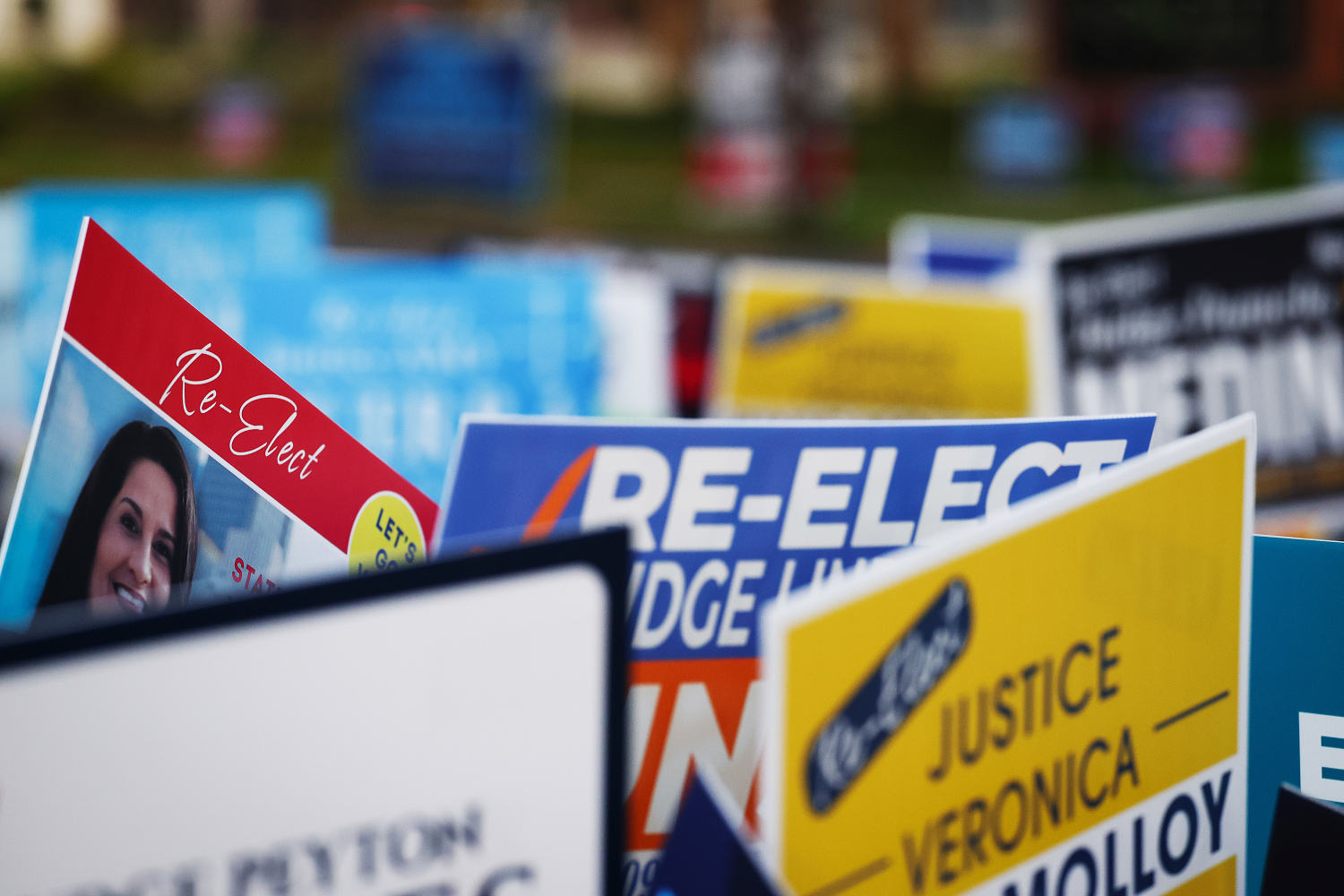
Most people treat jury selection like a boring administrative hurdle before the "real" trial starts. They're wrong. When a jury is selected for the trial of four men accused of sexually assaulting a man's drugged ex-wife, the entire outcome of the case often hinges on those first few days in the courtroom before a single piece of forensic evidence is ever shown.
Look at the broader legal reality surrounding these cases, particularly the massive, watershed trial in Avignon, France, involving Dominique Pelicot and dozens of co-defendants, alongside the subsequent related trials and appeals of the men accused of participating in the assaults of Gisèle Pelicot. Whether you're following the initial mass trial or the smaller, targeted trials of individual co-defendants who appealed their verdicts, the mechanics of seating an impartial panel under intense media glare follow a very specific, high-stakes playbook.
Why Jury Selection in Drug-Facilitated Assault Trials Is a Minefield
Standard criminal trials are hard enough to seat. Add allegations of chemical submission, domestic betrayal, and multiple defendants, and the process turns into a psychological chess match.
In the French legal system—specifically the cour criminelle départementale (departmental criminal court) used in the Pelicot proceedings, or the cour d'assises when citizen jurors are drawn by lot for appeals—the question of bias isn't theoretical. Everyone in the country already knows the headlines. Gisèle Pelicot famously waived her right to anonymity so the shame would switch sides, turning the proceedings into a global referendum on consent, rape culture, and chemical submission.
Try finding twelve ordinary citizens who haven't formed an opinion after months of front-page coverage. You can't.
Instead, the court isn't looking for people living under a rock. Judges and attorneys look for people who can compartmentalize. They need individuals who can look at four distinct defendants sitting in the dock and evaluate each man's specific intent and actions separately, rather than lumping them together under the horrific umbrella of the primary instigator's crimes.
The Trap of Collective Guilt
When four defendants stand trial together for assaulting the same drugged victim, defense attorneys face an immediate uphill battle. Their biggest enemy isn't always the prosecutor. It's the spillover effect.
If Defendant A committed the offense ten times and filmed it, and Defendant B showed up once and claims he thought it was a consensual swingers' arrangement, a poorly vetted jury will mentally convict them both before opening statements finish. During voir dire—or the French equivalent of questioning and challenging prospective jurors—defense lawyers aggressively probe for black-and-white thinking.
They want to know how potential jurors view:
- The definition of active consent versus passive presence or intoxication.
- The credibility of digital evidence, especially when messages between the ex-husband and the accused are ambiguous.
- Individual criminal responsibility when one dominant figure orchestrated the entire crime scene.
Honest legal observers will tell you that most prospective jurors claim they can be fair. Almost nobody raises their hand and says, "I've already decided they're guilty." So attorneys have to watch body language, hesitation, and how candidates react when the graphic nature of the charges is read aloud in court.
How the Court Filters Out Hidden Bias
I've watched enough criminal proceedings to know that the questions asked in open court only tell half the story. The real filtering happens through peremptory challenges and targeted questioning about personal experiences.
In cases involving drug-facilitated sexual assault, the court has to screen out people whose personal trauma might override their ability to weigh statutory elements of the crime. According to data from the Rape, Abuse & Incest National Network (RAINN), sexual violence affects millions of people, meaning almost any random pool of thirty or forty citizens will statistically include survivors or close family members of survivors.
Does having a personal connection to trauma automatically disqualify someone? No. At least, not legally.
The judge has to determine if that person can set their personal history aside and apply the strict letter of the law. In France, where the legal definition of rape has faced intense scrutiny precisely because the Penal Code historically emphasized violence, constraint, threat, or surprise rather than an explicit lack of affirmative consent, that distinction matters enormously. Jurors have to decide whether the element of "surprise" applies when a victim is rendered unconscious by heavy doses of lorazepam or other sedatives slipped into her food and drink.
Media Saturation and the "Echo Chamber" Problem
When a case becomes a cultural lightning rod, prospective jurors walk into the courthouse carrying the weight of public expectation. They know their neighbors, coworkers, and families are watching the news every night.
That creates a subtle, dangerous pressure. Nobody wants to be the juror associated with an unpopular acquittal, even if the prosecution fails to meet its burden of proof regarding one specific defendant out of four.
To counter this, judges issue strict instructions during the selection phase:
- Total media blackout regarding the trial, social media commentary, and background profiles of the defendants.
- Zero outside research into the toxicology of the drugs involved or the prior verdicts of other co-defendants.
- Strict reliance on courtroom testimony, ignoring protests or demonstrations happening outside the courthouse doors.
It sounds great in theory. In practice, keeping modern smartphone users completely insulated from viral clips and commentary requires constant judicial reminders and genuine commitment from the panel.
What Separates the Four Defendants in the Eyes of the Law
When four men are tried together for assaulting a man's drugged ex-wife, the prosecution doesn't just prove that an assault happened. That part is usually established early through medical reports, toxicology screens, and recovered video files.
The real battleground for the jury is mens rea—criminal intent.
In the Pelicot case and its subsequent appeal trials, the core defense mounted by nearly all the accused men wasn't "I wasn't there." The video evidence made that impossible. Their defense was "I didn't know she was drugged, and I thought her husband had her permission."
Think about what a jury has to do with that argument. They have to examine the specific circumstances of each of the four men:
- Communication logs: What did the ex-husband actually tell each man on platforms like Coco.fr or via text? Did he explicitly mention sleeping pills, or did he use coded language?
- Behavior in the room: Did the defendant whisper, tiptoe, or avoid turning on lights? A juror looking at video evidence will immediately ask why a man participating in a supposedly consensual encounter would act like a burglar.
- Medical reality: Can any reasonable adult look at a completely unresponsive, snoring woman and genuinely believe she is consenting?
The selected panel has to weigh these factors individually for all four defendants. One man might have visited the house multiple times over several years. Another might have gone once, stayed for twenty minutes, and left. A third might have been a repeat offender with prior convictions, while the fourth has a clean record and a steady job.
A competent jury refuses to take shortcuts. They build four separate mental files and demand that the prosecution prove guilt beyond a reasonable doubt for each one.
The Structural Differences Between Bench Trials and Citizen Juries
If you're following coverage of these trials from the United States or the UK, it's easy to misunderstand how the panel actually works.
In Anglo-American courts, twelve ordinary citizens decide guilt or innocence alone, and a judge hands down the sentence later. In France, the system operates differently depending on the stage of the trial.
During the initial mass trial in Avignon, the sheer number of defendants—fifty-one men in total—made a traditional citizen jury logistically impossible. Instead, the case was heard by a cour criminelle départementale, composed entirely of five professional magistrates.
However, when individual defendants appeal their convictions, the case moves to the cour d'assises d'appel. That's where citizen jurors enter the picture. Under French criminal procedure, an appellate assize court combines three professional judges with nine citizen jurors drawn from the electoral rolls.
Why That Hybrid Model Changes Everything
In a hybrid panel, the nine citizens and three judges deliberate together. They vote together on guilt, and they vote together on the sentence. To convict a defendant, a supermajority is required—at least eight of the twelve votes must be for guilt.
Think about the dynamic inside that deliberation room. You have nine everyday people—teachers, mechanics, retirees, office workers—sitting around a table with three career magistrates who know every nuance of the Penal Code.
During jury selection for this kind of panel, defense attorneys aren't just looking at the nine citizens. They're calculating how those nine citizens will interact with the three judges. Will the lay jurors defer blindly to the magistrates' legal framing, or will they bring real-world common sense about human behavior and consent into the room?
Defense lawyers typically use their peremptory challenges—up to five in an appellate assize court, while the prosecutor gets four—to remove jurors whose professions or backgrounds suggest rigid authority-mindedness or extreme susceptibility to emotional appeals.
Common Misconceptions About High-Profile Assault Trials
Public commentary around these cases gets messy fast. People conflate different stages of the legal process, misunderstand why certain evidence gets excluded, and jump to conclusions about what jury selection actually accomplishes.
Misconception 1: Jury selection is about picking "sympathetic" people.
It isn't. Lawyers don't get to pick their dream team. They only get to eliminate the people they think will hurt their side the most. You end up with whoever survives both sides' vetoes. It's a process of elimination, not selection.
Misconception 2: If a defendant appeals, it means the first verdict was flawed.
Under French law, the right to appeal a criminal conviction to a cour d'assises is automatic. A defendant doesn't have to prove a legal error occurred in the first trial to get a new hearing. However, appealing carries a massive risk: the new panel isn't bound by the original sentence and can actually hand down a harsher prison term if they find the defendant's lack of remorse aggravating.
Misconception 3: Chemical submission is easy to prove in court.
It's actually notoriously difficult unless the perpetrator recorded the crimes or kept meticulous digital records. Most sedatives used in drug-facilitated sexual assaults—like benzodiazepines or Z-drugs—clear out of blood and urine within hours or days. Hair strand testing can show chronic exposure over months, which is what helped corroborate the timeline in the Pelicot investigation, but proving a single isolated incident without digital footprints remains one of the hardest tasks in forensic medicine.
How to Follow Trial Coverage Without Getting Misled
When a trial involving four defendants moves from jury selection into witness testimony and closing arguments, headlines tend to flatten the nuances to generate clicks. If you want to understand what's actually happening inside the courtroom as the trial unfolds, watch for three specific indicators in the daily reporting:
- Track the individual charges, not the group narrative. Pay attention to whether the prosecution is alleging aggravated rape, attempted rape, or sexual assault for each specific man. Those distinctions carry drastically different sentencing guidelines.
- Watch how the court handles digital metadata. Timestamps on messages, deleted search histories, and encrypted chat logs usually carry more weight with jurors than courtroom apologies.
- Look at the prosecution's sentencing requests near the end of the trial. In continental European courts, the prosecutor recommends specific prison terms before the panel deliberates. Comparing those requests against the final verdicts tells you immediately whether the jury bought the defendants' claims of ignorance or rejected them entirely.
Now that the panel is seated, the procedural maneuvering gives way to the evidentiary phase, where every message, toxicology report, and video frame will be tested against the threshold of criminal intent.