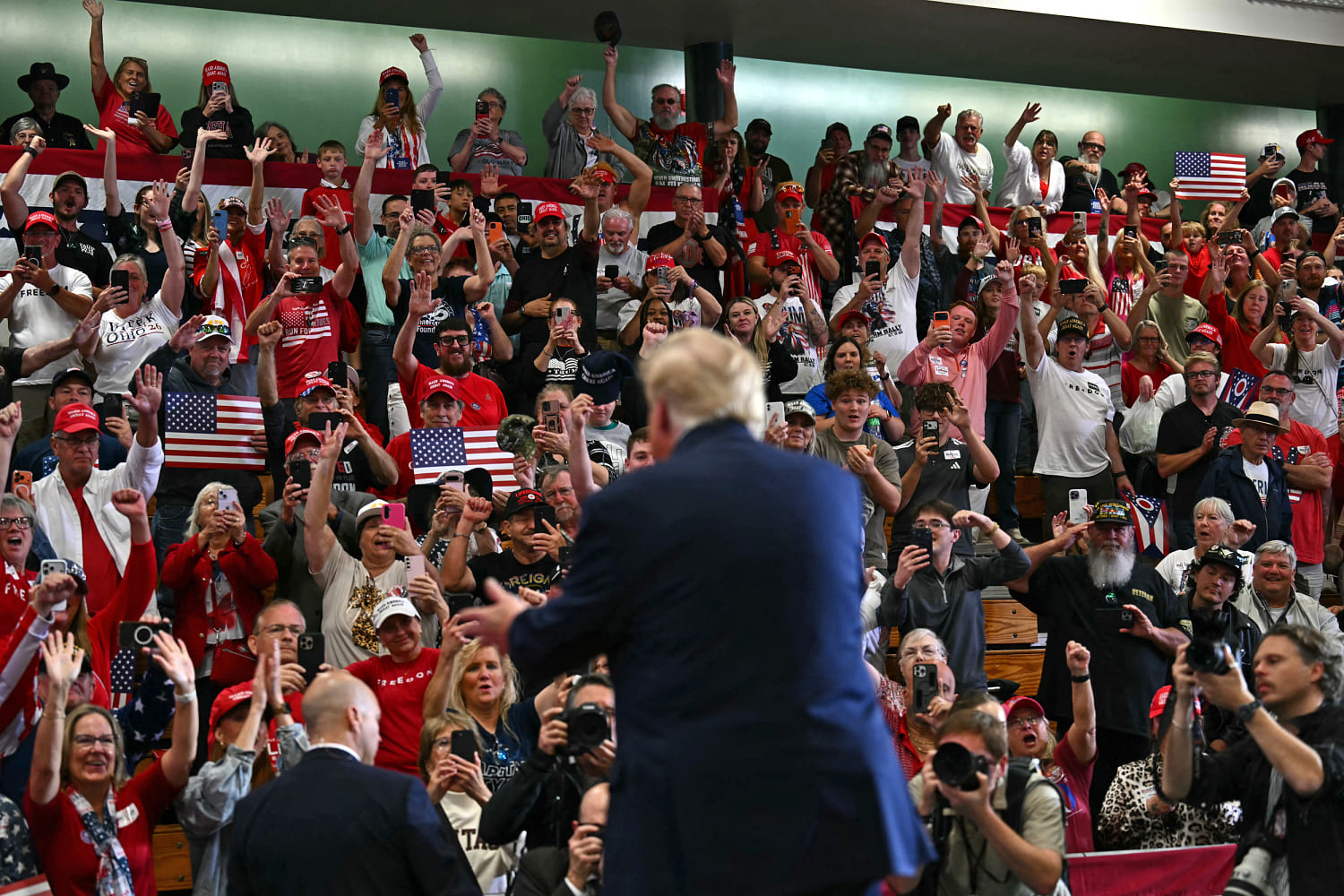
Most political pundits look at the final weeks of a presidential campaign and see chaos. They see a candidate flying between three time zones in forty-eight hours, repeating ninety-minute speeches, and seemingly ignoring the polished scripts handed to him by expensive consultants. When people analyze Donald Trump’s final sprint during the 2024 election cycle, they usually mistake sheer volume for a lack of discipline.
They're missing the point entirely. For another perspective, see: this related article.
If you've ever worked a ground game in a swing state or watched how turnout operations actually move numbers in late October and early November, you know that traditional campaign wisdom often breaks down in the closing stretch. The final sprint isn't about writing a brand-new policy white paper or winning over a mythical "undecided" voter sitting quietly in a suburban library. It's about raw, mechanical turnout and dominating every available screen so your base actually shows up when the polls open.
Why the Final Sprint Looks Different Than Conventional Campaigns
Traditional campaigns taper off. By the last ten days before Election Day, standard political playbooks tell candidates to shrink their message down to three safe talking points, hit two media markets a day, and avoid unscripted moments that might trigger an avoidable news cycle. Similar insight on this trend has been provided by Al Jazeera.
Trump’s closing strategy did the exact opposite. Instead of narrowing the aperture, his team flooded the zone with massive rallies in both battleground states and surprisingly non-competitive areas, paired with marathon podcast appearances that bypassed legacy broadcast networks altogether.
Think about the logistics of that schedule. While an ordinary campaign guards a candidate's voice and energy like rare glass, Trump’s late-stage calendar stacked multiple arena events back-to-back, often stretching past midnight. Critics called it exhausting and unfocused. Strategists who understand low-propensity voters saw something else entirely.
Low-propensity voters—the people who skip midterm elections and only tune into politics every four years—don't watch Sunday morning talk shows. They don't read newspaper endorsements. They respond to spectacle, cultural friction, and the feeling that something massive is happening right in their backyard. When a campaign drops a 15,000-person rally into a mid-sized Rust Belt city on a Tuesday night, local TV news covers it wall-to-wall for three days straight. That earned media hits living rooms that paid television ads simply can't buy anymore.
The Swing State Math Behind the Late-Stage Schedule
You can tell everything a campaign actually believes about its internal polling by looking at where the plane lands in the final seventy-two hours. Forget what press secretaries say on cable news. Follow the jet fuel.
In the closing stretch of the 2024 race, the flight logs centered relentlessly on the "Blue Wall" states of Pennsylvania, Michigan, and Wisconsin, alongside critical Sun Belt stops in North Carolina and Georgia. Pennsylvania alone absorbed an extraordinary share of time, money, and surrogate travel.
Here is why that math mattered so much. Without Pennsylvania's nineteen electoral votes, the path to 270 becomes painfully narrow for either major party. Every stop in places like Allentown, Reading, or Lititz wasn't random. Those cities sit inside counties where shifting margins by just two or three percentage points changes the statewide outcome.
Micro-Targeting Through Macro-Events
It sounds contradictory, doesn't it? How can an arena rally with thousands of cheering supporters count as micro-targeting?
Because modern rally operations are giant data-harvesting machines. Long before the candidate walks out to Lee Greenwood, campaign field organizers work the lines outside the venue. They verify voter registration statuses, capture cell phone numbers, sign people up for mail-in ballot tracking, and recruit local precinct captains on the spot.
The speech on television is the advertisement. The clipboard work in the parking lot is the actual campaign.
What the Media Missed About the Podcast Blitz
One of the sharpest shifts in Trump’s final sprint wasn't happening on a tarmac at all. It happened in studio chairs with headphones on.
By sitting down for multi-hour, unedited conversations on shows like The Joe Rogan Experience, This Past Weekend with Theo Von, and Flagrant, the campaign tapped into an audience that traditional political media barely reaches. Millions of young men—a demographic notoriously difficult to mobilize on Election Day—consumed those episodes in full.
Legacy reporters tended to clip out a single controversial ten-second soundbite from a three-hour conversation and treat it like a gaffe. Meanwhile, millions of listeners heard an unfiltered, conversational version of the candidate talking about everything from UFC fights to space exploration to tariffs.
That disconnect explains why so many pundits misread the momentum in the final week. If you only watched network evening news, you saw a turbulent closing stretch full of sharp rhetoric and controversy. If you were inside the podcast ecosystem, you saw a candidate comfortably dominating the cultural conversation without a moderator interrupting him every forty-five seconds.
The Risk of Going Off-Script in the Closing Days
Of course, running a high-volume, unscripted final sprint carries real danger. It isn't magic, and it certainly isn't immune to self-inflicted wounds.
When a candidate speaks off the cuff for ninety minutes three times a day, message discipline inevitably frays. During the closing weeks of the campaign, off-script remarks and controversial jokes from warm-up speakers at major events—most notably the Madison Square Garden rally in late October—created immediate defensive headaches. Suddenly, instead of hammering core economic arguments about inflation, grocery prices, and border security, surrogates had to spend forty-eight hours answering questions about rhetoric.
In a razor-thin race decided by tens of thousands of votes across a handful of states, losing two full news cycles to avoidable controversies is a massive gamble. Every hour spent playing defense is an hour voters aren't hearing your closing economic pitch.
Yet Trump’s team calculated that the upside of energy and authenticity outweighed the downside of bad headlines. In their view, trying to put him in a traditional teleprompter box would dull the exact edge that drove his base to the polls in 2016 and 2020. You don't win with a populist movement by suddenly acting like a cautious Senate candidate in the final week.
The Ground Game Reality Behind the Scenes
There was also a major structural shift happening quietly beneath the rallies during that final push. Historically, Republican campaigns relied heavily on internal party infrastructure for door-knocking and ballot chasing. In 2024, much of that late-stage ground operation was outsourced to outside super PACs, most prominently Elon Musk’s America PAC and Turning Point Action.
Following a 2024 Federal Election Commission advisory opinion that gave campaigns wider latitude to coordinate with outside groups on paid canvassing, those organizations poured tens of millions of dollars into targeted door-knocking across battleground states.
The strategy was laser-focused. Rather than knocking on every door in a neighborhood, canvassers used mobile apps to target specific households—particularly registered voters who leaned conservative on issues like guns, taxes, or immigration, but hadn't voted in recent cycles.
Did it work everywhere? Data from the ground showed mixed execution in certain pockets, with occasional reports of app glitches and contractor turnover. Even so, the sheer scale of late-stage spending ensured that targeted households in states like Arizona, Nevada, and Pennsylvania were contacted repeatedly through mailers, text messages, and face-to-face visits right up until polls closed.
How to Read Any Late-Stage Political Sprint Without Getting Fooled
Next time you're watching the final two weeks of a major election, ignore the breathless cable news panels arguing over who "won the news cycle." Most of that commentary is noise designed to keep you tuned in through commercial breaks.
Instead, track three concrete indicators that actually tell you what's happening on the ground:
- Watch the travel calendar, not the speeches. When a campaign visits a state it won comfortably four years ago during the final weekend, it's playing defense. When it camps out in a state it narrowly lost last time, internal numbers are showing a real opening.
- Follow late ad buys in local markets. National polling averages lag behind reality by several days. Local broadcast and digital ad reservations in cities like Erie, Milwaukee, or Greensboro reveal where campaigns see late movement in real time.
- Look at early voting demographic splits, not raw totals. High early turnout doesn't automatically favor one party anymore. What matters is whether a campaign is cannibalizing its own Election Day voters or successfully banking low-propensity ballots early so volunteers can chase harder targets on Tuesday.
Trump’s final sprint worked because it aligned his personal strengths—endurance, media instincts, and crowd energy—with a specific structural goal: turning out irregular voters who rarely engage with conventional politics. Whether you loved the style or hated it, the mechanics behind it were deliberate from start to finish. Stop treating loud closing campaigns like accidents, and start watching where the resources actually land.