When headlines first announced that the US measles death toll had climbed to eight earlier this month, plenty of people shrugged it off as an isolated statistical blip. They were wrong. Within weeks, state health departments pushed that fatal tally even higher—reaching at least 14 confirmed deaths nationwide by late November 2026—right as the Pan American Health Organization (PAHO) formally stripped the United States of its 26-year measles elimination status.
Let's be honest about what's happening here. Measles isn't a harmless childhood rash you just sleep off with chicken soup and a cool washcloth. It's one of the most contagious pathogens known to medicine, and watching a completely preventable disease claim lives in Pennsylvania, Wisconsin, New York, and Virginia in 2026 should be a wake-up call for every parent, school board, and clinic in the country.
If you've been trying to make sense of the conflicting death counts in the news or wondering whether your family's immunity still holds up, you're not alone. Even experienced clinicians are sorting through messy reporting pipelines right now.
Why the Official Measles Death Numbers Keep Shifting
You might have noticed something strange if you've followed the news closely over the past few weeks. One day a report says the US measles death toll hit eight. Days later, another outlet cites 10. Meanwhile, the Centers for Disease Control and Prevention (CDC) website lists fewer fatalities than state health departments do.
That gap isn't a cover-up. It's a bureaucratic bottleneck.
State agencies report "measles-associated" deaths as soon as local medical examiners confirm an active infection alongside fatal complications. The CDC, however, has been working through a standardized federal case definition before adding certain fatalities to its national ledger. That lag created a temporary split between state tallies and federal dashboards in November 2026.
Regardless of which ledger you check, the trajectory is grim:
- 2024 baseline: The US recorded 285 confirmed cases all year.
- 2025 surge: Infections jumped nearly eightfold to 2,289 cases, accompanied by three confirmed deaths.
- 2026 crisis: By November 19, confirmed cases surged past 5,838 across 47 jurisdictions, driven by 43 distinct outbreaks.
Pennsylvania has borne the heaviest brunt of the 2026 wave, logging over 1,630 infections and nine deaths on its own. Wisconsin recorded more than 430 cases—its worst tally in over 35 years—alongside two fatalities, including an infant. New York reported its first measles-linked child death in three decades, and Virginia confirmed a fatal pediatric case in a child under four.
Nine out of ten cases in this resurgence share one unmistakable trait. Around 96% of infected patients are either unvaccinated or have an unknown vaccination status.
Losing Measles Elimination Status Actually Means Something
On November 17, 2026, PAHO revoked the measles elimination status the United States had held since 2000. Canada lost its designation in late 2025, and Mexico and Bolivia lost theirs alongside the US.
People often confuse "elimination" with "eradication." Smallpox is eradicated—it doesn't exist in the wild anywhere on Earth. Measles was eliminated domestically, meaning the virus wasn't circulating continuously inside US borders for 12 months or longer. Travelers still brought it in from abroad, sure, but high community immunity always snuffed out those sparks before they became wildfires.
Not anymore. Because the same viral chains have now circulated uninterrupted across American communities for over a year, measles is officially endemic here again.
CDC Director Dr. Erica Schwartz pointed out in a November 17 joint statement that a diplomatic designation isn't what protects people—vaccination does. She's right about the biology, though the policy landscape makes rebuilding that shield complicated. Public health veterans and infectious disease specialists—including Dr. Sanchi Malhotra at UCLA Health—have openly called the setback an embarrassment, pointing directly to years of eroding trust and mixed messaging from top federal leadership, including Health and Human Services Secretary Robert F. Kennedy Jr..
To stop a virus with a basic reproduction number ($R_0$) between 12 and 18, you need roughly 93% to 95% of a community immune. National kindergarten coverage for the measles, mumps, and rubella (MMR) vaccine has slipped to around 92.4%. That tiny percentage drop looks innocent on a spreadsheet. In real life, it punches giant holes in herd immunity—especially in tight-knit rural counties where exemption rates cluster far higher than the national average.
What Measles Actually Does Inside the Human Body
If you grew up in an era when measles was basically a textbook footnote, it's easy to underestimate how vicious the virus really is. You don't just get a fever and spots.
Measles spreads through respiratory droplets and hangs suspended in indoor air for up to two hours after an infected person leaves the room. Walk into an empty pediatrician's waiting room or a grocery store aisle 90 minutes after a contagious patient coughed there, and you can still catch it.
Once inside your respiratory tract, the virus targets immune cells first. Doctors call what follows "immune amnesia." Measles literally wipes out a massive chunk of the memory B and T cells your body spent years building against other bacteria and viruses. For months or even years afterward, survivors face heightened vulnerability to secondary bacterial pneumonia, severe ear infections, and bloodstream infections.
About 1 in 8 infected Americans in the recent outbreaks have ended up hospitalized—roughly 650 people in 2026 alone. For kids under five, hospitalization rates climb closer to 23%.
The Complications Nobody Wants to Think About
Most fatalities stem from two acute emergencies:
- Measles pneumonia: The leading cause of death in young children with measles, occurring when the virus or secondary bacteria inflame the lungs so severely that oxygen can't reach the bloodstream.
- Acute encephalitis: Brain swelling that hits roughly 1 in 1,000 patients. Survivors frequently walk away with permanent hearing loss or intellectual disabilities.
Then there's the nightmare scenario that doesn't show up on immediate outbreak dashboards. Subacute sclerosing panencephalitis (SSPE) is a progressive, universally fatal brain disorder caused by persistent measles virus hiding in the central nervous system. It strikes seven to 11 years after a child appears to recover completely. Infants infected before age two face the highest risk. Because we've seen thousands of pediatric infections across 2025 and 2026, neurologists are bracing for a grim wave of SSPE cases in the mid-2030s.
Pregnant women face steep dangers too. CDC tracking since 2025 documented at least 194 pregnant Americans infected with measles, with roughly a quarter needing non-labor hospital care and 13 babies born already infected with congenital measles.
Common Myths That Keep Fueling the Outbreak
Whenever outbreaks surge, bad advice spreads almost as fast as the virus itself. Having watched clinicians debunk these claims repeatedly during the 2026 surge, three misconceptions stand out as genuinely dangerous.
Myth 1: Good nutrition and vitamin A prevent measles.
Vitamin A plays a legitimate clinical role after a child catches measles. The World Health Organization and American pediatricians administer high-dose vitamin A to hospitalized children to reduce eye damage and lower mortality risk. What vitamin A cannot do is block infection. Taking supplements won't stop an airborne virus from binding to your cells, and mega-dosing children at home risks liver toxicity.
Myth 2: Adults vaccinated decades ago don't need to check their status.
Most adults who received two documented doses of the live MMR vaccine are protected for life—two doses block infection about 97% of the time. However, people vaccinated between 1963 and 1967 may have received an inactivated ("killed") version of the shot that didn't provide lasting immunity. Similarly, adults born between 1957 and 1989 often received only a single dose, which offers around 93% protection rather than 97%. Notice that in Pennsylvania's massive 2026 outbreak, roughly two-thirds of reported cases occurred in adults.
Myth 3: Measles is mild if you're otherwise healthy.
Before the vaccine arrived in 1963, the US saw roughly 400 to 500 measles deaths every single year, mostly among previously healthy kids. Modern intensive care units can keep more patients alive on ventilators today than doctors could in 1960, which lowers the raw fatality percentage—until rural hospitals get overwhelmed or patients arrive too late.
Practical Steps to Protect Yourself and Your Family Right Now
You don't need to panic, and you don't need to guess where you stand. Take three concrete actions this week instead.
- Pull your actual immunization records. Don't rely on family memory. Check your state immunization registry or call your primary care clinic to confirm two documented MMR doses. If you can't find records—or if you were vaccinated before 1968—ask your doctor for an MMR booster. Getting an extra dose when you're already immune carries zero extra risk, and it's faster and cheaper than ordering an antibody titer blood test.
- Check early-dose eligibility for babies. Routine MMR shots happen at 12–15 months and again at 4–6 years. If you live in an active outbreak county—or plan to travel through crowded airports or affected regions with an infant aged 6 to 11 months—talk to your pediatrician about an early protective dose. It won't count toward their two routine childhood doses later, yet it buys crucial protection during peak holiday travel.
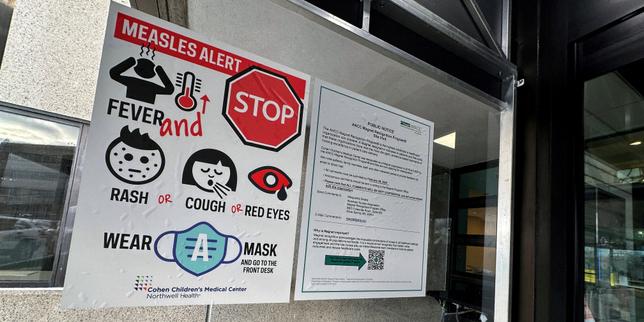
- Call ahead before visiting any clinic with a rash. If someone in your household develops a high fever, cough, runny nose, and red watery eyes followed by a blotchy red rash starting on the hairline, do not walk straight into an urgent care lobby. Call the clinic from the parking lot. Staff will bring you through a separate entrance so you don't inadvertently expose newborns, pregnant patients, or immunocompromised neighbors sitting in the waiting room.
Measles came back because collective immunity slipped below a razor-thin mathematical threshold. Closing those immunity gaps household by household is the only way we push it back out.