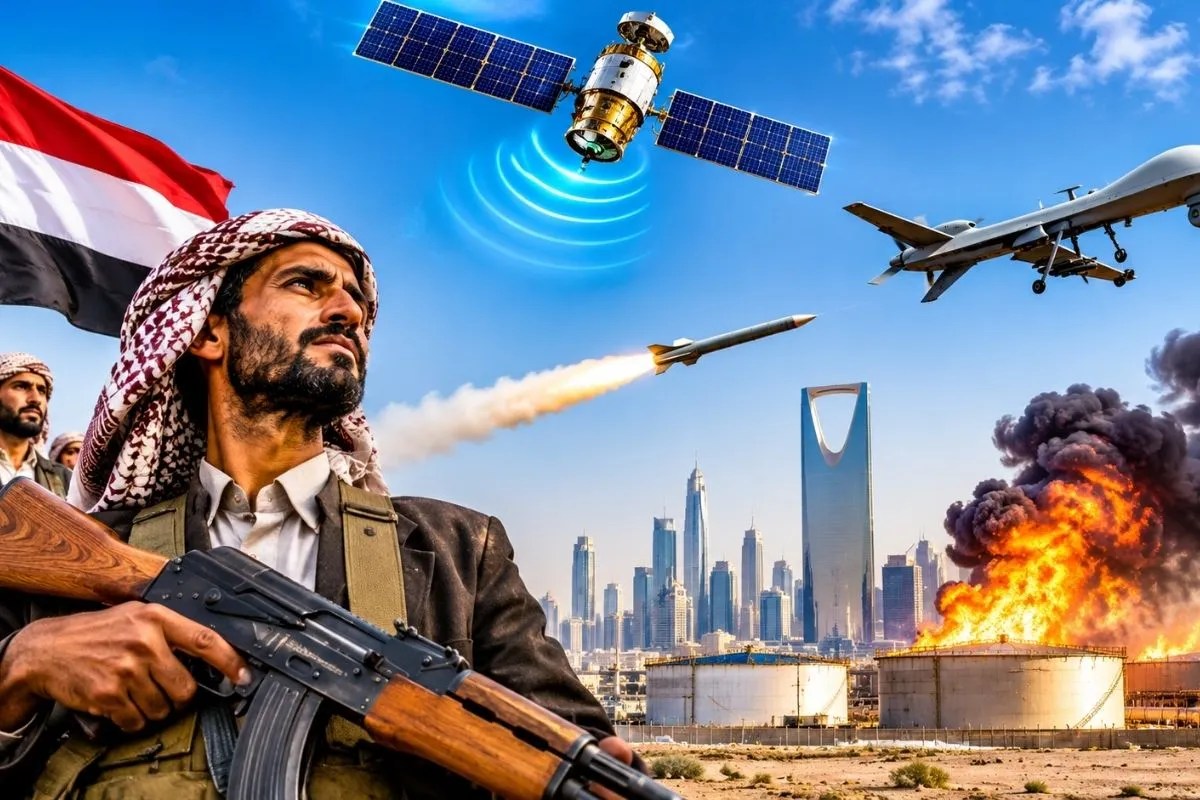
When drones slammed into three pumping stations along Saudi Arabia’s East-West Pipeline on September 10, 2026, oil flows ground to a halt across a critical 1,200-kilometer artery. Most observers chalked it up to another round of cheap Iranian-supplied drones getting lucky. They missed the real story happening hundreds of miles straight up.
An investigation by Geneva-based intelligence firm AURORAH GeoSignal Intelligence tracked 40 separate missile and drone attacks on Saudi targets between July 1 and October 19, 2026. In every single strike—100% of them—Russian military and government reconnaissance satellites were positioned overhead before and after impact. The Houthis in Yemen and allied militias in Iraq don't own spy satellites. Yet their munitions are suddenly finding high-value targets with unnerving accuracy.
You can't separate modern proxy warfare from orbital surveillance anymore. The missiles and drones grab the headlines, sure, but orbital targeting data is what turns a blunt instrument into a scalpel.
How Orbital Tracking Exposes the Moscow-Tehran-Sanaa Pipeline
Here's the problem with assuming militias operate on their own: they lack the indigenous intelligence, surveillance, and reconnaissance infrastructure required to map hardened military bases or pinpoint moving assets in real time. When a projectile hits a specific hangar housing an allied fighter jet rather than empty tarmac, somebody is feeding the launch crew exact coordinates.
AURORAH filtered through more than 11,000 active spacecraft in orbit to isolate 72 Russian government and military reconnaissance platforms. By mapping their orbital trajectories and maneuvers against ground strikes, analysts uncovered an unmistakable operational signature.
- Persistent Loitering Before Impact: During a 72-hour window surrounding major strikes, the concentration of Russian satellites passing over targeted Saudi zones jumped by 50% compared to baseline summer tracking.
- Multi-Sensor Coverage: The orbital passes weren't limited to basic optical cameras. Analysts identified six distinct Russian satellite classes overhead, including Persona optical platforms, Kondor-FKA radar imaging satellites, Bars-M mapping systems, and Lotos-S1 electronic intelligence collectors.
- Battle Damage Assessment: Satellite passes didn't stop once explosions occurred. Russian spacecraft repeatedly flew over strike zones immediately afterward, matching standard military protocols for assessing target destruction.
A senior Houthi leader even confirmed to the Associated Press that Iranian advisers stationed in Yemen have been handing over targeting packages derived directly from Russian satellite intelligence. Iran acts as the clearinghouse, translating raw orbital imagery and electronic intercepts from Moscow into actionable firing solutions for proxy crews on the ground.
Pinpoint Hits on Saudi Energy and Military Infrastructure
Look closely at the September 2026 strike wave, and the tactical value of space-based reconnaissance becomes obvious. Proxy forces didn't just lob rockets randomly at sprawling cities. They hit choke points.
The East-West Pipeline Chokepoint
With Iranian maritime attacks threatening tanker traffic through the Strait of Hormuz, Saudi Arabia relies heavily on its 1,200-kilometer East-West Pipeline to move crude from eastern oil fields across the Najd Plateau to Red Sea export terminals. Because the pipeline climbs more than 1,100 meters in elevation, its pumping stations are irreplaceable pressure points. Beginning in July, 11 satellites from Russia's Cosmos 2600 series concentrated specifically over three of those stations. On September 10, multiple drones launched from Iraq struck those exact three facilities, temporarily severing the kingdom's primary bypass route.
The King Fahd Air Base Strike
Roughly a week later, Houthi projectiles struck King Fahd Air Base in Taif. Rather than hitting empty runways or general Saudi facilities, the strike damaged hangars and specifically hit a deployed Italian Air Force Eurofighter Typhoon jet. Nawaf Obaid, founder of AURORAH and a fellow at King's College London's Department of War Studies, pointed out that isolating a foreign coalition aircraft inside a sprawling base demands specialized reconnaissance capabilities that neither Sanaa nor Tehran possesses organically.
Similar orbital patterns preceded earlier attacks too. Saudi officials noted that Russian satellite intelligence assisted Iranian strikes on Prince Sultan Air Base in March—damaging a U.S. reconnaissance aircraft—and factored into strikes hitting a CIA unit inside the U.S. Embassy compound in Riyadh. Even the October 19 attack on the Al-Alam military training center in Yemen's Shabwa governorate, which killed nearly 80 personnel, followed the exact same satellite pass sequence.
Why Moscow Plays This Shadow Game
Russia hasn't officially entered the Middle East conflict, and Moscow previously issued public statements condemning attacks on Saudi oil facilities. So why risk blowing up a carefully managed diplomatic relationship with Riyadh?
Because geopolitics rarely runs on goodwill. Since 2022, Iran has supplied Russia with Shahed drones, ballistic missiles, and manufacturing tooling to sustain its war effort in Ukraine. Sharing orbital intelligence costs Moscow virtually nothing in physical hardware while repaying Tehran in high-grade military currency.
There's also a broader strategic calculation at play. Every missile that forces Washington and European allies to burn through expensive air-defense interceptors in the Red Sea or Arabian Peninsula drains stockpiles that might otherwise head to Eastern Europe. By quietly passing targeting coordinates through Islamic Revolutionary Guard Corps intermediaries, Russia ties down Western military bandwidth while keeping its own fingerprints off the launch buttons.
What Analysts Get Right and Wrong About Direct Proof
If you read defense commentary online, you'll see two extreme takes. One camp claims Moscow is practically pressing the fire button for Houthi crews. The other insists orbital passes are pure coincidence because satellites orbit the Earth constantly anyway. Both views miss the mark.
Let's be transparent about the intelligence limits here. Neither AURORAH nor Western open-source analysts have publicly released intercepted radio transmissions or signed Kremlin directives proving a direct, real-time data feed from Russian space command to Houthi commanders. As orbital intelligence experts like Adam Marsh at LeoLabs have noted, massing satellites over conflict zones is textbook reconnaissance behavior, and international space law offers no mechanism to stop a nation from photographing whatever it wants from orbit.
Still, calling 40 out of 40 matches a coincidence stretches credulity past the breaking point. There are several plausible pipelines for how that data moves:
- State-to-State Intelligence Sharing: Russian military intelligence hands imagery directly to IRGC officers in Tehran, who relay coordinates to Yemen and Iraq.
- Co-Developed Assets: Iran operates its own Russian-built Khayyam reconnaissance satellite, blurring the operational lines between Moscow's orbital network and Tehran's space capabilities.
- Commercial Fronts and Intermediaries: Satellite imagery can be laundered through shell companies or allied channels before reaching regional militias.
Saudi leadership certainly isn't treating it as an accident. Rayed Krimly of the Saudi Foreign Ministry openly acknowledged that Iran and the Houthis receive intelligence backing from both Russia and China, confirming that Riyadh raises the issue regularly in diplomatic channels with Moscow and Beijing.
How to Track and Counter Proxy Space Warfare Going Forward
Watching this conflict evolve requires shifting how you evaluate regional threats. Counting how many drones a militia holds in a warehouse tells you almost nothing if an external superpower is acting as their eyes in the sky.
If you're tracking Middle East security, energy markets, or defense policy, focus on three concrete indicators rather than surface-level headlines:
- Watch Orbital Telemetry Alongside Ground Alerts: Organizations like LeoLabs and independent space trackers routinely flag unusual orbital maneuvers or sudden clustering of Kosmos-series satellites over the Arabian Peninsula. Spikes in overflights over Red Sea ports like Yanbu or refineries like Rabigh often precede kinetic strikes by days.
- Monitor Hardening and Deception Around Energy Chokepoints: Physical air defenses alone won't stop saturation attacks when an adversary knows exact coordinates. Look for Saudi Aramco and regional militaries to invest heavily in mobile decoys, electronic jamming, underground redundancy, and rapid repair crews at elevated pipeline stations.
- Follow Diplomatic Friction Between Riyadh and Moscow: Pay attention to OPEC+ production decisions and bilateral summit readouts. Saudi Arabia holds massive leverage over global oil pricing—leverage Riyadh can quietly tighten if Russian space intelligence continues jeopardizing kingdom infrastructure.
The era when non-state militias fought blind is over. Until international frameworks address orbital intelligence sharing with proxy groups, any regional militia backed by a space-faring patron can punch far above its weight class.