Four commercial vessels hit in twenty-four hours near Oman isn't just another headline to scroll past while drinking your morning coffee. When an oil tanker transiting the Strait of Hormuz gets targeted, the global energy market doesn't just flinch—it starts pricing in a nightmare scenario that affects everything from your local gas pump to the cost of shipping groceries across the ocean.
Most news outlets treat these maritime strikes like isolated military skirmishes. They report the smoke, name the naval task force responding, and move on to the next breaking story. That's a massive mistake. If you look at how maritime insurance, global crude supply, and naval chokepoints actually work, a cluster of attacks in a single day signals a structural shift in regional risk that takes months to unwind. Learn more on a related subject: this related article.
Why the Strait of Hormuz Matters More Than Any Other Waterway
Roughly one-fifth of the world's petroleum liquids pass through this narrow stretch of water between Oman and Iran. At its narrowest point, the Strait of Hormuz is only about twenty-one nautical miles wide, and the actual shipping lanes for incoming and outgoing tankers are just two miles wide in each direction, separated by a two-mile buffer zone.
There is no easy detour. More journalism by TIME delves into comparable perspectives on this issue.
While Saudi Arabia and the United Arab Emirates have built overland pipelines—like the East-West Pipeline and the Habshan-Fujairah pipeline—those bypass routes only handle a fraction of the total volume moving out of the Persian Gulf. When tankers come under fire off the coast of Oman, the global oil market loses its margin for error immediately.
I've watched energy traders react to Gulf incidents for years, and the pattern is always the same. Amateur observers look at whether a tanker sank. Professionals look at whether the crew abandoned ship, whether the hull took on water, and what the maritime security advisories say ten minutes later. A tanker doesn't need to end up on the ocean floor to disrupt supply. It just needs to become uninsurable.
What Happens When Four Ships Get Hit in One Day
A single incident can sometimes be brushed off as a rogue operation, a miscalculation, or an isolated warning shot. Four separate attacks within a twenty-four-hour window near Oman changes the math completely. It proves sustained capability and deliberate intent to disrupt commercial transit.
Here is what happens behind the scenes in the shipping industry the moment that fourth distress call goes out over VHF Channel 16.
- War risk premiums skyrocket. Lloyd's of London and other marine underwriters immediately re-evaluate the Persian Gulf and Gulf of Oman as high-risk zones. Shipping companies suddenly face hundreds of thousands of dollars in extra insurance surcharges for a single voyage.
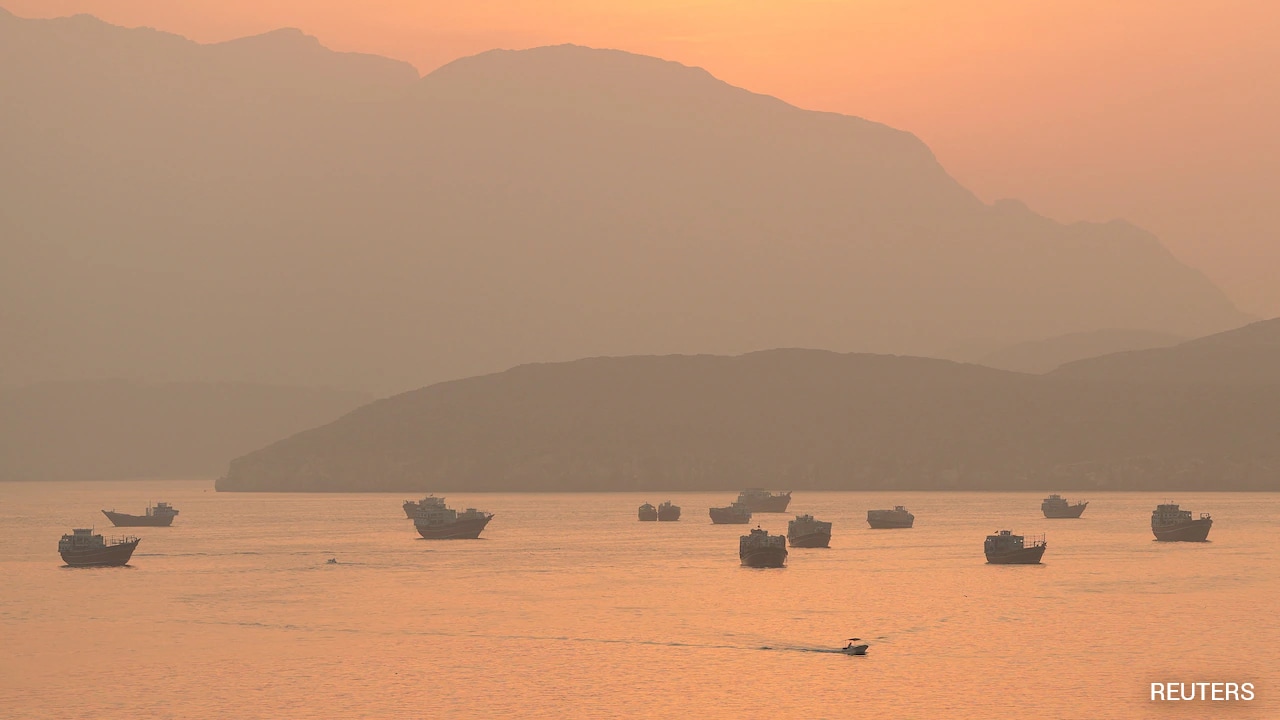
- Captains drop anchor. Master mariners have the legal authority to refuse orders if they believe their vessel and crew face imminent danger. You start seeing clusters of Very Large Crude Carriers idling outside the Gulf of Oman, waiting for naval escorts or clearer intelligence before entering the traffic separation scheme.
- Charter rates spike. Even if oil keeps flowing, the cost of hiring a tanker jumps because fewer owners are willing to put a hundred-million-dollar asset into a live fire zone.
Honestly, the physical damage to a single hull is rarely the biggest financial story. A limpet mine, an explosive-laden drone boat, or an anti-ship missile hitting above the waterline might leave a vessel afloat and limp back to Fujairah or Muscat for repairs. The real damage is psychological and financial. Once commercial crews refuse to sail without armed security teams or coalition warship escorts, the entire rhythm of global crude delivery slows down.
The Geography Near Oman Creates a Tactical Trap
People often assume attacks in the Strait of Hormuz happen right in the middle of the tightest choke point. In reality, the waters just outside the strait—in the Gulf of Oman near ports like Fujairah, Sohar, and Muscat—offer attackers far more room to operate and disappear.
Inside the narrowest section of the strait, naval radar coverage from Oman, the UAE, and international coalition patrols is dense. Every vessel's Automatic Identification System signal is tracked constantly. Once tankers exit the strait heading south and east into the Gulf of Oman, they spread out toward international shipping lanes bound for Asia, Europe, and North America.
That dispersal makes naval protection way harder. Warships can't escort every single merchant vessel across open water. Attackers using unmanned surface vessels, aerial drones, or fast-attack craft exploit that gap, striking tankers while they are slowing down to await orders, taking on bunker fuel, or transiting just outside territorial waters.
Misconceptions About Oil Prices and Naval Escorts
Whenever tankers get attacked near Oman, social media fills up with predictions that crude oil will hit two hundred dollars a barrel by Tuesday. That almost never happens overnight, and expecting an immediate price explosion is one of the biggest mistakes retail investors make.
Modern oil markets have massive buffers. Strategic petroleum reserves in the United States, Europe, and Asia exist specifically to bridge short-term supply shocks. Floating storage—tankers already loaded with crude sitting outside the Gulf—also cushions the immediate blow. Prices spike initially on fear, then settle into a higher volatility range as traders calculate how many barrels are actually delayed rather than destroyed.
Another common myth is that naval coalitions can simply sweep the area and guarantee safe passage. Navies play defense against asymmetric threats. Stopping low-flying drones or small remote-controlled boats packed with explosives in busy commercial shipping lanes is notoriously difficult. Radar clutter from hundreds of fishing dhows and merchant ships makes detecting small targets a constant headache for warship crews. Even with destroyers and frigates on patrol, commercial shipping remains vulnerable to hit-and-run tactics.
How Shipping Companies and Crews Adapt Under Fire
If you talk to mariners who run the Gulf route, you quickly realize how much preparation goes into a transit that used to be routine. Vessels entering high-risk areas near Oman follow strict Best Management Practices developed by the maritime industry.
Crews rig razor wire along low freeboards, pressurize fire hoses to deter small boats, and conduct citadel drills so everyone knows where to shelter if an impact occurs. Bridge teams maintain continuous visual watches alongside radar monitoring, often turning off non-essential deck lighting at night to reduce their visual profile.
Still, passive defenses only do so much against modern anti-ship weapons or aerial drones. When four vessels are struck in a single day, commercial operators have to make hard calls about routing, crew rotation, and contract force majeure clauses.
What to Watch Over the Next Seventy-Two Hours
If you're tracking this situation for business, investing, or supply chain planning, ignore the sensationalist headlines and watch three concrete indicators instead.
First, check the advisories from the United Kingdom Maritime Trade Operations and the Joint Maritime Information Center. They issue the ground-truth incident reports that ship captains actually rely on, stripping away political spin to confirm exact coordinates, vessel status, and the type of ordnance used.
Second, watch Automatic Identification System tracking data in the Gulf of Oman. If you see dozens of tankers clustering off the coast of Fujairah instead of entering the strait, supply bottlenecks are already forming regardless of what politicians say.
Third, monitor front-month Brent crude spreads rather than just the flat price. When immediate-delivery contracts jump sharply compared to contracts six months out—a market structure called backwardation—it tells you physical buyers are scrambling for barrels right now.
Keep your focus on insurance rates, vessel tracking, and official maritime security bulletins, because those three data points will tell you whether this crisis is escalating or cooling down long before the evening news catches up.