Everyone wants to talk about the war in Ukraine and the crisis in Iran. They're missing the real story.
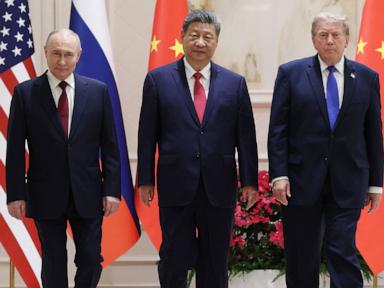
While cable news anchors obsess over stalled peace talks, Donald Trump, Xi Jinping, and Vladimir Putin have quietly found common ground on two massive global levers—energy markets and the International Criminal Court. It sounds contradictory on paper. Three rival superpowers with conflicting territorial ambitions suddenly nodding along in the same direction? Honestly, if you've watched international relations over the last decade, it makes complete sense. Meanwhile, you can explore related stories here: Counterterrorism Interdiction Mechanics in Decentralized Extremist Networks.
Here is the core reality. Washington, Beijing, and Moscow remain deadlocked on Tehran's nuclear ambitions and the front lines in Eastern Europe, yet their national interests overlap sharply when it comes to keeping energy flowing and keeping international prosecutors out of their business. You don't need a formal treaty to create a geopolitical block. You just need shared enemies and mutual economic survival.
Why Energy Brings Rivals Together
Money talks louder than ideology. Always has. To understand the bigger picture, check out the detailed report by The New York Times.
When global oil and natural gas prices spike, every leader in the world feels the heat at home. For Trump, high gas prices are political poison for American voters and domestic manufacturing. For Putin, energy exports are the literal lifeblood keeping the Russian state funded despite heavy Western sanctions. And for Xi? China is the world's largest importer of crude oil, meaning Beijing needs stable, predictable, and affordable energy to keep its industrial engine from stalling out.
None of these three men want an uncontrollable energy shock.
Think about what happens when global supply chains tighten. American shale producers want steady demand without wild boom-and-bust cycles that bankrupt smaller operators. Moscow needs reliable buyers—specifically China and India—willing to take discounted barrels without flinching at secondary sanctions. Beijing wants discounted Russian crude alongside steady Middle Eastern shipments, plus access to American liquefied natural gas when spot prices dip.
It's a pragmatic triangle. Nobody is signing a "best friends" pact, and they still compete aggressively for market share. Still, all three administrations have strong incentives to prevent global energy infrastructure from collapsing. If shipping lanes close or major refineries burn, everybody loses. That shared fear creates an unspoken floor under global energy diplomacy, even when diplomatic cables between Washington, Moscow, and Beijing look frostier than ever.
The Shared Hatred of the International Criminal Court
If energy is about money, targeting the International Criminal Court is about raw power.
Neither the United States, China, nor Russia is a party to the Rome Statute, the treaty that established the ICC in The Hague. None of them recognize its jurisdiction over their citizens. Why? Because superpowers don't let outside judges grade their homework.
Let's look at the track record.
- The United States has long opposed ICC overreach. During his first term, Trump authorized economic sanctions and visa restrictions against ICC officials investigating alleged war crimes by American forces in Afghanistan and by Israeli officials. Washington's stance is straightforward—American courts handle American accountability, period.
- Russia treats the court as an instrument of Western political warfare. After the ICC issued an arrest warrant for Putin over the deportation of Ukrainian children, Moscow responded by placing ICC prosecutors and judges on its own criminal wanted lists.
- China watches The Hague with deep suspicion, viewing international tribunals as tools that Western nations could eventually weaponize against Beijing over domestic policies in Xinjiang, Tibet, or future moves in the South China Sea.
When Trump, Xi, and Putin push back against the ICC, they're defending the exact same principle—absolute state sovereignty. They want a world where major powers settle disputes through bilateral muscle and negotiation, not international legal bodies. By delegitimizing the court, slapping sanctions on its staff, or simply ignoring its warrants, these three capitals effectively hollow out the institution's authority. If the world's three most powerful militaries refuse to play by the court's rules, smaller nations quickly realize those rules don't mean much in practice.
Why Iran and Ukraine Remain Completely Stuck
So if they can align on oil and international courts, why can't they cut a deal on Iran or Ukraine?
Because those conflicts involve zero-sum survival for the regimes involved. You can split energy market share. You can't easily split sovereignty.
The Ukraine Impasse
In Eastern Europe, the fundamental gap hasn't budged. Kyiv and its European backers want full territorial integrity and ironclad security guarantees so Russia can't simply reload and attack again in three years. Putin wants formal recognition of Russian control over occupied Ukrainian regions and a permanent ban on Ukraine joining NATO.
Trump has repeatedly pushed for a fast ceasefire to stop the bleeding and reduce American financial commitments. Yet wanting a deal and getting Putin to accept terms that Washington and European allies can stomach are two wildly different things. Meanwhile, Xi plays the long game. Beijing calls for peace talks on paper while keeping Moscow's economy afloat through dual-use trade and energy purchases, because a distracted West tied down in Europe relieves pressure on China in the Indo-Pacific. Nobody has enough leverage to force the other side to blink without risking a catastrophic escalation.
The Iran Standoff
Tehran presents an even messier knot.
Trump's approach to Iran relies heavily on maximum economic pressure, strict enforcement of oil sanctions, and backing regional partners like Israel to roll back Iranian influence. Moscow and Beijing want the exact opposite. Russia relies on Iranian defense cooperation and sees Tehran as a vital partner in challenging American dominance across the Middle East. China buys the vast majority of Iran's sanctioned oil at steep discounts and views Iran as a key node in its broader Belt and Road infrastructure network.
Ask Beijing or Moscow to help Washington squeeze Tehran, and they'll smile politely and change the subject. Why would they help America solve its biggest Middle Eastern headache for free? They wouldn't. Without Russian and Chinese cooperation at the United Nations Security Council, multilateral sanctions stay dead in the water, leaving Washington to rely on unilateral enforcement while Tehran keeps advancing its regional network.
What Most Analysts Miss About Great Power Politics
Here is the mistake most armchair commentators make. They treat global politics like a team sport where countries are either total allies or total enemies.
Real statecraft doesn't work like that. It's transactional.
During the height of the Cold War, the United States and the Soviet Union pointed thousands of nuclear warheads at each other, yet they still cooperated on smallpox eradication, space docking missions, and nuclear non-proliferation treaties. Today's environment isn't much different. Trump, Xi, and Putin understand that they don't need to trust each other to work toward parallel outcomes.
When Washington pressures the ICC, Moscow and Beijing quietly cheer because it weakens an institution they despise. When Beijing and Moscow keep global oil flowing outside Western price caps, it inadvertently helps keep global crude supply high enough to prevent massive price spikes at American gas stations. It's messy, cynical, and completely devoid of idealism. It's also how the world actually runs.
How to Read the Next Phase of Global Diplomacy
If you're tracking geopolitical risk—whether for business, investing, or just trying to understand where the world is heading—stop waiting for grand, historic peace summits. They rarely deliver what the headlines promise.
Instead, watch the quiet operational moves. Pay attention to maritime shipping insurance rates, secondary sanctions enforcement on Chinese independent refineries, and travel schedules of high-level officials who ignore ICC arrest warrants without consequence. Those real-world indicators tell you far more about the balance of power than any press conference ever will. Follow the energy flows and watch which international institutions lose their teeth, because that's where the real alignment is happening right now.