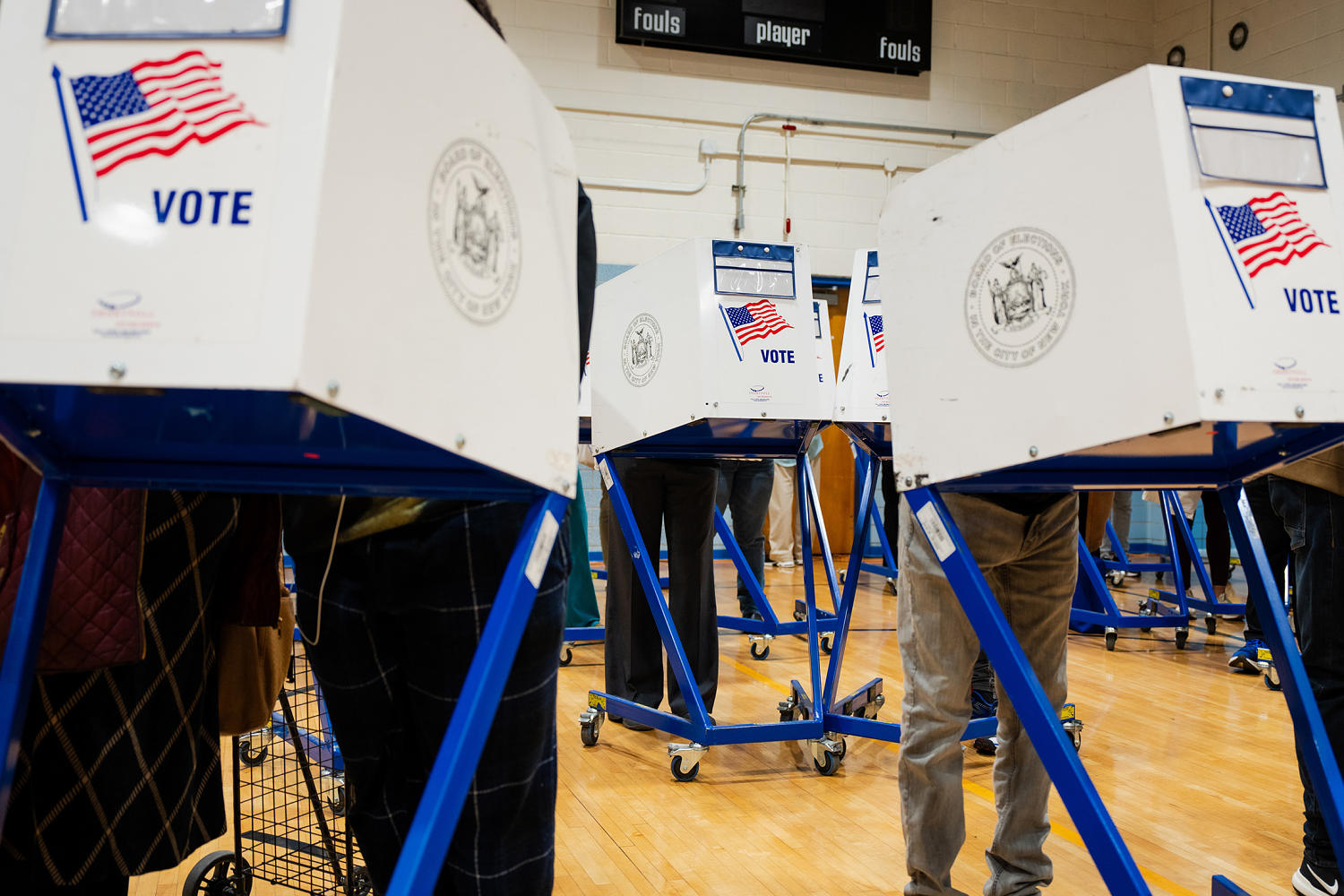
You're probably going to watch election night wrong. Most people turn on a single cable news broadcast at 7 p.m. Eastern, stare at a glowing red-and-blue map, and panic every time a county flips before the mail-in ballots are even opened.
Stop doing that.
Watching election night effectively requires understanding how votes are actually counted, which bellwether counties actually matter, and why early returns almost always lie to you. Major news organizations—like the Associated Press, NBC News, and the New York Times—staff massive decision desks filled with statisticians, political scientists, and local reporters specifically to make sense of the chaos. Yet viewers at home still fall for the exact same optical illusions every two years.
If you want to actually understand what's happening on election night without losing your mind, you need a system. Here is how political desks track the night, and how you should set up your own viewing strategy.
Why Early Election Night Returns Lie to You
The biggest mistake casual viewers make is treating early vote totals like a scoreboard in a basketball game. In sports, a 20-point lead in the first quarter means something. In American elections, a 20-point lead at 8:15 p.m. often means nothing at all.
Different states count different types of ballots in completely different orders. Some states process mail-in and early ballots weeks before Election Day, releasing a massive dump of results the second polls close. Other states are legally barred from even touching mail-in envelopes until Election Day morning.
This creates two predictable mirages that trip people up every single cycle:
- The Red Mirage: In states like Pennsylvania and Wisconsin, Election Day in-person votes—which tend to skew Republican—are often counted and reported first. A Republican candidate might look like they're cruising to a massive victory at 9 p.m., only for their lead to evaporate overnight as heavily Democratic urban mail-in ballots are finally tallied.
- The Blue Shift: The exact opposite happens in states like Florida, North Carolina, and Arizona. Because these states process early and mail-in ballots ahead of time, Democrats often jump out to an early lead when polls close. Then, as Election Day precinct totals roll in later at night, Republican numbers surge and close the gap.
Decision desks don't care about raw statewide totals at 8 p.m. They care about precinct-level comparisons. Analysts compare the current vote in a specific suburban precinct against how that exact same precinct voted two or four years ago. If a candidate is outperforming their party's previous benchmark in key counties, they're having a good night—even if the statewide ticker shows them trailing by 100,000 votes.
How to Build Your Own Election Night Command Center
You don't need a wall of monitors in Rockefeller Center to track the night like a pro. You just need to separate your data sources from your commentary sources. Cable news panels are built for entertainment and drama, not precision.
Start by picking one reliable data tracker. The Associated Press (AP) remains the gold standard for race calls in the United States. Since 1848, the AP has maintained a network of local stringers at county courthouses across the country who report raw numbers directly to central editors. They're famously conservative with their calls, refusing to project a winner until there is zero mathematical path for the trailing candidate to catch up.
Pair that data feed with a precinct-level map, like the ones hosted by The New York Times or CNN's Magic Wall. When you look at a state, ignore the color of the state itself. Click into the counties. Look at the estimated percentage of votes remaining—a metric that major outlets introduced after 2020 to stop viewers from misreading partial returns.
Keep the TV volume low. Honestly, most on-air pundits are just stalling for time between data drops, speculating wildly about exit polls that are notoriously noisy early in the evening. Use broadcast coverage for the big moments—victory speeches, concession calls, and official network projections—while relying on your second screen for the actual math.
The Poll Closing Timeline That Actually Matters
Election night isn't one continuous event. It's a series of waves dictated by time zones and state laws. Knowing when the key gates open keeps you from burning out before the real action even starts.
7:00 PM Eastern The First Real Clues
Polls close in six states, including Georgia and Virginia. Georgia is your first major stress test of the night. Because Georgia requires mail-in ballots to be processed early, you'll get a massive batch of data almost immediately. Watch the Atlanta metro counties—Fulton, DeKalb, Cobb, and Gwinnett. If turnout and margins there match or beat previous Democratic benchmarks, it's a long night for Republicans. Meanwhile, keep an eye on Virginia's Loudoun County; even though Virginia rarely flips, Loudoun moves fast and tells you immediately how college-educated suburbanites are voting nationwide.
7:30 PM to 8:00 PM Eastern The Bellwether Wave
North Carolina and Ohio close at 7:30 p.m., followed by a massive dump of over a dozen states at 8:00 p.m., including Pennsylvania, Michigan, New Hampshire, and Texas. North Carolina counts fast and gives you an early read on the Sun Belt. Watch Wake and Mecklenburg counties against rural eastern counties. By 8:30 p.m., you won't have final winners in the Midwest, but you'll have enough early returns from Florida (most of which closes at 7:00 p.m., with the panhandle closing at 8:00 p.m.) to gauge national momentum.
9:00 PM Eastern The Western Battlegrounds Enter
Polls close across the Mountain time zone and several Plains states, bringing Arizona, Wisconsin, and Minnesota onto the board. By this point, rural counties in Pennsylvania and Michigan will start reporting significant chunks of their in-person vote. Compare those rural margins directly against 2020 and 2024 numbers. If a candidate isn't hitting their rural targets in places like Erie County, Pennsylvania, or Saginaw County, Michigan, they're in serious trouble.
10:00 PM to 11:00 PM Eastern The Late Night Grind
Nevada closes at 10:00 p.m., and the West Coast—California, Oregon, and Washington—closes at 11:00 p.m. Even if California is called the second polls close, don't tune out. Control of the U.S. House of Representatives frequently hinges on a dozen tight districts in California's Central Valley and Orange County, and California takes days or even weeks to finish counting mail ballots.
Understanding Exit Polls Without Getting Fooled
Every election night at 5:00 p.m. Eastern, news networks start teasing early exit poll numbers. You'll hear anchors say things like, "The economy is the top issue for 40% of voters," or "Voters are angry about the direction of the country."
Take all of that with a massive grain of salt.
Exit polls—conducted primarily by Edison Research for the National Election Pool—are designed to explain why people voted the way they did, not to predict who won. Early waves of exit poll data are notoriously skewed because they haven't been weighted against actual vote totals yet. Throughout the night, pollsters quietly adjust the exit poll numbers behind the scenes to match the real results coming in from precincts.
If you make predictions based on 5:00 p.m. exit poll leaks, you're using broken tools. Wait until after midnight, when the demographic breakdowns have been calibrated against real ballots, before drawing conclusions about how specific age groups, income brackets, or educational demographics shifted.
Why Some Races Take Days to Call
Whenever a close race drags into Wednesday or Thursday, conspiracy theories inevitably flood social media. People assume something went wrong because they're used to instant results.
In reality, slow counts are usually a sign that election workers are following strict security protocols. Every mail-in ballot requires signature verification, envelope opening, flattening, and scanning—a manual process that takes dramatically longer than feeding a paper ballot into a precinct scanner on Election Day.
States like Arizona, Nevada, and California allow mail ballots postmarked on Election Day to arrive days later. In a race separated by 15,000 votes where 200,000 mail ballots are still sitting in county offices, no responsible decision desk will make a call. They run statistical models to determine the exact margin the trailing candidate would need from the remaining uncounted ballots—often called the vote-by-mail chase. Until that required margin becomes statistically impossible, the race stays uncalled.
Your Election Night Game Plan
Don't try to watch everything at once. Before polls close on the East Coast, bookmark one raw data feed like the AP, pull up a county-level map on a laptop or tablet, and pick five specific bellwether counties to track rather than staring at the national electoral map. Keep a notepad handy to jot down the 2020 or 2024 margins in those five counties so you have a real baseline when the first numbers drop at 7:00 p.m. When the inevitable late-night lull hits around midnight and the remaining swing states are too close to call, turn off the TV and go to sleep—the math won't move any faster just because you're staring at it.