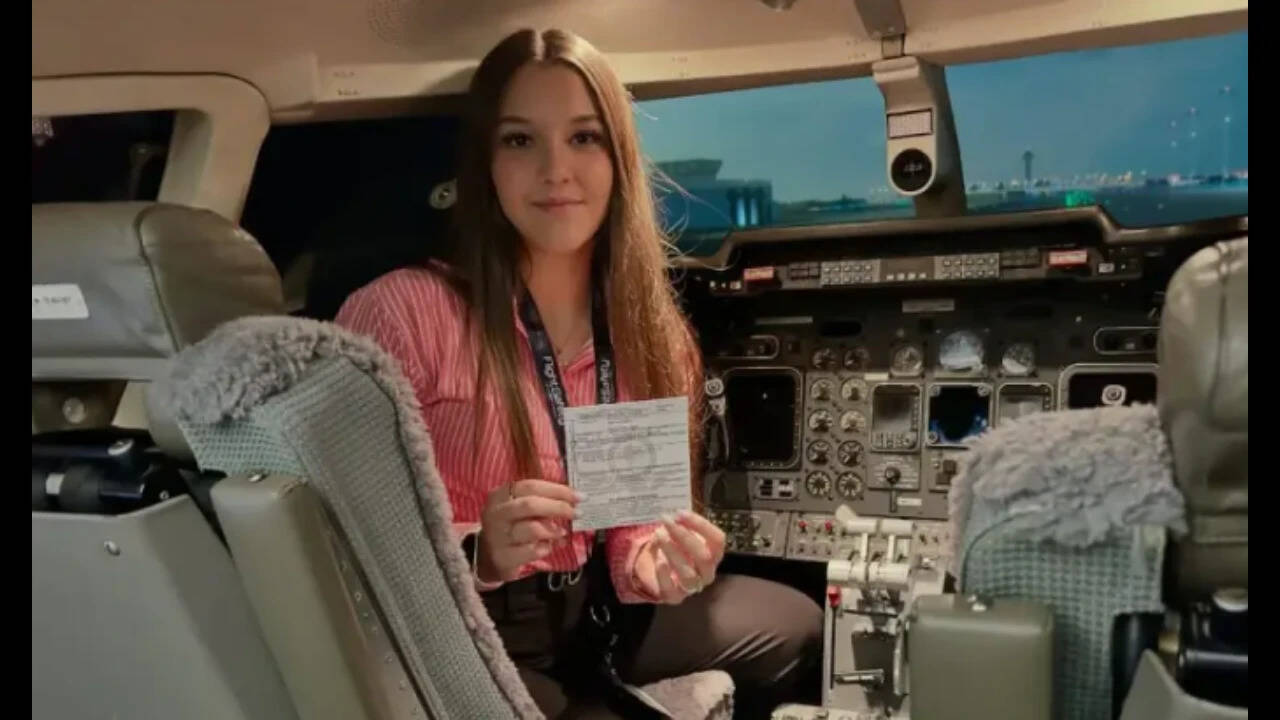
When an aviation tragedy goes viral on social media, the internet immediately starts playing detective. And almost every time, the crowd gets the most basic facts completely wrong.
You've probably seen the clips circulating online. They usually carry a dramatic caption asking who "Jack" was—the mysterious man allegedly called out by a female pilot named Nathalia in the final seconds before a Learjet slammed into the ground. People love a mystery. They want a hidden romance, a secret co-pilot, or a dramatic last-second betrayal to explain why an aircraft fell out of the sky.
Here's the blunt truth. That viral narrative is built on a mess of misheard audio, misattributed transcripts, and internet telephone.
If you actually look at aviation accident records, cockpit voice recorder (CVR) protocols, and the specific Learjet crashes involving female crew members, the real story looks nothing like the TikTok and X threads suggest. Let's break down how these viral audio rumors start, what actually happens in the cockpit during a high-stress emergency, and why the name "Jack" gets attached to crashes where no one by that name was even on board.
Why Viral Crash Audio Is Almost Always Misheard
Cockpit voice recordings are notoriously difficult to understand, even for trained investigators sitting in quiet acoustic labs with multi-thousand-dollar audio filtering equipment.
When a raw audio clip—or worse, a compressed screen-recording of an Air Traffic Control (ATC) frequency—hits social media, background static and engine noise turn ordinary aviation phraseology into a Rorschach test. You hear whatever the caption tells you to hear. Psychologists call this auditory pareidolia, and it's the exact same phenomenon behind those "ghost hunter" recordings where static sounds like a Victorian child whispering.
In aviation, pilots use clipped, rapid-fire shorthand. A hurried callout like "Check!" (meaning cross-check your instruments) or "Track!" (referring to the flight path or localizer track) or "Back!" (pull back on the yoke) sounds remarkably like "Jack!" when shouted over a blaring stall warning horn and rushing wind.
Throw in a shaky translation or an AI-generated subtitle track, and suddenly "Look outside, check!" becomes "Look outside, Jack!"
Once a caption goes viral, nobody checks the National Transportation Safety Board (NTSB) docket. They just hit share.
The Reality Behind Learjet Crashes and Cockpit Crews
To understand why this specific rumor gained so much traction, you have to look at how the public reacts when a female pilot is involved in a high-profile business jet accident. Business aviation is still overwhelmingly male. When a woman is at the controls of a Learjet—an aircraft famous for its high speed, swept wings, and unforgiving handling at low speeds—media outlets and social media accounts hyper-focus on her name and every word she spoke.
Over the past several years, a handful of fatal Learjet accidents have dominated news cycles across North and South America. In several of these cases, leaked ATC audio or preliminary accident reports surfaced before official investigations concluded.
Consider how an actual Learjet cockpit operates. Almost all Learjet models require a two-pilot crew: a Pilot in Command (PIC) and a Second in Command (SIC). Everything they do is governed by strict Crew Resource Management (CRM) rules.
When something goes catastrophically wrong—say, a pitch trim runaway, an asymmetric thrust event, or an aerodynamic stall on final approach—pilots don't suddenly start chatting like characters in a Hollywood movie. Their brains fall back on thousands of hours of simulator muscle memory. They call out airspeed, altitude, pitch attitude, and checklist items.
If a pilot yells "Look outside!" during an instrument approach, it isn't a poetic farewell. It's a standard operational callout. In low-visibility conditions, one pilot flies the aircraft solely by looking at the cockpit instruments while the other pilot scans out the windshield for the runway environment. When the aircraft reaches decision height, the monitoring pilot looks up, spots the approach lights or runway threshold, and yells "Look outside!" or "Visual!" so the flying pilot can transition from instruments to a visual landing.
It's purely procedural. Not a drama script.
How Internet Hoaxes Invent Missing Characters
So where did "Jack" come from?
In viral aviation misinformation, phantom names usually come from one of three places:
- Cross-contaminated transcripts: Content farms frequently mash together details from two completely different crashes. A quote from a 1990s commercial airliner crash gets pasted onto a 2020s private jet crash because the algorithm rewards engagement, not accuracy.
- ATC frequency bleed-over: Air Traffic Control frequencies are shared by dozens of aircraft in the same sector. While one plane is declaring an emergency, another pilot on the exact same frequency might key their mic to say, "Thanks, Jack," to a controller they know. On a LiveATC archive recording, those two transmissions play back-to-back, tricking casual listeners into thinking the voices are in the same cockpit.
- Clickbait fabrication: Let's be honest here. Accounts chasing ad revenue know that a mystery performs ten times better than a dry mechanical explanation. Saying "The crew experienced spatial disorientation during a night approach" gets fifty likes. Saying "Who was the mysterious Jack she screamed for before impact?" gets two million views.
I've watched this exact cycle play out dozens of times over the last decade. Whenever a plane goes down, fake "leaked cockpit audio" floods YouTube within forty-eight hours. Half the time, the audio is literally ripped from a flight simulator video game like Microsoft Flight Simulator or X-Plane, complete with fake screaming added in post-production.
What Actually Happens to Cockpit Voice Recorders
There's another massive misconception baked into these viral posts. People assume that anyone can just download the cockpit voice recorder audio the day after a crash.
You can't. Not in the United States, and not in almost any country that follows International Civil Aviation Organization (ICAO) standards.
Under federal law (49 U.S.C. § 1114), the NTSB is strictly prohibited from releasing actual CVR audio recordings to the public. Ever. Even after a final report is published years later, the public only gets a written transcript prepared by a specialized group of investigators, family representatives, and technical experts. That group listens to the tape dozens of times over several weeks to verify every single syllable, grunt, and background click before writing it down.
Air Traffic Control radio transmissions, on the other hand, are broadcast over open VHF radio waves. Anyone with a scanner or an internet connection can record them. Because the public doesn't know the difference between an ATC radio recording and an internal Cockpit Voice Recorder, clickbait creators routinely label standard ATC audio as "leaked black box audio."
If you hear a crystal-clear recording of a crash on social media the week it happens, it isn't the black box. It's radio traffic—or it's completely fake.
The Real Dangers of Flying a Learjet
If you want to understand why Learjets occasionally end up in tragic headlines, forget the phantom passengers and look at the airplane itself.
Bill Lear designed the original Learjet 23 in the early 1960s based on a Swiss fighter-bomber prototype, the FFA P-16. That fighter jet DNA never completely left the airframe. Learjets are fast, sleek, and thrilling to fly, which is why executives and air ambulance operators love them.
That performance comes with razor-thin margins for error:
- High approach speeds: Compared to slower turboprops or larger business jets with complex leading-edge slats, older Learjets come over the fence fast. If a pilot gets behind the airplane on final approach, things unravel in seconds.
- Dutch roll and pitch sensitivity: At high altitudes or high speeds, swept-wing jets require active yaw damping and precise trim management. A runaway pitch trim or an uncommanded roll can overwhelm a crew if they don't catch it immediately.
- Unforgiving stall characteristics: Because the wings are thin and built for speed, stalling a Learjet near the ground leaves almost zero altitude to recover.
When a Learjet crashes, investigators look at weight and balance, icing conditions, maintenance logs, pilot fatigue, and spatial disorientation. They look at physics and human factors. They aren't looking for a soap opera.
How to Fact-Check Viral Aviation Stories Yourself
Next time a dramatic crash clip pops up on your feed with a sensational caption, don't take the bait. You can verify the truth in about three minutes using the exact same databases aviation journalists rely on.
First, check the Aviation Safety Network (ASN) database. It tracks virtually every commercial and business jet accident worldwide in real time, listing the exact aircraft registration, operator, crew fatalities, and preliminary cause without any tabloid fluff.
Second, search the aircraft's tail number on the NTSB CAROL database (if the crash happened in the U.S. or involved a U.S.-registered aircraft). Preliminary reports usually drop within two to three weeks of an accident. They strip away all the social media noise and give you the cold, verified facts: weather conditions, flight path data, witness statements, and crew certifications.
Third, look at the source of the audio. If a video claims to have "cockpit voice recorder audio" from a recent crash, close the tab. You're being lied to for clicks.
Aviation tragedies are devastating enough for the families and crews involved without the internet turning their final moments into cheap fiction. Stick to the official reports, question every viral transcript you read, and always check the tail number before you believe the headline.