Pyongyang has transitioned from using its nuclear program as a bargaining chip to codifying it as a permanent structural element of its national identity. This shift renders traditional denuclearization frameworks—predicated on economic incentives or security guarantees—fundamentally obsolete. The assertion that North Korea’s nuclear status will not change is not merely rhetorical bravado; it is the logical output of a decades-long cost-benefit analysis where the survival of the Kim regime is the only relevant variable.
The Triad of Irreversibility
To understand why North Korea considers its nuclear status non-negotiable, one must examine the three pillars that support the state’s current strategic posture: Legality, Capability, and Survivability.
1. The Legal-Constitutional Lock-In
The Supreme People’s Assembly has moved beyond simple policy declarations to embed nuclear status into the state constitution. This creates a domestic legal barrier that prevents future negotiators from easily reversing course. By defining the DPRK (Democratic People's Republic of Korea) as a "responsible nuclear weapons state," the regime communicates to its own elite and the international community that the program is no longer a temporary project under development, but a finished component of the state's architecture.
2. The Credible Second-Strike Capability
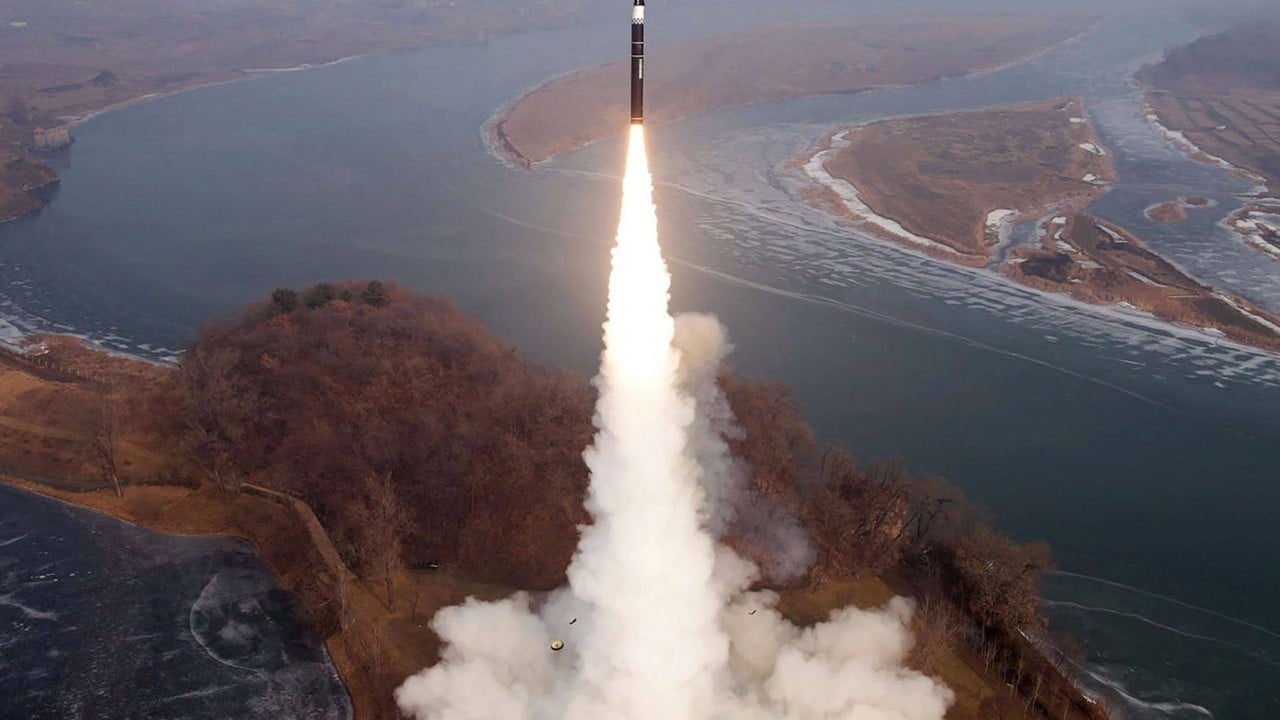
For a nuclear deterrent to be effective, it must survive an initial attack. North Korea has prioritized mobile launch platforms, solid-fuel technology, and hardened silo systems. Solid-fuel engines, specifically, reduce the fueling window required before a launch, significantly shrinking the "kill chain" time available for adversaries to conduct a preemptive strike.
3. The Regime Survival Function
The historical precedents of Iraq, Libya, and Ukraine serve as the primary datasets for North Korean strategists. The regime perceives a direct correlation between the absence of a nuclear deterrent and the eventual forced removal of non-nuclear autocrats. Within this framework, the cost of maintaining the program—regardless of sanctions or isolation—is always lower than the perceived cost of disarmament.
The Failure of Traditional Denuclearization Models
Most Western diplomatic strategies rely on the assumption that North Korea is a rational economic actor seeking a path toward global integration. This assumes a "prosperity for peace" trade-off. However, the DPRK operates on a "security over prosperity" hierarchy.
The CVID (Complete, Verifiable, Irreversible Dismantlement) model fails because it ignores the inherent asymmetry of information. The regime knows that once the nuclear shield is removed, they have no leverage to ensure the promised economic benefits continue or that "regime change" policies are permanently shelved. This creates a classic prisoner’s dilemma where the safest move for Pyongyang is to maintain its weapons.
Structural Drivers of Modern Escalation
The current geopolitical environment provides North Korea with a degree of breathing room not seen since the Cold War. Two primary shifts have diluted the effectiveness of external pressure.
The Sino-Russian Shield
The fracturing of the UN Security Council has effectively ended the era of unified global sanctions. As Russia seeks munitions for its conflict in Ukraine and China prioritizes regional stability over denuclearization, the enforcement mechanism for international law has collapsed. Pyongyang has capitalized on this by aligning its defense production with Russian requirements, creating a new revenue stream that bypasses traditional financial blocks.
Tactical Nuclear Proliferation
A significant shift in North Korean doctrine is the move from strategic deterrence (aimed at the US mainland) to tactical employment (aimed at the Korean Peninsula). This involves the development of smaller, lower-yield warheads designed for battlefield use.
- Miniaturization: The ability to fit warheads on short-range ballistic missiles.
- Diversification: Utilizing cruise missiles and underwater drones to saturate missile defense systems like THAAD and Aegis.
- First-Use Doctrine: Recent legislative changes allow for preemptive nuclear strikes if the regime perceives an imminent threat to its leadership.
The Economic Resilience Variable
Despite extreme isolation, the North Korean state has optimized its internal economy to support the nuclear program through a system of "Byungjin" (parallel development). While the civilian economy suffers, the military-industrial complex remains insulated.
- Cyber-Finance: State-sponsored hacking groups have become primary revenue generators, stealing billions in cryptocurrency and conducting ransomware attacks. This provides the hard currency needed for specialized components that cannot be produced domestically.
- Resource Allocation: The regime utilizes a Command-and-Control economic model where the highest-quality human capital and raw materials are funneled exclusively into the missile and nuclear sectors.
- Illicit Ship-to-Ship Transfers: The persistence of maritime smuggling networks ensures a steady flow of refined petroleum products, undermining the "maximum pressure" campaigns of previous years.
The Technological Leap: Solid Fuel and Satellites
The transition from liquid to solid-fuel missiles represents the most critical technical evolution in the DPRK arsenal. Liquid-fuel missiles are volatile and require hours of preparation, making them visible to satellite surveillance. Solid-fuel missiles can be stored, transported, and launched within minutes.
The recent focus on military reconnaissance satellites serves as the "eyes" for this "sword." Without satellite intelligence, North Korea’s missiles are powerful but blind. By establishing a sovereign space-based surveillance network, the regime aims to gain the ability to monitor troop movements in the South and target carrier strike groups in real-time.
The South Korean Response and the Nuclear Paradox
North Korea’s hardening stance has triggered a shift in Seoul. Public opinion in South Korea has increasingly leaned toward either the return of US tactical nuclear weapons or the development of an independent South Korean deterrent.
This creates a "Nuclear Paradox":
- If South Korea remains non-nuclear, it relies entirely on the US "nuclear umbrella," which North Korea believes it can test by threatening US cities.
- If South Korea goes nuclear, it triggers a regional arms race that could destabilize the entire Pacific Rim, potentially leading to the collapse of the Non-Proliferation Treaty (NPT).
Quantifying the Strategic Stalemate
The current state of affairs is not a "crisis" in the sense of a temporary disruption; it is a new equilibrium. The variables involved suggest that the probability of voluntary denuclearization is near zero.
| Variable | 1994 (Agreed Framework) | 2026 (Current State) |
|---|---|---|
| Warhead Count | Estimated 1-2 | Estimated 50-100+ |
| Delivery Vehicle | Short-range Scud variants | ICBMs capable of hitting DC |
| Fuel Type | Liquid (Slow/Vulnerable) | Solid (Fast/Survivable) |
| Great Power Unity | High (US, China, Russia aligned) | Low (Geopolitical fragmentation) |
| Regime Objective | Economic Aid | Permanent Nuclear Status |
The data confirms that North Korea has successfully navigated the "window of vulnerability"—the period where a nascent nuclear program could be destroyed by a conventional strike. They have reached a level of sophistication where a preemptive strike would likely fail to neutralize all assets, ensuring a devastating retaliatory blow.
Necessary Adjustments to Global Policy
The persistence of the "denuclearization" goal in diplomatic circles is increasingly viewed as a form of strategic denial. To manage the reality of a nuclear North Korea, policy must pivot toward three pragmatic objectives.
First, the focus must shift from disarmament to arms control. This involves establishing communication channels to prevent accidental escalation and mid-tier agreements to freeze specific technologies (such as MIRV or hypersonic glide vehicles) in exchange for calibrated sanctions relief.
Second, the international community must enhance its counter-proliferation efforts. As North Korea’s technology matures, the risk of the regime selling nuclear blueprints or materials to non-state actors or other rogue regimes increases. Monitoring the "secondary market" of nuclear technology becomes the primary security priority.
Third, the US and its allies must strengthen integrated deterrence. This requires more than just military drills; it necessitates the deployment of persistent, multi-layered missile defense systems and the clear communication of "red lines" regarding the transfer of nuclear technology.
The North Korean nuclear program is no longer a problem to be solved, but a permanent condition to be managed. The regime’s insistence that its status will not change is the most honest assessment of the situation provided by any party in the last decade. Strategy must now align with this reality or risk total irrelevance in the face of an expanding and permanent nuclear threat.